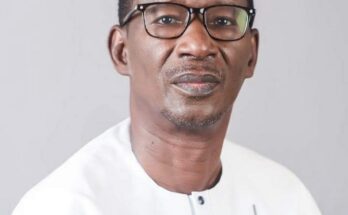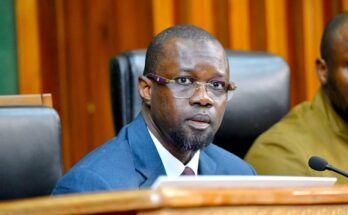
In a rare public statement, opposition figure Dieudonné Minlama Mintogo has issued a stark warning to Gabon’s transitional government, urging authorities not to dilute the overwhelming popular mandate of President Brice Clotaire Oligui Nguema into a narrow partisan agenda.
After months of deliberate silence following the April 2025 presidential election, Minlama re-emerged in the national discourse with a pointed critique that is already sparking debate across political circles. In his assessment, the greatest threat to Gabon’s new democratic order is not economic stagnation or institutional fragility—it is the political risk of hijacking a historic electoral victory and converting it into a tool for a single faction.
He emphasizes that President Oligui Nguema’s mandate—secured with over 94% of the vote—is not merely a partisan triumph, but a national mandate rooted in the collective aspirations that emerged from the August 30, 2023 democratic transition and were reaffirmed in the return to constitutional order.
From National Hope to Political Exclusion
Minlama warns that misinterpreting this mandate as the exclusive property of one party or political bloc could lead to a dangerous narrowing of the political space. He cautions that such an approach risks alienating the very citizens, civil society leaders, and political figures who contributed to the transition and supported the nation’s rebuilding process.
« The gravest mistake would be to convert a mandate born of national unity into a partisan instrument. » His words carry weight, not only because of his long-standing presence in Gabonese politics, but because they reflect a growing unease among those who once rallied behind a shared vision of renewal.
The Fragility of a Two-Tier Republic
According to Minlama, the strength of President Oligui Nguema’s project lies in its ability to rise above traditional divisions. He notes that the Transition drew support from a broad coalition of political sensibilities, all united by one goal: to close the chapter on past divisions and build a new foundation for the nation.
Yet, he warns, any move toward exclusionary governance could fracture this fragile consensus. The real challenge ahead, he argues, is to maintain the spirit of national unity by fostering an inclusive administration that draws on the best talents from across Gabon—regardless of political affiliation.
Honoring the Spirit of August 30
At its core, Minlama’s message is a call for vigilance. While the President’s electoral mandate is unprecedented in modern Gabonese history, its true significance lies not in its magnitude, but in its meaning: it was granted not to a candidate of a party, but to a leader seen as a unifying figure during a pivotal moment in the nation’s history.
He suggests that the success or failure of Gabon’s new republic will hinge on whether its leaders honor that legacy. The 94% electoral result is not a blank check for political maneuvering—it is a solemn responsibility to govern inclusively, transparently, and in the service of all Gabonese citizens.