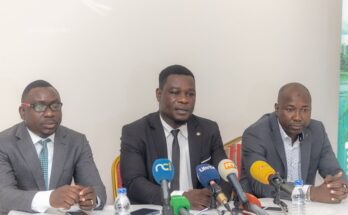
A significant financial scandal has engulfed Gabon’s Ministry of National Education, leading to the detention of nearly twenty officials. These agents, primarily from the Central Directorate of Financial Affairs (DCAF), are under investigation by the Judicial Police for their alleged involvement in an extensive cash voucher overbilling scheme. The estimated financial loss surpasses 560 million FCFA, equivalent to almost 850,000 euros, funds reportedly diverted from a critical state department.
An organized scheme within the DCAF
Details emerging from the investigation reveal a sophisticated system centered on manipulating cash vouchers. These administrative tools, typically used for immediate or routine government expenditures, were allegedly falsified with inflated sums. The difference between the legitimate cost of services and the exaggerated payment was reportedly siphoned off by members of the implicated network. Such an elaborate scheme suggests intricate collaboration among those authorizing payments, accounting personnel, and either non-existent or complicit recipients, underscoring the breadth of the recent arrests.
The simultaneous apprehension of around twenty civil servants sends a powerful political message across Gabon. Since the August 2023 regime change, the transitional government has prioritized combating administrative corruption as a key pillar of its legitimacy. For months, authorities have been conducting focused operations to dismantle illicit public spending networks, especially within ministries managing substantial budgets.
Education: a budget under immense pressure
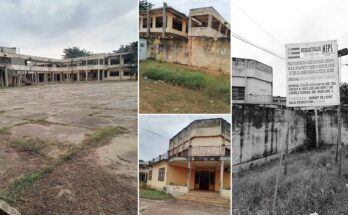
The Ministry of National Education was not arbitrarily chosen for this probe. It consistently accounts for a significant portion of Gabon’s national budget, funding essential areas like staff salaries, student scholarships, educational materials, and school construction. The sector faces immense challenges, with teacher unions frequently highlighting issues such as delayed wages and deteriorating school facilities. The alleged embezzlement of 560 million FCFA represents a substantial loss, enough to fund dozens of new classrooms or provide thousands of vital scholarships, directly impacting the nation’s youth and future.
This incident emerges at a critical time as Libreville strives to assure international financial partners, including the International Monetary Fund and the African Development Bank, of its commitment to transparent public financial management. The Court of Accounts, whose powers have been recently reactivated and expanded, has frequently flagged concerns regarding advance accounts and cash vouchers, often criticized for their lack of clear traceability. This ongoing investigation vividly exemplifies the very irregularities these internal audits aim to uncover and address.
Judicial proceedings with high political stakes
The forthcoming stages of this legal process will determine if these allegations lead to formal charges, either before the Special Court for Financial Affairs or through the standard judicial system. Potential indictments could include embezzlement of public funds, public document forgery, and criminal association – all carrying severe penalties under Gabonese law. The detained officials will be required to provide explanations regarding the provenance of the questionable vouchers, the chain of hierarchical approvals, and the identities of any higher-ranking individuals who may have directed these illicit activities.
A critical political question looms: how high will this investigation trace the chain of command? The DCAF, like all ministerial financial directorates, operates under the direct purview of the ministerial cabinet and maintains continuous liaison with both the General Directorate of Budget and the General Directorate of Treasury. The inquiry must ascertain whether this constitutes an isolated internal lapse or a more pervasive system embedded within the state machinery. The government’s resolve to fully prosecute this case will serve as a crucial benchmark for the credibility of the transitional administration’s commitment to eradicating corruption.