The clock is ticking for Gabon’s political landscape, with just one week remaining until the June 27, 2026 deadline for parties to comply with sweeping new regulations. While many leaders claim their formations meet the requirements, the gap between rhetoric and reality remains stark: as of April, fewer than ten out of 104 registered parties had submitted complete dossiers to authorities.
This legislative shake-up, born from the April 2024 national dialogue recommendations, aims to purge the system of ‘shell parties’—small, often family-run groups lacking national substance. The new law, numbered 016/2025, demands far more than symbolic membership: parties must now prove they are viable political machines, with 10,000 real members verified through National Identification Numbers (NIP), evenly distributed across all nine provinces. Additional prerequisites include a physical headquarters, dedicated bank accounts, updated statutes, and strict financial transparency overseen by the Court of Auditors.
Interior Minister Adrien Nguema Mba has been unequivocal: no extensions will be granted. Parties failing to comply by the deadline face automatic dissolution. The justification is unapologetic—a nation of under three million cannot sustain 104 fragmented formations, many of which exist in name only.
Divided reactions as the deadline looms
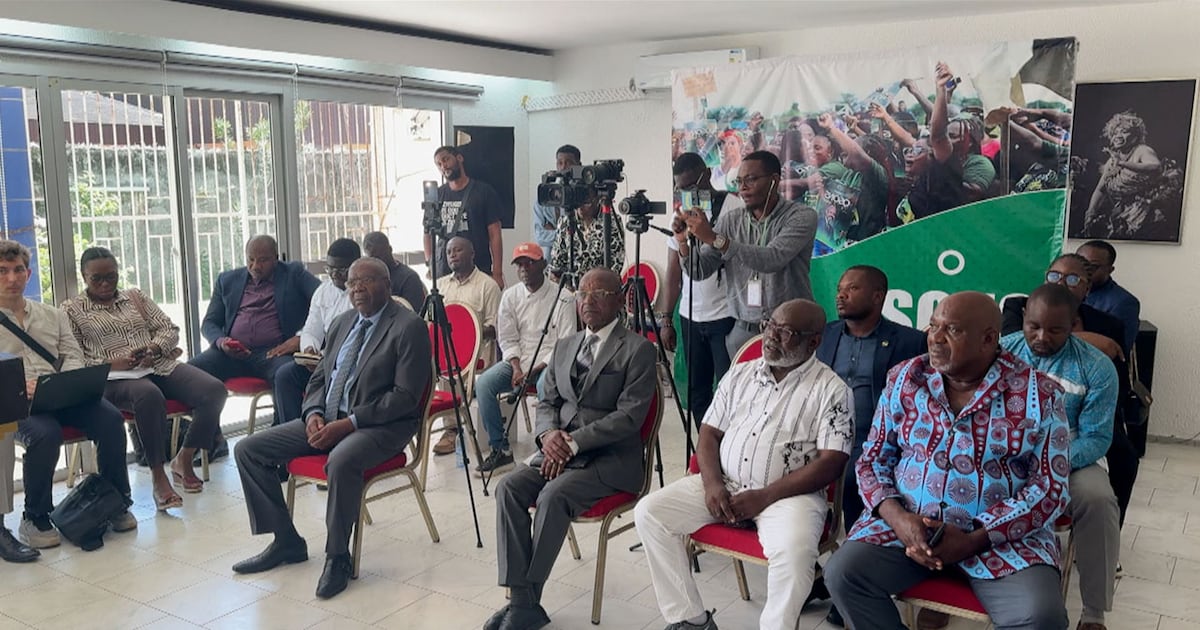
Reactions within Gabon’s political sphere are sharply polarized. Joachim Mbatchi, leader of the Front pour la défense de la République (FDR), welcomes the reform as an opportunity for weaker parties to merge into stronger coalitions. “This is not a threat to us,” he asserts. “It’s a chance for consolidation.” Meanwhile, Théophile Makita Nyembo, vice-president of Ensemble pour le Gabon, insists his party—founded by former Prime Minister Alain Claude Bilie By Nzé (currently detained)—already meets all criteria. “We fulfill every requirement,” he states, though critics argue the law disproportionately targets opposition groups.
Tensions escalated further when the President addressed Parliament, questioning amendments to the national dialogue’s recommendations but insisting, “decisions made by the Gabonese people must be respected.” The statement sparked outrage from Francis Aubame of the Parti Souverainistes-Écologistes (PSE), who accused the President of political manipulation. “The Head of State signed a decree and now asks lawmakers to reverse it,” Aubame argued. “The national dialogue is not a sovereign conference. Deputies are free to vote as they see fit.”
The countdown to survival
As the June 27 deadline approaches, the stakes could not be higher. Early assessments suggest only four parties—including the dominant Union Démocratique et Sociale (UDS) and Parti Démocratique Gabonais (PDG)—have submitted complete files. Others are scrambling to meet the 10,000-member threshold, risking oblivion if they fall short. The law also introduces a performance clause: parties that fail to field candidates in two consecutive elections will lose their registration.
Government officials frame the changes as a bid to elevate democratic quality over quantity. Yet critics warn the reforms could shrink political pluralism, effectively burying an era where forming a party was little more than a bureaucratic formality.
The Interior Ministry’s verdict on June 27 will reveal whether Gabon is entering a new age of structured, accountable politics—or witnessing the collapse of a once-vibrant multiparty system.
Comments are closed, but trackbacks and pingbacks are open.