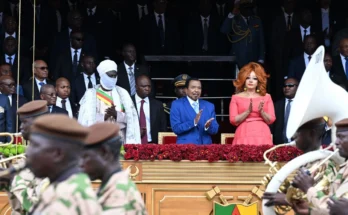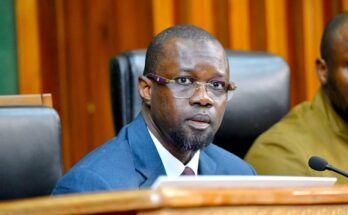
The presidential palace witnessed a pivotal moment as Edith Laure Mbiguidi Oyaya officially assumed her role as head of Gabon’s General Tax Directorate (DGI). During a formal meeting with the new director and her core team, Brice Clotaire Oligui Nguema underscored the pivotal role of taxation in the nation’s broader development agenda, positioning it as the backbone of public policy financing in Gabon. The message to top officials was unequivocal: boosting domestic revenue mobilization now ranks as a top national priority.
Tax administration as a catalyst for economic transformation
In his address, the Head of State emphasized how tax policy directly impacts the government’s ability to fulfill commitments in infrastructure, education, healthcare, and economic sovereignty. With Libreville aiming to curb its reliance on oil revenues, expanding the tax base and improving collection efficiency emerge as critical priorities. The DGI is no longer seen merely as a revenue collector; it has now been tasked with playing a pivotal role in fiscal governance and macroeconomic stability.
The President’s discussion with the new leadership team highlighted the strategic importance of their mission. This mandate goes beyond mere performance metrics—it demands unwavering ethical standards. Key expectations include cracking down on tax evasion, modernizing administrative procedures, and ensuring transparent treatment of taxpayers. For policymakers, the ultimate goal is to shift perceptions of the tax authority from a rigid bureaucracy to a facilitator that fosters a more conducive business environment.
Edith Laure Mbiguidi Oyaya inherits a high-stakes fiscal landscape
Edith Laure Mbiguidi Oyaya’s appointment comes at a time when Gabon is working to stabilize its financial footing after a period marked by liquidity constraints and complex negotiations with multilateral lenders. As the new DGI chief, she inherits an institution whose performance is crucial to maintaining public debt sustainability and sustaining state investment capacity. Her ability to drive change will depend not only on the technical resources at her disposal but also on the tangible political backing she receives in overcoming internal resistance.
The newly appointed leadership team is expected to tackle pressing challenges, including the digitalization of tax declarations, payment tracking systems, fiscal policies for large extractive industries, and alignment with Central African Economic and Monetary Community (CEMAC) standards. While these initiatives are not new, their accelerated implementation has become essential to reinforcing the credibility of the President’s economic reform agenda. Additionally, the DGI is actively engaged in technical cooperation programs with international partners, including the International Monetary Fund.
Taxation stands at the core of Gabon’s economic vision
Since assuming office in mid-2023 and securing re-election in April 2025, Brice Clotaire Oligui Nguema has consistently framed fiscal sovereignty as a cornerstone of his political agenda. The government’s official narrative ties economic transformation, social justice, and equitable redistribution directly to the need for higher and more evenly distributed tax revenues. In practice, the administration seeks to increase contributions from high-value sectors while easing the burden on low-income households.
Yet Gabon faces a complex equation. The economy remains heavily informal, the taxpayer base is limited, and hydrocarbon revenues—highly sensitive to global price fluctuations—still dominate public finances. Expanding the tax base will require a balanced approach: incentivizing formalization, simplifying compliance processes, and implementing targeted enforcement measures. The new DGI director must navigate the delicate balance between delivering immediate revenue gains and implementing long-term structural reforms, all under pressure to demonstrate tangible results.
The presidential meeting also sent a clear signal to Gabon’s financial partners. By publicly endorsing the new leadership team, the Head of State aims to reassure investors and creditors about the continuity and credibility of the country’s fiscal governance commitments. The trajectory of non-oil revenues will be closely monitored as a key indicator of Libreville’s economic reform progress.