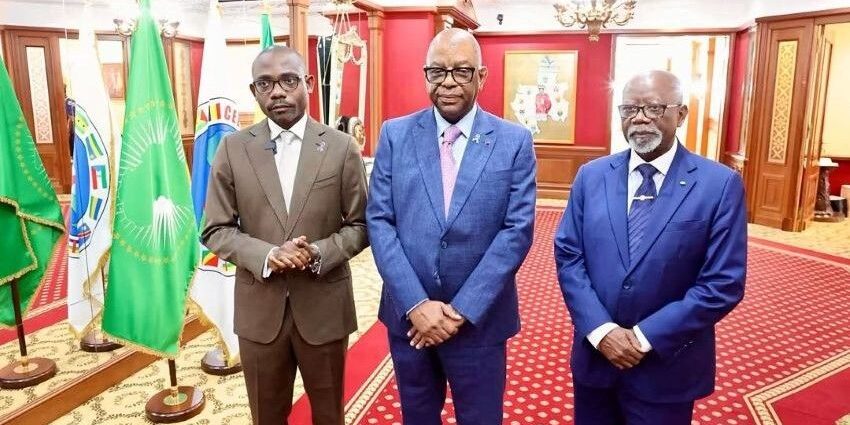
Gabon’s UDB makes bold political moves: RPM talks and new recruits signal decisive shift
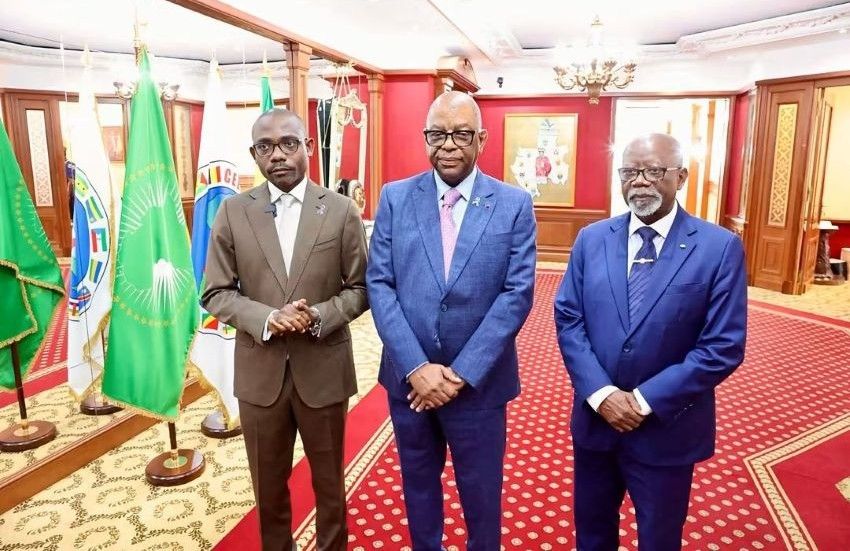
Libreville, November 25, 2026 — Gabon’s political landscape is undergoing a significant transformation, with the Union for Democracy and Building (UDB) emerging as a central player in the latest power realignment. On November 24, UDB founder and president Brice Clotaire Oligui Nguema hosted two high-profile delegations in Libreville, signaling a critical turning point in the nation’s political dynamics.
First among them was a delegation led by Alexandre Barro Chambrier, president of the Rally for the Homeland and Modernity (RPM), which engaged in strategic discussions with UDB leadership. The second group included former members and leaders of the Réagir movement, who formally joined the UDB. These two audiences underscore the shifting alliances and strategic repositioning sweeping through Gabon’s political arena.
RPM’s strategic calculus takes center stage
The meeting with Alexandre Barro Chambrier follows months of behind-the-scenes negotiations between the RPM and UDB. According to discussions, UDB Secretary-General Mays Mouissi presented to Oligui Nguema the findings of joint reflection sessions, outlining potential terms for closer political cooperation. While no definitive agreements have been disclosed, the RPM’s upcoming extraordinary fourth congress on November 26 in Libreville is poised to be a defining moment.
The congress will address the party’s future positioning, potentially clarifying whether the RPM seeks to deepen its cooperation with the UDB or explore a more formal integration. At this stage, no official announcement regarding a merger or dissolution of the RPM has been made.
For Barro Chambrier, these deliberations carry significant weight. The RPM must determine its role in a rapidly evolving political landscape reshaped by Gabon’s recent institutional transition. Party leaders face the dual challenge of preserving the RPM’s identity while ensuring its grassroots members remain engaged in any transformative decisions.
Fresh faces join the UDB amid internal restructuring
The second audience marked the formal integration of several prominent former Réagir members into the UDB’s ranks. These individuals, including former officials and activists, were personally received by Oligui Nguema, reinforcing the UDB’s strategy to broaden its influence by welcoming leaders from diverse political backgrounds.
These new recruits have pledged to continue their political engagement under the UDB banner, aligning with the party’s upcoming ordinary congress on December 5, 2026, in Libreville. The event, themed “Rooting and Consolidation,” follows a series of provincial council meetings held from November 20 to 22, which gathered input from local structures to shape the party’s strategic direction.
Important clarification: While these individuals have defected to the UDB, the Réagir party’s executive leadership, under Michel Ongoundou Loundah, has emphasized that these moves represent individual ralliements and do not constitute a wholesale shift of the Réagir movement. This distinction highlights the nuanced nature of Gabon’s political realignments.
Pluralism in action: navigating Gabon’s shifting political currents
These developments unfold amid an active period for Gabon’s political parties. The UDB is finalizing preparations for its first major statutory gathering, while the RPM and the Gabonese Democratic Party (PDG) also prepare for their respective congresses. Each formation is now forced to confront critical organizational, strategic, and positioning questions in the wake of the country’s institutional transition.
For the UDB, the challenge lies in translating individual ralliements and tactical alliances into a cohesive, structured organization capable of sustaining its vision beyond its leadership. The RPM, meanwhile, must grapple with defining its political future while ensuring its collective identity remains intact. Grassroots supporters and citizens, in turn, will be watching closely to assess how these shifts reshape public discourse and political representation in Gabon.
The November 24 meetings represent more than symbolic gestures—they reflect the tangible momentum building within Gabon’s political sphere. The true test will come in the form of formal party decisions, the integration of grassroots voices, and the clarity of these new alliances’ objectives. As Gabon’s parties prepare to convene in the coming weeks, the scope and direction of this political realignment will become increasingly apparent.
Comments are closed, but trackbacks and pingbacks are open.