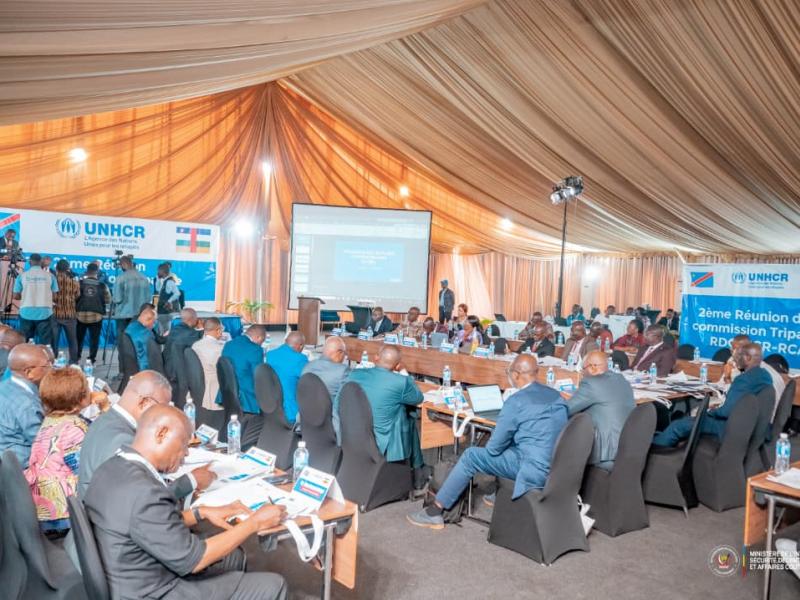
Historic Tripartite Meeting to Facilitate Return of 22,000 Central African Refugees from DRC
A landmark tripartite meeting involving the Democratic Republic of Congo (DRC), the Central African Republic (CAR), and the United Nations High Commissioner for Refugees (UNHCR) is underway in Kinshasa from June 9 to 12, 2026. The primary focus of this high-level gathering is the voluntary repatriation of over 22,000 Central African refugees currently residing in the DRC.
Key Figures and Current Situation
According to Pierre Atchom, UNHCR Representative in the DRC, a total of 22,604 Central African refugees have been biometrically registered in the country. These individuals are primarily located in the provinces of Nord-Ubangi, Sud-Ubangi, and Bas-Uélé. Additionally, 65,000 new asylum seekers from the Central African Republic arrived in the Zapaï locality, within the Ango territory of Bas-Uélé, in May 2025.
Progress and Challenges
Éric Mukandila, Permanent Secretary of the National Commission for Refugees (CNR) and head of the DRC delegation, emphasized that the voluntary repatriation process resumed following the stabilization of previously conflict-ridden zones. This followed a 2019 agreement between the DRC, CAR, and UNHCR, which was further reinforced by the 2022 Yaoundé Declaration. This declaration promotes a regional approach to finding sustainable solutions for persons displaced by the Central African crisis.
Mukandila highlighted that 40,000 Central Africans have already returned to their country since 2019, facilitated by the UNHCR in collaboration with the governments of both nations. He stressed the need for a thorough review of the situation to address frustrations among potential returnees and ensure safe and dignified returns.
Central African Republic’s Commitment
Mesmin Guenguebe Mbari, Advisor for Territorial Development in the Central African Republic and head of the CAR delegation, reported that 43% of the refugees who left the DRC have already returned home. He outlined ambitious plans for 2026, aiming for the return of nearly 60,000 refugees from various host countries. Mbari emphasized the CAR’s innovative strategy of establishing development poles in return zones to support reintegration and called for pragmatic discussions to assess the real impact of assistance provided to returnees.
Path Forward
The tripartite meeting seeks to evaluate the progress made, address ongoing challenges, and chart a clear path for the safe and dignified return of refugees. With security conditions improving in previously conflict-affected areas, the focus is on ensuring that the repatriation process is both sustainable and beneficial for all parties involved.