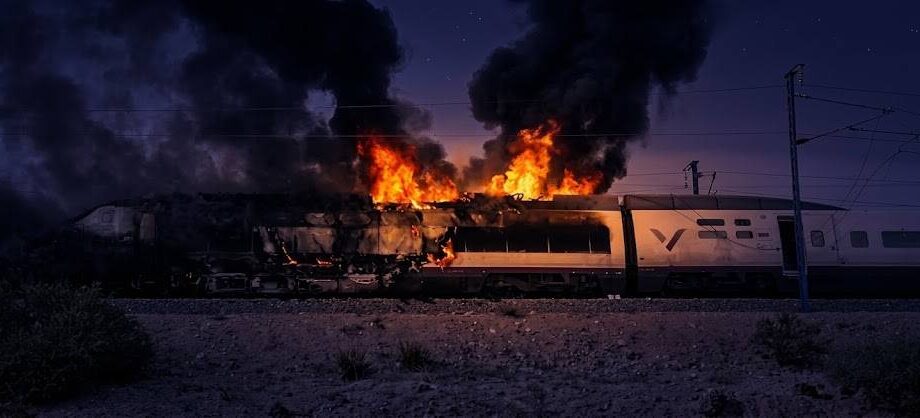
When a fire broke out in the rear cab of a Renfe AVE train near Ricla on October 12, the immediate priority was evacuating all 283 passengers — which was accomplished without injuries. Yet the incident’s deeper significance lies in its ripple effects: the shutdown of high-speed rail traffic between Madrid and Barcelona for hours, exposing the fragility of a critical transport link during one of Spain’s busiest travel periods.
How a single train fire paralyzed a key corridor
The AVE train, operating from Madrid’s Puerta de Atocha station to Figueres in Catalonia, had departed at 2:27 p.m. and was nearing Ricla in Zaragoza province when the fire was detected around 4:05 p.m. Renfe’s initial reports indicated the blaze originated in the rear cab, prompting immediate safety protocols.
Rapid evacuation and emergency response
With smoke threatening the interior, the 283 passengers were swiftly evacuated while emergency teams worked to extinguish the flames. The absence of casualties underscores the effectiveness of onboard safety procedures. However, the precise cause of the fire remains under investigation, with a formal inquiry launched to identify any technical failures.
Domino effect on national rail network
The decision to halt all high-speed trains between Madrid and Barcelona — one of Spain’s busiest routes — had immediate consequences. Trains were held at stations, afternoon departures cancelled, and thousands of travelers faced delays, reroutings, and uncertainty. The disruption was magnified by the timing: October 12 is Spain’s National Day, falling at the end of a long weekend when transport demand typically peaks.
Renfe’s passenger support and service recovery
In response, Renfe offered free ticket changes or refunds and deployed technical teams to inspect the track once the fire was out. The company initially could not estimate the full duration of disruptions but later announced a gradual resumption after firefighters and inspectors cleared the line.
Root causes and lingering questions
While the evacuation succeeded, the incident highlights vulnerabilities in high-speed rail operations. An isolated fire in a rear cab managed to disrupt a major artery for hours, raising questions about emergency protocols and infrastructure resilience. As investigations continue, the focus will likely turn to preventive measures and the coordination between onboard staff, operators, and emergency services.
The initial human toll was reassuring — all 283 passengers evacuated safely — but the operational fallout demonstrates how quickly a localized event can cascade into widespread travel chaos, affecting thousands and testing the limits of a modern rail network.
Comments are closed, but trackbacks and pingbacks are open.