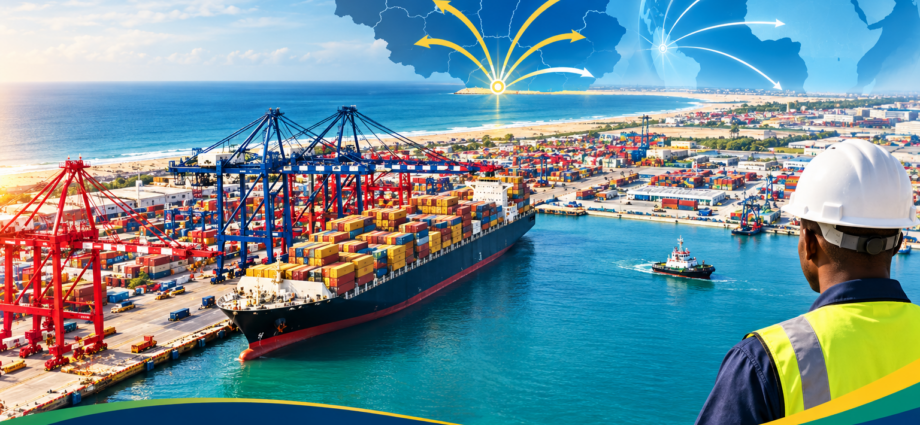
The Port of Cotonou is no longer just a gateway for Benin’s imports. Behind the headline figures of 2025 and the first half of 2026 lies a deliberate strategic shift: the port authority is actively diversifying its traffic sources, expanding transshipment and export operations, and repositioning the platform as a logistics hub for the Gulf of Guinea even as regional corridors face repeated shocks.
What the numbers reveal about a changing port
In 2025, the Port of Cotonou handled 14.7 million tonnes of cargo, up from 9.6 million tonnes in 2024 a 52% increase. Exports rose by 74.8%, while transshipment surged by 312.6%. The number of vessels calling at the port climbed from 725 to 841.
These figures gain greater significance when set against the regional backdrop. The Beninese corridor has faced significant disruptions, most notably the closure of the border between Benin and Niger. Yet port activity continued to grow. This suggests that Cotonou now has multiple growth engines and is no longer dependent on a single outlet.
The regional transit picture is shifting
The first clear lesson from this evolution is that the Port of Cotonou is working to broaden its regional market.
Niger, Burkina Faso and Mali remain strategic markets, but the strategy is no longer simply to wait for goods from the hinterland. The port is also developing redistribution flows, transshipment, exports and trade with other sub-regional markets.
The rise in transshipment is particularly telling. In 2025, this activity jumped by 312.6%. In the first half of 2026, it grew again to around 516,558 tonnes, compared with 204,928 tonnes in the same period of 2025 a 152.1% increase.
This dynamic means Cotonou is no longer content to be just an entry point for goods destined for Benin. It aims to become a platform for redistributing cargo to other destinations. That is a major strategic shift.
A port that withstands regional shocks
The performance of the Port of Cotonou also deserves analysis in light of the trade and diplomatic tensions that have affected West African corridors.
A significant share of hinterland trade was disrupted by tensions with Niger. Yet overall port traffic continued to rise. This resilience indicates that investments in infrastructure, equipment modernisation, digitalisation and logistics chain improvements are beginning to pay off.
The port authority has launched a broad transformation programme, including Terminal 5, expansion of the port basin, modernisation of quays and improved access roads. The stated goal is to increase handling capacity and accommodate larger vessels.
The African Development Bank is also supporting this transformation. Financing of around 60 billion CFA francs has been mobilised for Terminal 5, the centralised access and the Zongo parking area, with the aim of smoothing movements and boosting the platform’s competitiveness.
Cotonou bets on multiple corridors
This is arguably one of the most important elements of the transformation.
The port strategy is gradually multiplying outlets to reduce vulnerability linked to dependence on a single corridor. The Port of Cotonou enjoys a particularly favourable geographical position: it can serve the Beninese market, but also hinterland economies and part of the trade with Nigeria and other regional markets.
This diversification is becoming more important as international trade faces increasingly frequent disruptions: security crises, diplomatic tensions, border closures, rising logistics costs and supply chain reorganisation.
In this new environment, a high-performing port is no longer just one that handles a lot of cargo. It is one that can attract new flows, process them quickly, redistribute them and maintain activity despite regional shocks.
That is precisely where Cotonou is trying to reposition itself.
An engine for Benin’s economy
The importance of the Port of Cotonou goes far beyond quays and terminals. Its activity feeds an entire economic chain: road transport, handling, transit, warehousing, insurance, banking, customs, commerce, catering, maintenance, digital services and a multitude of related activities.
Every increase in port traffic can therefore have a knock-on effect across several sectors of the national economy.
The port is also an essential tool for the competitiveness of Beninese businesses. A more efficient port infrastructure helps reduce delays, improve operational predictability and facilitate access to international markets.
That is why the modernisation of the port should be seen not only as an investment in infrastructure, but as an investment in Benin’s productive and commercial capacity.
The modernisation programme launched several years ago represents more than 450 million euros of investment in the medium term, according to the Port of Cotonou.
Export growth and the role of the GDIZ
Another important development is the rise of Beninese exports.
In the first half of 2026, exports handled by the Port of Cotonou reached around 2.87 million tonnes, compared with 2.16 million a year earlier a 33.3% increase. This dynamic is linked in particular to higher industrial output and exports of Nigerian crude oil.
This shift is strategic for Benin. The more the country develops its industrial processing and export capacity, the more the port becomes an essential instrument of this new economy.
The development of the Glo-Djigbé Industrial Zone, rising production capacities and the search for new markets give the port an additional function: supporting Benin’s transition from an economy largely focused on re-export trade to one driven more by production and exports of processed goods.
A strategic advantage for Benin
The true success of the Port of Cotonou will therefore not be measured solely by the number of tonnes handled.
It will be measured by its ability to attract economic operators over the long term, secure supply chains, gain market share in the sub-region and become an essential platform for West African trade.
The first results are encouraging. The Container Port Performance Index by the World Bank and S&P Global Market Intelligence ranked Cotonou 303rd out of 403 ports in 2024, up from 402nd out of 405 ports in 2023 a jump of nearly 100 places in a single year.
Challenges remain: further improving corridor fluidity, reducing logistics costs, strengthening security, continuing digitalisation and winning back certain hinterland markets.
But one thing is now hard to deny: the Port of Cotonou is no longer simply defending its historical positions. It is seeking to conquer new ones.
Rising traffic, booming transshipment, growing exports and infrastructure investments are gradually redrawing the map of regional outlets.
For Benin, the challenge goes beyond the performance of a single port. It is about consolidating one of the main levers of its economy, attracting more regional trade and making Cotonou a platform capable of sustainably connecting Benin to the major commercial circuits of West Africa.
The Port of Cotonou is no longer content to watch goods pass by: it now seeks to become one of the crossing points that organise their movement across the region.
Comments are closed, but trackbacks and pingbacks are open.