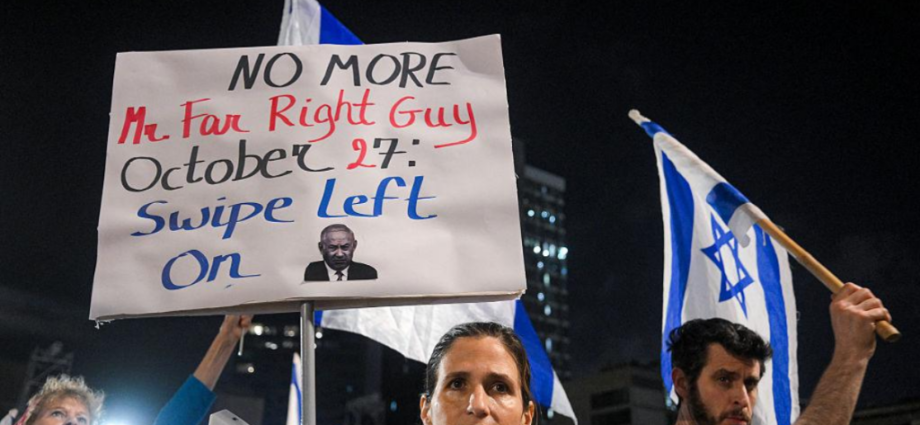
Israel’s latest parliamentary elections have delivered a fractured mandate that leaves Benjamin Netanyahu without the 61-seat majority needed to govern. With his bloc securing just 53 seats in the 120-member Knesset, the opposition holds 48 seats while Arab parties command 19—a result that sets the stage for a high-stakes political showdown.
No clear path to a stable government
Netanyahu’s Likud party remains the largest in the Knesset with 27 seats, but this falls short of the absolute majority required to form a government. His current coalition, which previously held 68 seats, has lost ground amid years of internal division and public discontent over security and governance.
The opposition, led by former military chief Gadi Eisenkot, holds 48 seats, while Arab parties—including the Joint List and Ra’am—have secured a historic 19. This fragmented landscape complicates coalition-building, as deep ideological divides make it difficult to secure cross-party support.
Gaza’s future hangs in the balance
Israel’s next government will face immediate challenges in Gaza, where reconstruction, security, and Palestinian governance remain unresolved. A Netanyahu-led coalition would likely continue hardline policies on Palestinian territories, while an opposition government might seek diplomatic adjustments—but sweeping policy shifts are unlikely.
The election outcome does not guarantee immediate relief for Palestinians, as the next government’s stance on Gaza and the West Bank will depend on the alliances that emerge in the Knesset.
Regional security risks take center stage
The election’s ripple effects extend beyond Israel’s borders, particularly regarding Iran and Lebanon. Israel’s longstanding tensions with Tehran—over nuclear programs, ballistic capabilities, and regional proxy conflicts—remain a top concern. A weakened government may struggle to craft a unified security strategy, though consensus on national security issues typically transcends political divides.
Lebanon’s Hezbollah poses another flashpoint, with any military escalation threatening to destabilize the region further. Meanwhile, Syria’s shifting dynamics continue to demand Israel’s attention at its northern frontier.
Diplomatic uncertainty looms for allies and foes
The United States will closely monitor Israel’s government formation, as military and strategic ties between the two nations remain vital. Differences over Gaza operations and regional de-escalation efforts could strain relations.
Arab states, including Egypt, Jordan, Saudi Arabia, and the UAE, will also watch developments cautiously. While normalization with Israel remains a strategic priority for some, progress depends on Israel’s ability to present a clear political roadmap—one that addresses Palestinian concerns and regional stability.
Three possible paths forward
The coming weeks will determine whether Netanyahu can cobble together a viable coalition, whether opposition forces unite to form an alternative government, or if Israel heads to a second election amid deadlock. Each scenario carries profound implications for Gaza, Iran, and Israel’s standing in the Middle East.
A Netanyahu victory would likely mean policy continuity, while a new government could introduce shifts in diplomacy—but neither guarantees a breakthrough on core conflicts. One thing is certain: Israel’s fractured election result has set the stage for prolonged political uncertainty with far-reaching consequences.
Comments are closed, but trackbacks and pingbacks are open.