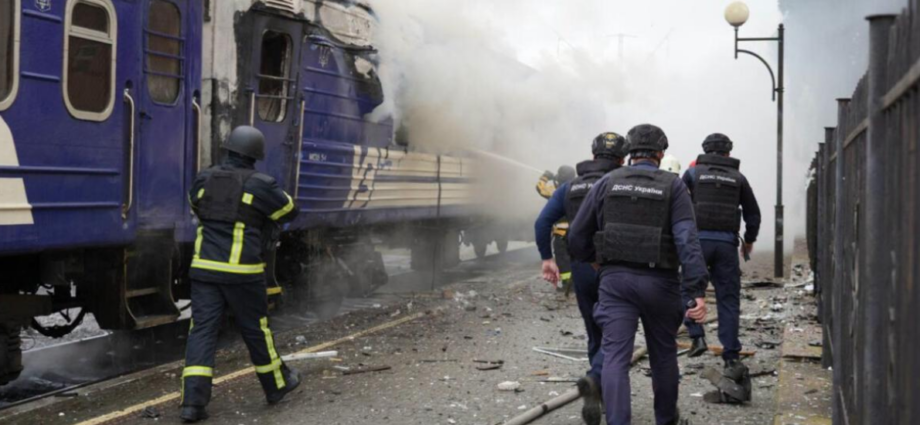
Ukraine’s intensifying drone campaign against Russian energy infrastructure reached a new peak overnight as a major oil refinery in Novokouïbychevsk was set ablaze, just hours after a deadly railway attack in Dnipro claimed at least 14 civilian lives.
Nighttime attack leaves Samara refinery in flames
The Novokouïbychevsk refinery—a key facility owned by Russian oil giant Rosneft—was struck by multiple drones between October 29 and 30. Witnesses reported massive explosions followed by towering plumes of black smoke visible for miles, with emergency crews battling to contain the blaze.
Regional authorities confirmed the attack but did not provide specific details on the extent of damage, though social media footage suggests substantial destruction to critical infrastructure. The refinery, capable of processing millions of tons of crude oil annually, plays a vital role in Russia’s aviation fuel production and energy exports.
Dnipro railway strike marks another civilian tragedy
Earlier that day, Russian drones targeted a busy railway station in Dnipro, central-eastern Ukraine, striking two passenger trains and killing at least 14 civilians. Authorities reported multiple injuries, including a critically wounded 11-year-old child. Rescue teams retrieved mangled train cars and scattered debris from the strike zone.
Ukrainian President Volodymyr Zelensky condemned the attack as a deliberate assault on civilians, urging international partners to escalate pressure on Moscow. European leaders, including European Council President António Costa, decried the escalation of strikes against civilian infrastructure.
Energy and transport infrastructure become battlegrounds
These dual strikes highlight the increasing militarization of civilian infrastructure in the nearly three-year conflict. Since Russia’s full-scale invasion in February 2022, Ukraine has relied on its railway network for military logistics, humanitarian aid, and daily commuter travel—making it a primary target for Russian forces. Conversely, Ukraine has systematically expanded drone operations deep into Russian territory, focusing on oil refineries and energy plants to cripple Moscow’s war economy.
The Novokouïbychevsk refinery, already struck multiple times this year, represents a high-value target due to its scale and strategic importance. Located hundreds of kilometers from the frontline, its destruction underscores Ukraine’s growing ability to project force beyond traditional combat zones.
Civilian toll rises as conflict intensifies
Amid the escalating strikes on both sides, ordinary citizens bear the brunt of the violence. Railway stations, once symbols of daily life, now serve as flashpoints for military confrontation. Similarly, industrial zones in Russia—previously considered safe from direct attacks—face growing vulnerability as drone technology advances.
With no diplomatic breakthrough in sight and both nations doubling down on long-range strikes, the prospect of peace remains distant. As the war enters its fourth year, the targeting of critical infrastructure—whether energy plants, rail hubs, or civilian transit points—continues to redefine the battlefield beyond the frontline.
Comments are closed, but trackbacks and pingbacks are open.