- Santé
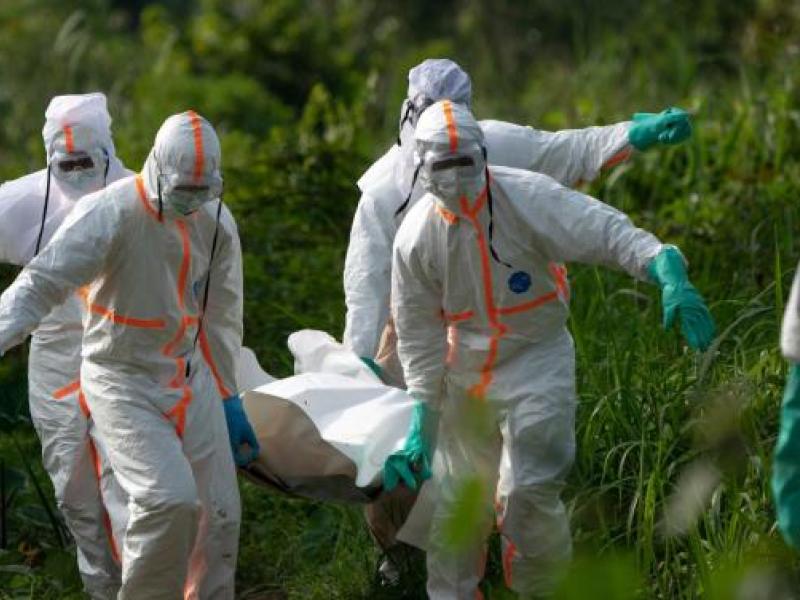
The Japanese government has announced an emergency grant of $3 million to the Democratic Republic of Congo to bolster the fight against the Ebola virus disease outbreak affecting the eastern provinces of North Kivu and South Kivu.
The Japanese Embassy in Kinshasa stated that the funding will be distributed among three international humanitarian organizations. The International Federation of Red Cross and Red Crescent Societies (IFRC) will receive $1.5 million, the World Food Programme (WFP) $1 million, and the United Nations Children’s Fund (UNICEF) $500,000.
This assistance is intended to support interventions in critical areas, including healthcare, access to clean water, sanitation, and hygiene. Japanese authorities believe this contribution will help curb the spread of the Ebola virus not only in the DRC but also in neighboring countries at risk of contamination.
“With this contribution, the Government of Japan reaffirms its commitment to the principle of human security,” the embassy statement read. This principle, according to diplomatic sources, was the primary motivation behind Tokyo’s positive response to requests from international agencies operating in the DRC.
Amid the numerous international financial support announcements since the resurgence of the Ebola epidemic, the Minister of Public Health, Hygiene and Social Welfare, Samuel Roger Kamba, called on partners to strengthen coordination and transparency in managing funds allocated for health interventions, particularly the Ebola response in the east of the country.
During a joint briefing on June 18, 2026, in Bunia, Ituri province, alongside the Minister of Communication and Media, Patrick Muyaya, the Health Minister emphasized the need for a common approach between the government and technical and financial partners. He justified this by noting that a large portion of these funds is managed directly by humanitarian organizations without passing through state channels. This situation, he explained, creates confusion among the public, who often believe that the money is under the direct control of the Congolese government.
On May 17, 2026, two days after the official declaration of the epidemic in the DRC, the World Health Organization (WHO) classified the Ebola outbreak caused by the Bundibugyo virus—which has spread from the DRC to Uganda—as a Public Health Emergency of International Concern (PHEIC).
According to the WHO, the epidemic has expanded significantly and its true scale may be underestimated. The situation is aggravated by high population mobility, fragile health systems, inadequate health infrastructure, and access difficulties to conflict-affected areas.
Adding to these challenges is the current absence of a licensed vaccine and specific treatment for the Bundibugyo virus. Despite this worrying context, Congolese authorities remain optimistic, drawing on the experience gained from the 16 previous Ebola outbreaks the country has managed to contain.
Comments are closed, but trackbacks and pingbacks are open.