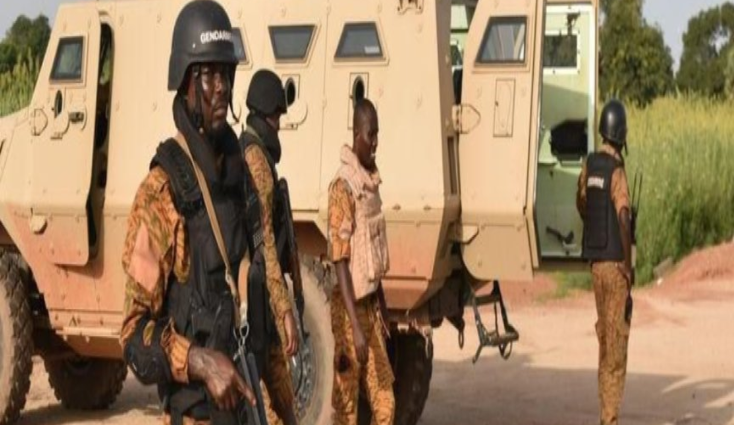
The Group for the Support of Islam and Muslims (JNIM), an Al-Qaeda affiliate operating in the Sahel, has claimed responsibility for two separate attacks against security forces in Burkina Faso. The incidents—one targeting a military armored vehicle near Fada N’Gourma and another in Bam province—highlight the ongoing security challenges facing the West African nation.
JNIM claims destruction of armored vehicle in eastern Burkina Faso
According to the group’s statement, a military armored vehicle was destroyed using an improvised explosive device near Fada N’Gourma in the country’s eastern region. This area serves as a critical transit point between major urban centers, making it a frequent target for insurgent activity.
Improvised explosive devices (IEDs) remain one of the most pervasive threats to military convoys and civilian traffic in conflict zones. These weapons can inflict severe damage even against heavily fortified vehicles, disrupting supply lines and complicating military operations.
The precise details of the attack, including casualties among military personnel, have yet to be independently verified. However, the claim underscores the persistent vulnerability of security forces in exposed regions.
Militiamen killed in Bam province amid rising jihadist threats
JNIM also asserted that it carried out an ambush in Bam province, resulting in the deaths of three Volontaires pour la défense de la patrie (VDP) militiamen. The group reported seizing automatic weapons during the operation.
The VDP, civilian volunteers mobilized to support Burkina Faso’s armed forces, have become frequent targets in the conflict. Their involvement in counterinsurgency efforts places them directly in the crosshairs of militant groups, exacerbating risks for rural communities.
While the group’s version of events remains unverified, the incident adds to concerns over the circulation of military-grade weapons in volatile areas. Such seizures can further destabilize local security dynamics and fuel cycles of retaliation.
Burkina Faso’s deepening security crisis
These attacks are part of a broader insurgency that has gripped Burkina Faso for years, with violence spreading across multiple provinces including the North, Center-North, and East. The conflict has led to widespread displacement, economic disruption, and the collapse of essential services.
Civilians face mounting risks, including restricted access to healthcare, education, and food supplies. Entire villages have been cut off from roads, while markets and agricultural activities struggle to function under the shadow of ongoing violence.
The crisis has pushed thousands into internal displacement, straining resources for aid and shelter. Restoring stability will require more than military action—it demands reinforced intelligence networks, civilian protection, and the restoration of government services in affected zones.
Government under pressure to secure vulnerable regions
The latest claims by JNIM place renewed emphasis on the challenges facing Burkina Faso’s security apparatus. Protecting critical infrastructure, such as highways and outposts, remains a top priority to prevent further militant incursions.
For authorities, the dual objectives are clear: contain insurgent activity while rebuilding public trust in state institutions. For communities, the immediate focus is on reclaiming a sense of safety and resuming normal life amid the uncertainty.
Until these claims are officially corroborated, the situation underscores the persistent and evolving threat posed by jihadist groups in Burkina Faso. The path to lasting peace remains fraught with obstacles, demanding coordinated and sustained efforts from all stakeholders.
Comments are closed, but trackbacks and pingbacks are open.