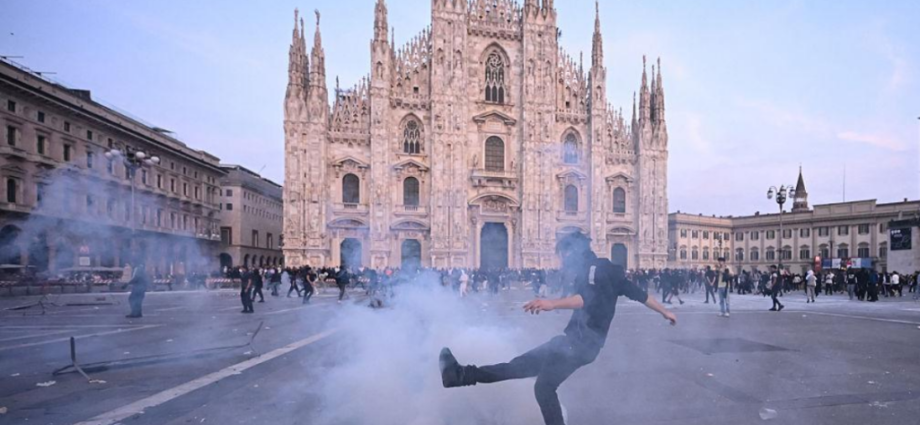
Rome has taken decisive action against escalating urban unrest after a surge of violent clashes, looting, and property damage rocked cities across northern Italy. The Italian government approved a sweeping new security decree on October 20, introducing stricter penalties, financial accountability for parents, and expanded surveillance measures in a bid to restore public order.
Government targets collective violence with stricter penalties
The cabinet approved legislation introducing severe penalties for participants in violent group actions. Under the new rules, individuals involved in disturbances with at least four others face up to five years in prison and fines of up to €20,000 if they pose a public safety risk. Penalties escalate for those concealing their identities or when injuries occur.
Organizers of violent gatherings are also directly targeted. The justice ministry has framed the promotion of such groups—whether through physical meetings or digital platforms—as punishable by four to twelve years behind bars. The move signals a broader crackdown not only on those committing acts of violence but also on those facilitating or inciting them.
Families face financial responsibility for juvenile offenders
Young offenders are not exempt from accountability. The decree lowers the age threshold for prosecution to 14, enabling authorities to detain minors aged 14 to 17 if deemed dangerous. Additionally, parents may be held financially liable for damages caused by their children under 18, with authorities empowered to pursue compensation for vandalism and theft.
While the government frames these measures as tools to deter repeat offenses, the expansion of parental responsibility raises immediate legal and ethical questions about the balance between punishment and family rights.
Milan becomes test ground for security crackdown
The northern city of Milan, an epicenter of recent clashes, has been selected as the focal point of a heightened security operation. Authorities have deployed 500 additional military personnel under the nationwide Strade Sicure initiative to patrol high-risk areas and assist local police in maintaining order.
Though the unrest began with property destruction and confrontations with police, the underlying tensions extend beyond vandalism. Protesters cite rising living costs, energy prices, housing shortages, and strained public services as key grievances. The government insists economic hardship cannot excuse violence, while critics argue a purely punitive approach fails to address the deeper roots of public discontent.
Balancing security and civil liberties under scrutiny
The new decree is the latest in a series of security-focused laws enacted since Italy’s current leadership took office in 2022. Critics, including police unions and civil rights advocates, warn the measures risk disproportionate punishment, expanded preventive detention, and unjustified restrictions on protest rights. Debates have already begun over the proportionality of penalties and the potential for abuse in the application of these laws.
While some proposed measures—such as granting military officers expanded policing powers—were reportedly blocked due to constitutional concerns, the decree entered into force immediately. However, it remains subject to parliamentary review and must be formally ratified as law within 60 days to avoid lapsing.
Ongoing concerns over effectiveness and proportionality
As Italy implements its latest security strategy, the challenge ahead is twofold: restoring immediate public order without eroding democratic freedoms. The coming weeks will determine whether these tough new tactics succeed in curbing violence or merely escalate tensions without addressing the social and economic pressures fueling unrest across the country.
Comments are closed, but trackbacks and pingbacks are open.