How the JNIM is redrawing the power map in Mali
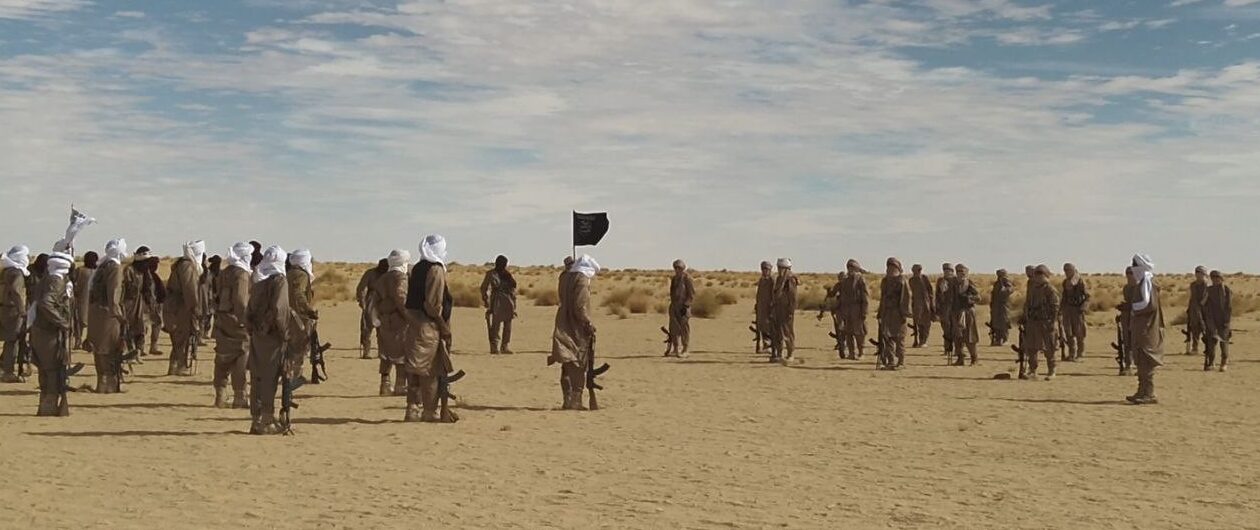
The vast stretches of northern and central Mali are no longer simply battlegrounds for sporadic assaults. For years, these regions have been trapped in a relentless cycle of violence and civilian exhaustion. Recent offensives by the Group for the Support of Islam and Muslims (JNIM) and the Azawad Liberation Front (FLA)—targeting military posts, supply convoys, and critical road networks—signal a decisive shift in insurgent strategy. These groups are no longer content with capturing towns or staging high-profile attacks. Their goal is more ambitious: to systematically erode state control, pushing the military junta into an increasingly precarious position around Bamako.
The transformation goes deeper than tactics. It redefines the very nature of the conflict. The struggle is no longer just about holding territory or securing military installations. It is about access—who can still move people, goods, fuel, or administrative personnel across the country without constant armed escort. Mobility itself has become the new battleground.
Targeting the lifelines of the state
Over recent months, attacks on major roads and military convoys have surged. In several regions, even basic administrative travel now requires armed protection, severely limiting the state’s ability to function beyond its urban strongholds. The JNIM appears to have recognized a critical truth: in a nation already weakened by institutional collapse, economic stagnation, and chronic insecurity, attrition can be more effective than open confrontation.
This strategy offers multiple advantages. It disperses military resources, inflates security budgets, and sustains a climate of perpetual fear. Above all, it fosters collective fatigue—among soldiers, civilians, and institutions alike. In rural areas, the absence of stable administration is becoming as dangerous as the presence of armed groups. Schools close, health services vanish, and justice systems retreat into the distance. The result is not just territorial loss, but the erosion of state legitimacy itself.
Why military force alone cannot secure Mali
The Malian military leadership has staked its political legitimacy on regaining control. Since the successive coups, the exit of French forces, and the rise of Russian military cooperation have all been framed as acts of reclaiming sovereignty. Yet sovereignty is not measured solely by the capacity to wage war. It is measured by the ability to maintain territorial, economic, and administrative continuity.
Paradoxically, the intensification of military operations has not led to lasting stabilization. In many rural zones, military presence coexists with deepening fragmentation—where roads, schools, and clinics remain absent, and economic life stagnates. The state’s footprint is often reduced to sporadic, heavily armed patrols. When public services disappear, communities turn to informal or parallel systems for protection, justice, and survival. These spaces of abandonment become fertile ground for armed groups, not because they create the conditions of instability, but because they know how to exploit them.
A regional crisis with local roots
The Malian conflict is no longer confined to Mali. Across the Sahel, armed actors, local alliances, and illicit economic networks are rapidly recomposing. The porous borders between Mali, Burkina Faso, and Niger allow insurgent groups to move freely. Yet, despite forming a shared political-military alliance, these countries have struggled to coordinate effectively. The recent JNIM-FLA offensive exposed the limits of regional solidarity—and the isolation of Bamako’s junta, which now relies almost entirely on the Africa Corps for support.
This asymmetry benefits groups that can adapt quickly. The JNIM thrives on operational flexibility, deep local roots in certain communities, and its integration into informal economic networks. It does not seek to permanently control all territories it traverses. Instead, it imposes a high security cost on the state—one that is economic, political, and social. The Sahel conflict is becoming a war of endurance, where the goal is not total conquest, but the permanent disruption of normal state functions.
Beyond counterterrorism: understanding the real crisis
A purely military reading of the Sahel obscures the deeper realities. Frustrations over land disputes, communal tensions, state neglect, and structural poverty are not created by insurgents—but they are skillfully exploited. The central challenge is not just defeating armed groups, but rebuilding state legitimacy in areas where the government appears intermittently, often only in the form of military patrols.
The future of Mali will likely be decided not in a single decisive battle, but in the capacity—or failure—to restore a stable public presence beyond security operations. A war of attrition doesn’t just destroy military positions—it wears down roads, economies, administrations, and social bonds. Ultimately, it erodes the very idea of a governed territory.