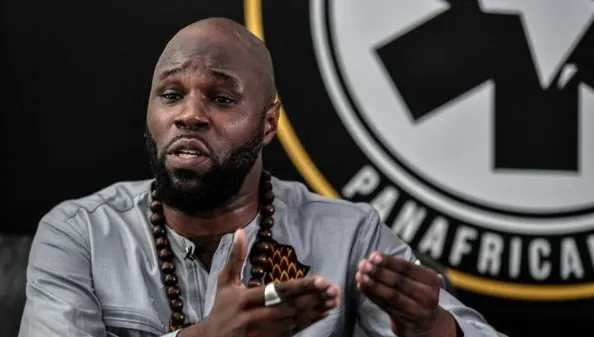
In the landscape of Francophone African digital influence, few figures spark as much debate as Kémi Séba. The 42-year-old Béninois activist and online personality, known for his sharply anti-Western rhetoric, has become a central figure in the discourse surrounding Russian influence on the continent. His recent loss of French citizenship—formalized through a decree published in the French Journal officiel—has only intensified the scrutiny around his activities and allegiances.
Described by some as a pan-African revolutionary and by others as a propaganda conduit, Séba wields significant clout across social media platforms. His Facebook following exceeds one million, while his YouTube videos routinely amass hundreds of thousands of views. His recent online post—“No more French nationality—glory to God. I am free from this burden”—underscored the symbolic weight of his exclusion from France, a move tied to his 2006 conviction for racial incitement and leadership of the dissolved supremacist group Tribu KA.
From online presence to geopolitical amplifier
Séba’s rise to prominence began over a decade ago, when Russian authorities identified him as a valuable asset in their strategy to expand influence in Africa. According to reports from Jeune Afrique, Yevgeny Prigozhin—former head of the Wagner Group—directly funded and directed Séba’s activism as part of a broader effort to destabilize French interests on the continent through anti-colonial and anti-French narratives.
His organization, Urgence Panafricaines, has hosted high-profile conferences across multiple continents, from Brazil to Iran, with a particular focus on countries aligned with Moscow. Séba himself was a notable presence at the Russia-Africa Summit in Saint Petersburg, further cementing his role as a bridge between African grassroots movements and Kremlin-backed initiatives.
Targeting symbols of French influence
Séba’s rhetoric consistently targets what he terms the Françafrique nexus and the CFA franc, labeling the latter a colonial currency. While denying direct subservience to Russian interests, he has publicly endorsed military juntas in Niger, Mali, and Burkina Faso—nations that have distanced themselves from Paris in favor of partnerships with Moscow. “Other countries will join this movement—we’re working hard on it,” he declared in recent months, signaling his alignment with a broader geopolitical shift.
French authorities have taken note. In 2023, the chair of the National Assembly’s Defense Committee accused Séba of serving as a vector for Russian propaganda, amplifying narratives designed to erode trust in France across Francophone Africa.
Comments are closed, but trackbacks and pingbacks are open.