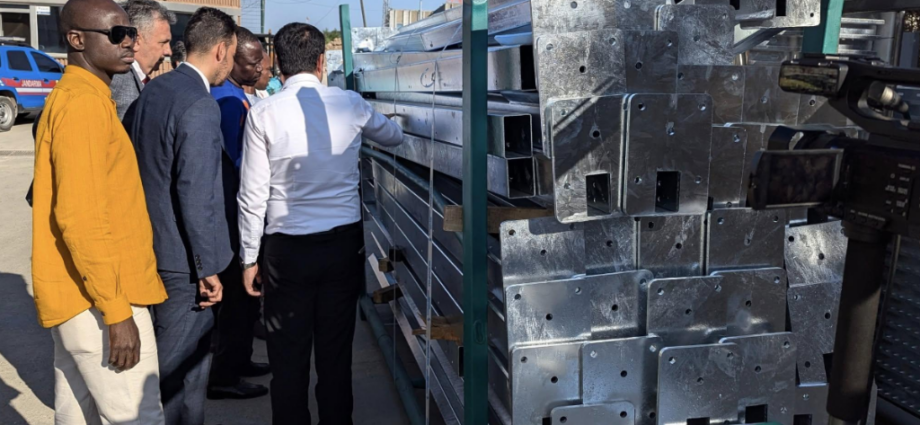
The construction of a new 15,000-seat stadium in Koudougou, Burkina Faso, has been confirmed as part of the presidential initiative to boost sports infrastructure. While the project’s timeline and key players—including Turkish firm Integral Sport—have been disclosed, critical financial details remain undisclosed, leaving stakeholders and the public with unanswered questions.
Inside the Koudougou stadium project: what’s known and what’s missing
The stadium’s inclusion in Burkina Faso’s Initiative for the Rise and Promotion of Sports Elite (IP-RELIS) signals its importance in the country’s sports development strategy. Designed to accommodate 15,000 spectators, the facility aims to enhance local sports facilities and support youth athletic training.
A high-level delegation visited the proposed construction site in October 2026, marking a milestone in the project’s preparatory phase. However, despite these advancements, key financial aspects such as the total cost, funding sources, and role of foreign partners remain undisclosed in public records.
Who is building the stadium—and who is paying?
Turkish construction firm Integral Sport has been appointed as the lead contractor for the project, collaborating with Burkina Faso’s Faso Mêbo Agency. This same enterprise is also involved in the construction of the 15,000-seat Léguéma Stadium in Bobo-Dioulasso, further emphasizing its role in the country’s sports infrastructure expansion.
While Integral Sport’s involvement is confirmed, its financial contribution—or lack thereof—has not been clarified. Is the company solely responsible for construction costs, or is it executing a contract financed by public funds, private investment, or international partnerships? Without accessible contracts or official financial statements, these details remain speculative.
Faso Mêbo and the state’s role: operational involvement vs. financial responsibility
The Faso Mêbo Agency, under the Ministry of Sports, is slated to oversee the stadium’s development. This public entity’s operational role does not, however, confirm its financial stake in the project. Will Faso Mêbo contribute through material resources, human capital, direct funding, or a blended approach?
Similarly, while the stadium falls under a presidential initiative, this does not automatically imply that the national budget will fully cover its costs. Verifiable financial commitments, budgetary allocations, or signed agreements are necessary to determine the extent of state involvement.
The urgency of financial transparency
Public infrastructure projects demand accountability, especially when taxpayer funds or foreign investments are involved. Clarity on the following points would significantly improve transparency:
- The estimated total cost of the stadium
- The primary source(s) of funding—whether domestic, international, or a combination
- The terms of the construction contract, including payment milestones and penalties
- The role and contributions of Integral Sport, Faso Mêbo, and any external partners
- The project timeline, from groundbreaking to completion
If foreign investors or lenders are part of the funding equation, their identities and engagement terms should also be disclosed. Conversely, if the project relies entirely on public resources, the specific budget lines and disbursement mechanisms must be outlined.
What happens next? Calls for official clarity
The responsibility to provide answers lies with the key stakeholders: the Ministry of Sports, the IP-RELIS oversight committee, Faso Mêbo Agency, and Integral Sport. Their formal statements should address:
- Whether a construction contract has been finalized and its financial terms
- The existence of any financing agreements with foreign entities
- The project’s compliance with national procurement regulations
These disclosures are not merely bureaucratic formalities—they are essential for public trust. Citizens have a right to understand the financial commitments tied to a project that directly impacts their community and national resources.
Beyond the announcement: the real measure of the project’s success
A stadium’s worth extends beyond its seating capacity or architectural design. Its true value is determined by the transparency of its funding, efficiency of its execution, and long-term benefits to the region.
As of now, the financing structure of Koudougou’s stadium remains an open question. Will it be a fully national initiative, a public-private partnership, or a blend of domestic and international funding? Until official documents provide definitive answers, the public’s understanding of this landmark project will remain incomplete.
Comments are closed, but trackbacks and pingbacks are open.