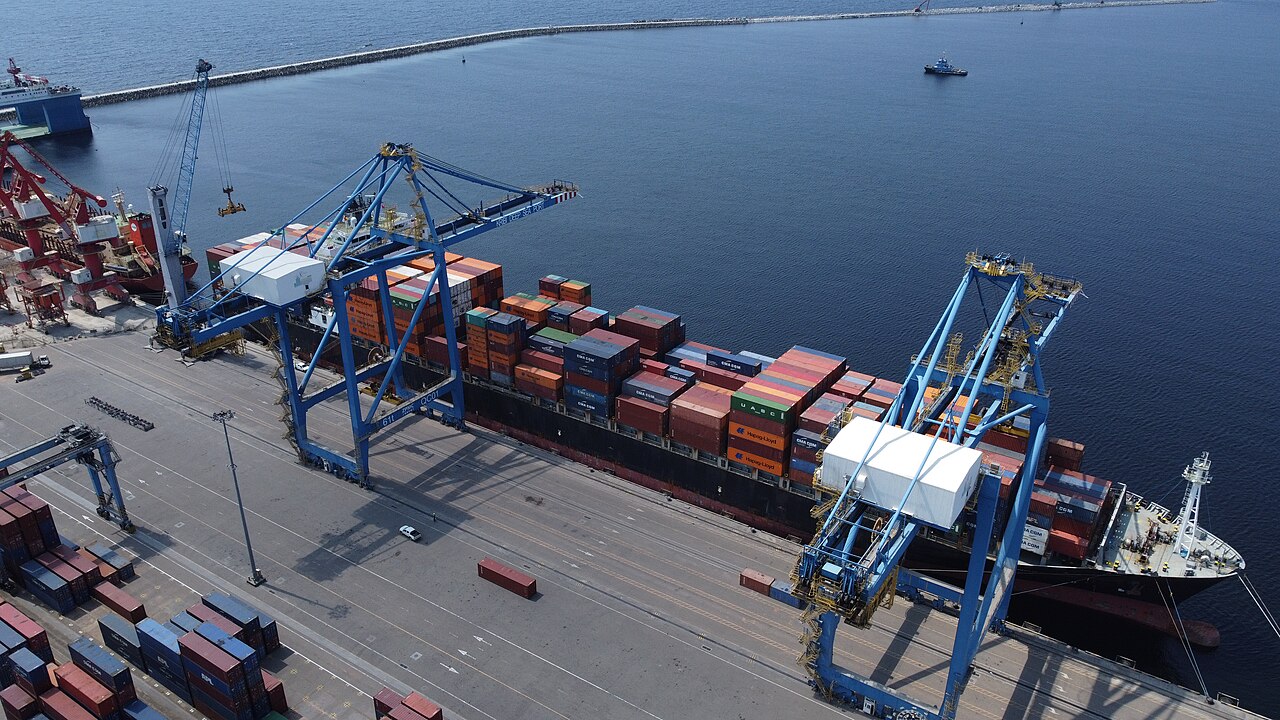
The completion of Kribi’s deep-water port fifteen years ago wasn’t just an infrastructural milestone—it ignited a national debate about Cameroon’s economic future. Once a quiet fishing village, Mboro now anchors one of Central Africa’s most strategic maritime hubs, reshaping livelihoods, trade corridors, and public expectations about what comes next.
From sandy tracks to sea lanes: the physical and social upheaval
In 2009, the coastal stretch south of Kribi was a maze of narrow earth tracks winding between thatched huts and fishing boats. Gu Gaobai, now a senior executive with China Harbour Engineering Company (CHEC) in Cameroon, recalls the site visit: “We crawled along basic dirt roads until we reached a shoreline marked only by sand and scattered reefs. There was nothing but a dream—until we began to build.”
The port’s arrival triggered a transformation visible in everyday routines. Roads once closed during rain now accommodate six-lane arterials with pedestrian walkways and street lighting that banishes nighttime gloom. Residents like Jean-Kalvin Assembe, a 50-year-old local trader, say the change has redefined daily life: “I feel alive in this town; the port has brought customers to my small shop and dignity to our community.”
Long queues of container trucks now stretch toward the docks, a testament to accelerated logistics. Veteran driver Yaya Aboubakar, who has driven across four Central African countries, notes the difference: “Before, hauling goods through shallows and sandbanks wasted days. Kribi shortened timelines and streamlined paperwork—our routes now feel like modern highways.”
The industrial ripple: ports, profits, and public perception
Patrick Mpila Ayissi, infrastructure lead at Kribi Port Industrial Zone, tracks the zone’s metamorphosis. “From a 455-hectare logistics yard in 2018, we now oversee 4,000 hectares earmarked for heavy industry,” he reports. Investors have committed nearly $700 million, securing 93 land-use permits and launching 18 operational firms within seven years.
Projections suggest $900 million more in fresh capital and up to 150,000 jobs—direct and indirect—over the next fifteen years. Volumes confirm expansion: container throughput quadrupled beyond 555,000 TEUs in 2025, while total cargo tonnage reached 12.7 million in 2024, feeding supply chains into Gabon, Chad, Congo-Brazzaville, and Equatorial Guinea.
Skills, wages, and upward mobility behind the docks
The port’s most human dividend is the skill set it has seeded across Kribi. In 2013, welder Ngatugirius Ndenya left a workshop in Yaoundé for a CHEC apprentice program. “Back then I could barely read blueprints,” he admits. “Today I handle end-to-end welding, training others in my crew.” Similar stories abound: workers without technical diplomas now operate cranes and manage logistics flows.
Earnings have climbed in tandem. Armand Guehoada joined CHEC a decade ago earning 100,000 Central African francs per month. “I arrived with hand-to-mouth handouts,” he says. “Today I own three vehicles and fund my family’s future.” The company claims to have trained hundreds of Cameroonians in large-scale port engineering, many now applying those skills in the adjacent industrial park.
What the critics are saying—and what’s still on the drawing board
Public debate has intensified. Some economists argue that job gains remain concentrated in maritime services while local fishermen lose access to once-shared waters. Others point to uneven infrastructure spillovers in surrounding villages. Questions also swirl around long-term financing and the port’s resilience against rising sea levels and global shipping volatility.
Still, Patrick Mpila Ayissi stresses continuity: “Kribi is a living emblem of Cameroon–China cooperation, built on concessional financing designed to endure. It has evolved from a single dock to a multi-modal gateway capable of docking the largest vessels on the Atlantic coast.”
Patrice Melom, CEO of Kribi Port Authority, frames the next chapter: “Our task is clear—leverage this infrastructure to anchor sustainable national prosperity and deeper regional integration. The blueprint exists; implementation will define Cameroon’s next decade.”
Comments are closed, but trackbacks and pingbacks are open.