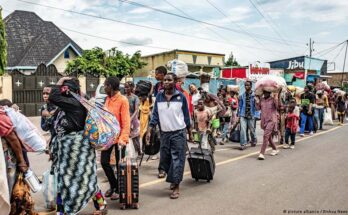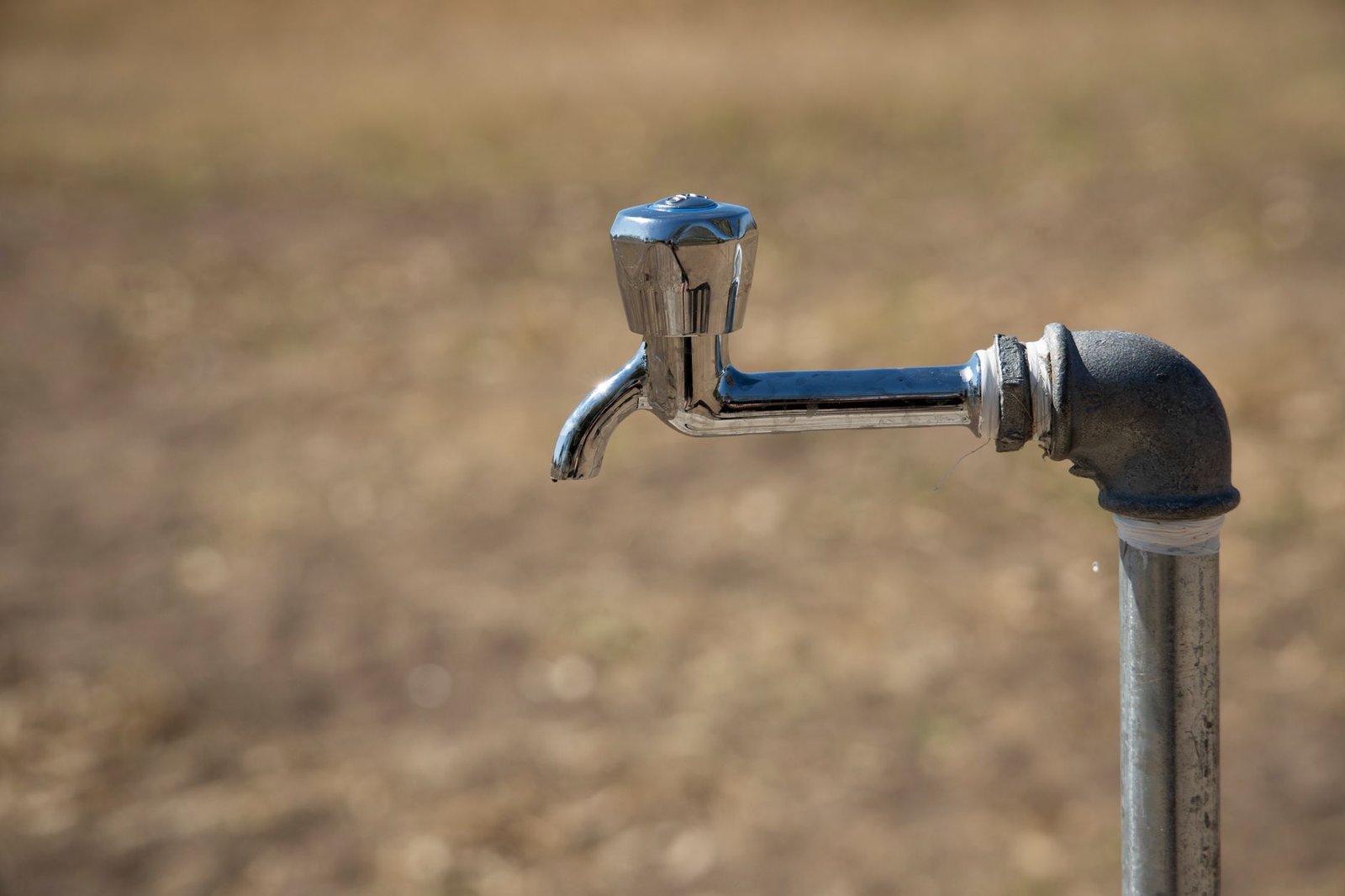
Libreville is grappling with a critical water shortage that has forced authorities to declare a state of hydric emergency across the capital and its outskirts. Residents endure days without running water, while long queues form around the few remaining distribution points. The skyrocketing cost of water resold in plastic containers—often compared to the value of a 10,000-franc CFA note—reflects the mounting frustration of a population enduring a crisis that has become the norm.
Two intertwined factors explain the severity of this situation. First, an unusually weak rainy season has drastically reduced water levels in reservoirs and intake points that supply the greater Libreville area. Second, the aging infrastructure—neglected for decades—suffers from high leakage rates in pipelines and underperforming treatment plants. The result is a brittle system unable to withstand even minor climate shocks.
The crumbling network threatens Gabon’s water sovereignty
The water crisis in Libreville exposes the flaws in Gabon’s approach to managing essential services. For years, the Société d’énergie et d’eau du Gabon (SEEG) handled distribution, but repeated contract disruptions and government takeovers have left the sector without a stable investment strategy. With the capital’s population—including its outskirts—exceeding 700,000, demand has outpaced production capacity. Today, even minor droughts trigger water rationing in the city’s most remote neighborhoods.
The political transition following the August 2023 regime change has placed this issue at the top of the national agenda. The government faces a narrow window to prove its ability to deliver tangible results. The declared hydric emergency is a first step, enabling rapid mobilization of public funds, equipment requisition, and cross-ministry coordination. However, these measures will only yield lasting improvements if paired with a credible multi-year investment plan.
Social unrest in Libreville tests the transition’s resolve
On the ground, residents are improvising solutions. Government-run water trucks, sporadic deliveries at district town halls, private boreholes, and resale networks form a fragmented response to the crisis. Businesses, hotels, and hospitals also suffer operational disruptions, with ripple effects on local economies. In healthcare facilities, water shortages complicate hygiene standards and heighten fears of waterborne disease outbreaks.
Authorities are touting short-term fixes: expediting repairs at treatment plants, importing pumping equipment, and tapping into underground reserves. Yet the financial burden of this transition looms large. Multilateral lenders, including the African Development Bank and the World Bank, have historically backed water projects in Greater Libreville. Their renewed involvement will depend on clear governance reforms and a defined role for the legacy operator.
A climate warning for Gabon and beyond
Gabon’s water crisis mirrors similar challenges in Central and West African capitals, where urban populations face recurring water insecurity. Cities like Kinshasa, Brazzaville, Douala, and Abidjan battle persistent shortages, driven by rapid population growth, underinvestment, and erratic rainfall. For Gabon—a nation once considered water-rich due to its dense rainforests—the current crisis is a stark reality check.
Resolving the shortage will require three key actions: upgrading existing infrastructure, diversifying water sources, and overhauling the institutional framework governing public water services. The political calendar of the transition demands swift execution, as lingering discontent could sway upcoming elections. Ultimately, the crisis underscores how climate variability and decades of neglect have exposed the fragility of Libreville’s water system.