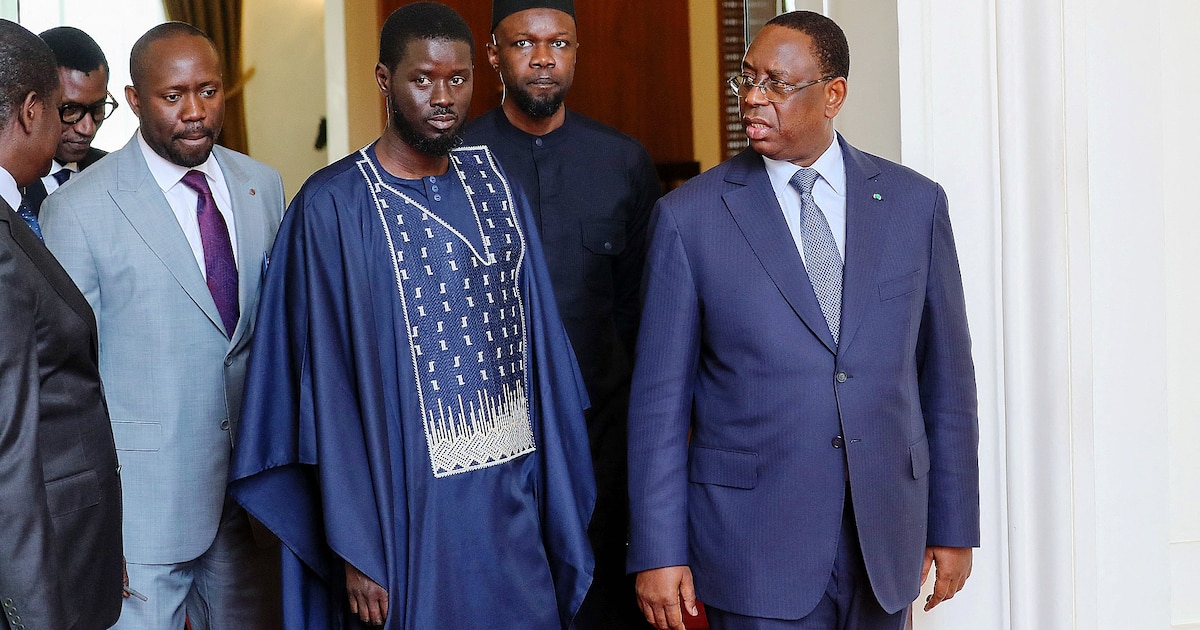
The political landscape in Senegal is once again thrown into turmoil as former President Macky Sall prepares to land at Yoff Military Airport in Dakar this Friday, marking his first public appearance in the country since his electoral defeat in 2024. The announcement of his visit has ignited fierce debates, reigniting deep-seated grievances tied to the harsh crackdowns of his administration.
The timing of his trip is particularly sensitive. Just weeks before the 2024 presidential elections, Bassirou Diomaye Faye, now President of Senegal, was imprisoned alongside hundreds of members of his party, Pastef, including prominent figures like Ousmane Sonko. Among those detained was Aly Coly, who recalls the ordeal of being jailed with seven other family members—including his wife and infant son—simply for wearing the colors of the opposition party.
Unresolved wounds and lingering resentment
The scars left by Macky Sall‘s presidency remain fresh in the collective memory of many Senegalese. Over 1,000 political prisoners were detained during his tenure, with at least 65 fatalities recorded in protests between 2021 and 2024. Critics argue that the current government has yet to address these injustices, leaving families of victims and former detainees in a state of unresolved anger.
Aly Coly voices the frustration of many: “They even locked up my wife and our three-month-old baby. Now, we see the man who orchestrated this chaos welcomed back with open arms. How can we accept this? It’s as if the old system is making a comeback—and we’re not blind to it.”
Macky Sall‘s UN ambitions: a controversial move
Beyond domestic politics, Macky Sall‘s visit carries international implications. In a statement, he confirmed that his brief trip is tied to his candidacy for Secretary-General of the United Nations, a role he has openly pursued since addressing the UN General Assembly in April. His campaign positions him as a champion of multilateralism and neutrality, yet his campaign has so far failed to secure backing from the African Union or his own government.
The prospect of a former leader accused of human rights violations—including deaths during protests—leading the world’s most prominent human rights institution has sparked outrage. Aly Coly questions the logic: “The UN’s purpose is to defend human rights, isn’t it? How can someone responsible for 60 deaths as president head this institution?”
A double-edged sword for Bassirou Diomaye Faye
For President Bassirou Diomaye Faye, the meeting with his predecessor could serve as a strategic move. His relationship with Ousmane Sonko, the influential Speaker of the National Assembly and former mentor, has deteriorated in recent months. Sonko’s faction holds significant power and could undermine Faye’s agenda, making Macky Sall a potential ally in navigating political turbulence.
Political analyst Maurice Soundieck Dione suggests that the encounter reflects a pragmatic shift: “For Diomaye Faye, aligning with his predecessor could be a necessary step in a volatile political climate. But it also risks alienating his base, who elected him to break from the past.”
From promises of change to accusations of betrayal
Faye’s presidency was built on promises to dismantle the corrupt systems of the past. However, recent controversial appointments have led many supporters to accuse him of backsliding. The cultural taboo of betraying a mentor—especially one as influential as Sonko—adds another layer of complexity to the situation.
Maurice Soundieck Dione notes: “The perception that Diomaye is betraying Sonko is deeply unsettling in Senegalese culture. It fuels doubts about his commitment to his original ideals.”
The question remains: Will Friday’s meeting strengthen Bassirou Diomaye Faye’s position or further isolate him from his supporters? One thing is certain—the return of Macky Sall has once again exposed the fractures in Senegal’s political fabric.
Comments are closed, but trackbacks and pingbacks are open.