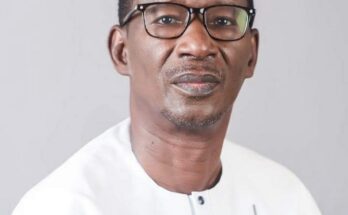
In Mali, the detention of pro-democracy advocate Ibrahima Tamega has spotlighted the transitional government’s growing intolerance toward dissent, particularly when it targets the country’s deepening ties with Russia. The activist, known for his calls to restore constitutional order, was taken into custody on May 23 in Bamako’s third arrondissement and held at a local police station. Authorities allege he was involved in painting anti-Moscow graffiti across the capital, a claim that has drawn sharp scrutiny from his supporters.
Over a week since his arrest, Tamega remains in detention without formal charges. Prosecutors in Bamako’s second district, responsible for reviewing his case, have yet to decide whether to release him or proceed with legal action. Under Malian law, police may hold suspects for up to 48 hours, a period that can be extended by another 48 hours with judicial approval. Tamega’s prolonged detention, however, exceeds these limits with no transparent justification, raising concerns over the legality of his confinement.
Unlawful detention raises legal and ethical concerns
Malian criminal procedure mandates strict timeframes for holding detainees before judicial review. Any extension without clear procedural grounds risks violating constitutional protections for the accused. In Tamega’s case, authorities have not disclosed formal charges, nor provided his legal team or family with access to case details. This lack of transparency mirrors patterns observed since military leaders assumed power in 2020 and 2021, with critics—including activists, judges, and politicians—routinely facing detentions later deemed irregular by human rights groups. The recent ban on political parties has further narrowed public dissent.
Anti-Russian graffiti signals shifting dissent in Bamako
The recent appearance of anti-Russia graffiti in Bamako marks a subtle but significant shift in the city’s political climate. Since French counterterrorism forces and the UN’s MINUSMA mission withdrew, Mali’s transitional government, led by General Assimi Goïta, has increasingly leaned on Moscow for security support. The deployment of Russian paramilitary groups—first Wagner and now Africa Corps—has expanded alongside Malian armed forces in the fight against jihadist and separatist threats.
While international NGOs have documented alleged abuses by Russian-linked fighters, public opposition to Moscow’s role remains rare and risky in Bamako. The graffiti, though minor in scale, reflects a rare visible challenge to the official narrative, which frames the Russian alliance as a cornerstone of Mali’s regained sovereignty.
Tamega’s case highlights shrinking civic freedoms
Tamega’s profile amplifies the political stakes of his detention. A vocal advocate for credible elections and a swift return to constitutional rule, he is part of a broader network of civil society actors pushing the junta to honor its transition commitments. His arrest follows a string of detentions, house arrests, and forced exiles targeting opposition figures in recent months.
The handling of Tamega’s case will serve as a litmus test for Mali’s political trajectory, particularly for Western diplomats still operating in Bamako amid strained relations. The Economic Community of West African States (ECOWAS)—which Mali left alongside Burkina Faso and Niger to form the Alliance of Sahel States—is also monitoring public freedoms in the region. Whether authorities formally charge Tamega or release him quietly, as seen in past cases, remains uncertain. Yet the mere length of his detention sends a clear message: public criticism of the Russian-Malian partnership will not be tolerated.