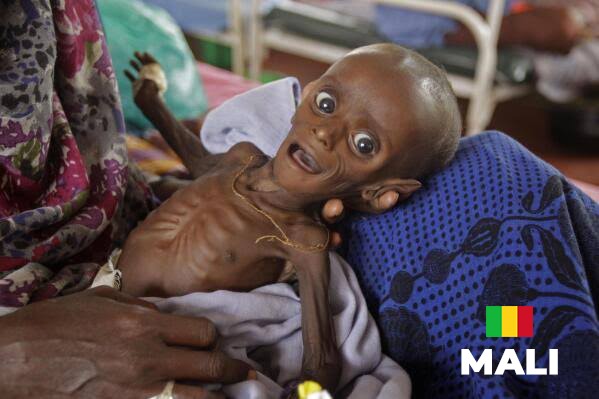
Mali’s hunger crisis is no longer a silent emergency. With the World Food Programme warning of a $73.6 million funding shortfall to keep operations running until February 2027, the announcement has triggered reactions across the humanitarian sector and beyond. The figures paint a stark picture: millions of Malians are already trapped between poverty and acute food insecurity, and the debate now is whether the world will respond before the situation deteriorates further.
Funding gap sparks concern as the clock ticks toward 2027
The arithmetic is simple but alarming. The World Food Programme estimates it needs $81.2 million to sustain its interventions in Mali until February 2027. Only $7.6 million is currently available. That leaves a gap of $73.6 million — a shortfall that could force a further reduction in food aid and, eventually, the suspension of humanitarian flights starting in January 2027.
Behind these amounts lie millions of lives. According to the Food and Agriculture Organization, about 1.56 million Malians faced acute food insecurity between June and August 2026 — classified as phase 3 or higher under the Cadre Harmonisé, meaning they require urgent action. Nearly 57,000 people were in phase 4, an emergency situation.
This is not a new phenomenon. FAO data show that the number of people in acute food insecurity during the lean season rose from about 1.52 million in 2025 to 1.56 million in 2026. The increase may seem small in absolute terms, but it comes in a country already battling deep poverty and rapid population growth.
Nearly one in two Malians lives below the national poverty line
Poverty is another dimension of the crisis. World Bank data show that 45.5% of Mali’s population lived below the national poverty line in 2021, up from 42.1% in 2018. That translates to 9.7 million poor people — about 1.4 million more than in 2018.
It is important to distinguish this from the international extreme poverty measure. Using the $3-a-day international poverty line (2021 purchasing power parity), the World Bank estimates that 36.1% of Malians are affected. The two indicators should not be directly compared, but they point in the same direction: a large share of the population has very little cushion against shocks.
Humanitarian aid reaches only a fraction of those in need
One of the most telling gaps is between needs and assistance actually delivered. A World Food Programme assessment in June 2026 found that 40% of households needed humanitarian aid. In the three months before the survey, only 4% had received any.
In other words, the problem is not just how many people are poor or hungry — it is also whether the humanitarian system can reach them. Regions such as Ménaka, Gao, Tombouctou, Mopti and Ségou are among the worst affected, where conflict, displacement, access constraints and disruptions to farming and trade deepen existing vulnerabilities.
A crisis that goes beyond food
Poverty and food insecurity reinforce each other. The World Bank notes that poverty is especially high in rural areas, where families depend heavily on rain-fed agriculture. In a 2025 analysis, the institution estimated that national poverty has hovered around 45% for a long period, with climate shocks and seasonality making things worse during the lean season.
Displacement adds another layer. The World Food Programme reports more than 290,000 refugees and over 400,000 internally displaced people in Mali — groups particularly exposed to losing their livelihoods and becoming dependent on aid.
Demographic pressure complicates the equation further. Mali’s population was estimated at 25.2 million in 2025, growing at nearly 2.9% per year, according to the World Bank.
The risk of another setback
The World Food Programme’s funding shortfall comes at a time when needs remain enormous. A prolonged reduction in humanitarian operations could hit households that already have almost no margin to absorb higher prices, a poor harvest, displacement or lost income.
The available figures do not tell a single story but several overlapping realities: 9.7 million people poor under the latest national threshold, 1.56 million facing acute food insecurity during the last lean season, and 40% of households needing humanitarian assistance in the June 2026 assessment.
In this context, the $73.6 million the World Food Programme is seeking is not just a bookkeeping gap. It is the difference between what is available and what is needed to respond to a crisis already affecting millions. The key question for the coming months is whether funding will hold up as needs remain high — and what happens if it does not.
Comments are closed, but trackbacks and pingbacks are open.