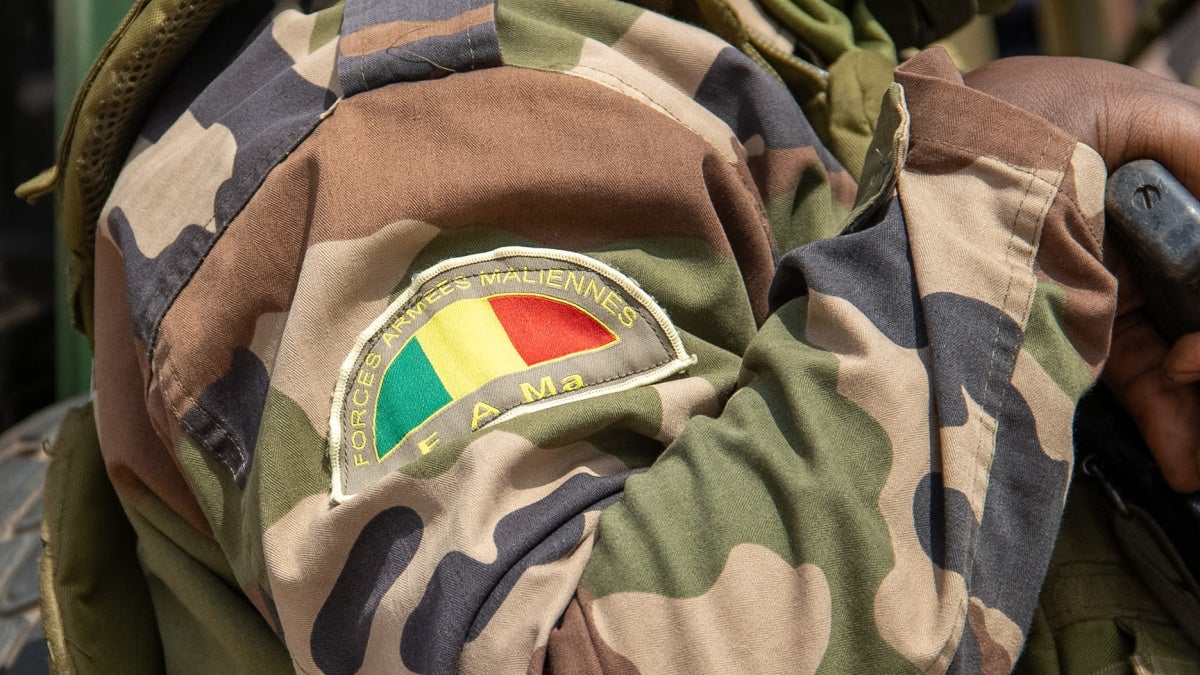
Mali: civilian massacres linked to army operations in Ségou region
In the heart of Mali’s Ségou region, where conflict has festered for over a decade, a fresh wave of violence has left at least 31 civilians dead and entire communities in ashes. On October 2 and 13, coordinated attacks by Malian soldiers and allied militias—particularly the dozos, traditional hunters turned counterinsurgency operatives—unleashed deadly force in the villages of Kamona and Balle. Survivors and local leaders describe a pattern of summary executions, arson, and unrelenting brutality that has left families shattered and trust in state forces irreparably damaged.
Village of Kamona: a day of bloodshed and flames
October 2 began like any other morning in Kamona, a village located deep within territory controlled by the Group for the Support of Islam and Muslims (GSIM/JNIM), an Al-Qaeda-affiliated faction. By 10 a.m., at least seven pickup trucks and three armored vehicles rumbled into the settlement, accompanied by dozens of dozos on motorcycles. Their stated mission—to root out suspected GSIM collaborators—soon descended into carnage.
Witnesses recount how local GSIM fighters had warned villagers of the approaching military force, prompting many to flee into the surrounding bush. Those who remained were systematically rounded up and executed. “They gathered the men and shot them where they stood,” a survivor recounted. “Some bodies were found with their heads crushed by bullets.“
The attackers torched at least ten huts and three storage buildings, all belonging to Fulani ethnic families. Under an isolated tree, villagers later discovered 17 bodies, their bodies riddled with bullets. Nearby, four more corpses were found scattered in the bush. “We dug two mass graves,” said a local man who helped bury the dead. “All had gunshot wounds to the head and torso.“
The list of victims tallied 21 men, aged 20 to 65. But villagers suspect the toll was far higher. “We heard that at least 15 others were killed in the bush that day,” one resident stated. “But we were too afraid to go check.“
Balle: another chapter of terror
Thirteen days later, the same pattern of violence unfolded 55 kilometers away in Balle, another village under GSIM control. Around 1 p.m., five military vehicles and at least 30 dozos on motorcycles stormed the settlement. Some residents fled immediately, but others remained, only to face brutal interrogations and summary killings.
“I didn’t run at first,” said a 24-year-old man. “But when I saw soldiers going door-to-door and beating men, I hid. From my hiding place, I heard gunfire.” By the time the attackers withdrew, ten civilians lay dead—nine men and one woman aged 55. The attackers also made off with over 100 cattle, a devastating loss for a community already struggling under jihadist taxation.
“We found the bodies lying together in the village square,” recounted a 33-year-old villager. “Some had broken bones and bullet wounds. It was clear they had been executed.“
The victim’s daughter, aged 21, tearfully described her mother’s final moments. “She confronted the soldiers, accusing them of abusing the villagers.” The soldiers responded by dragging her to where the men were being held and shooting her execution-style.
Military denies involvement amid growing outrage
In an October 14 statement, Mali’s Army Chief of Staff claimed a “defensive reconnaissance operation” had been conducted near Balle, resulting in the “neutralization of around twenty terrorists” and the seizure of weapons. Yet locals and witnesses reject this narrative, insisting the military and allied dozos operated unchecked, targeting civilians with total impunity.
“We’ve paid zakat [Islamic tax] for years,” said one resident. “When disputes arise, it’s the jihadists who resolve them. There are no soldiers, gendarmes, or police here. The army sees no difference between them and us.“
This sentiment underscores a dangerous and widening rift between Mali’s security forces and rural communities, particularly in regions like Ségou where GSIM’s influence has grown unchecked. Since 2012, successive governments have waged war against Islamist armed groups, but the cost has been catastrophic: thousands of civilian deaths and over 400,000 displaced persons.
Legal accountability remains elusive
International humanitarian law is unequivocal: civilians must never be targeted, and all parties to a conflict must uphold basic protections. These recent attacks violate fundamental principles enshrined in the Geneva Conventions and customary laws of war. Yet despite calls for justice, accountability remains elusive.
Mali withdrew from the International Criminal Court (ICC) in September, but remains bound by the Rome Statute until September 2026. The ICC has been investigating alleged war crimes in Mali since 2013, a process that has yet to yield tangible results for victims of state-led violence.
The African Union (AU), tasked with promoting peace and security across the continent, has remained largely silent. Despite escalating violence, the AU’s Peace and Security Council has confined itself to issuing statements expressing concern—hardly sufficient in the face of crimes against humanity.
“This conflict demands immediate and sustained attention from the AU,” said a senior Sahel analyst. “Regular briefings, strengthened diplomatic efforts, and coordinated regional action are needed to ensure that perpetrators—on all sides—are held accountable.“
As Mali’s crisis deepens, the cycle of violence threatens to engulf more communities. Without urgent action and transparent investigations, the bloodshed in Ségou may only be a prelude to further atrocities.
Comments are closed, but trackbacks and pingbacks are open.