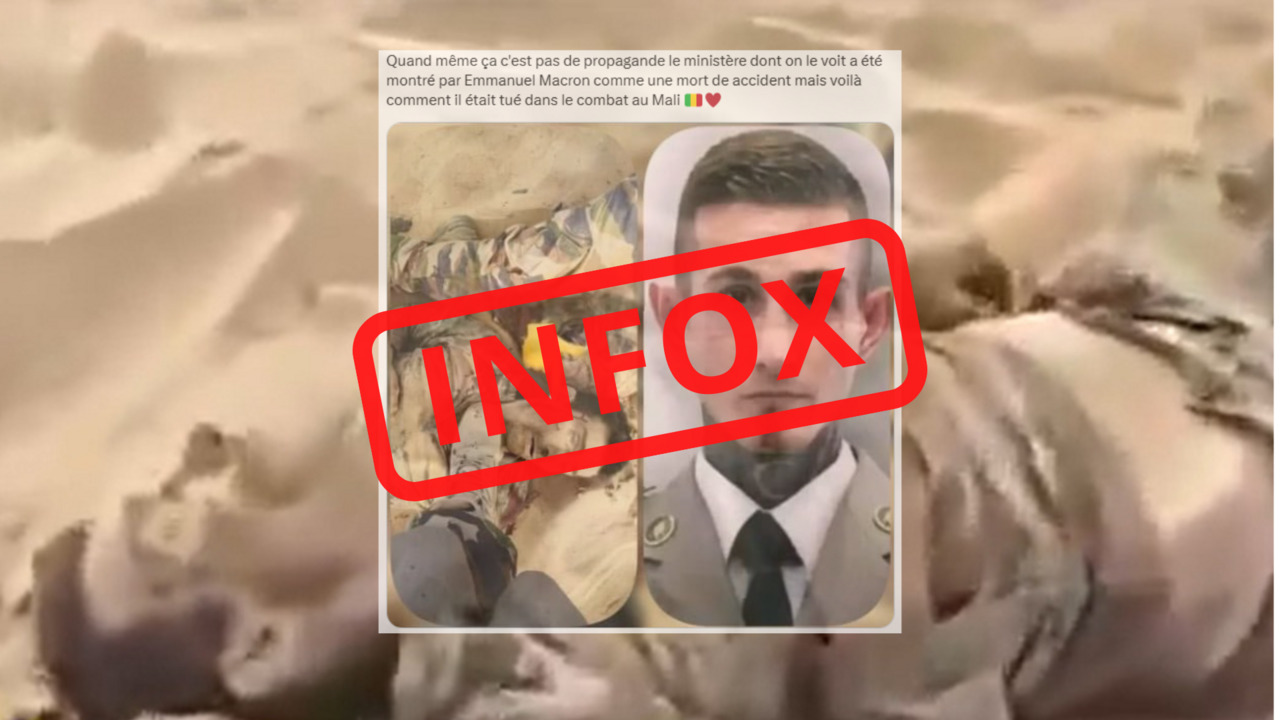
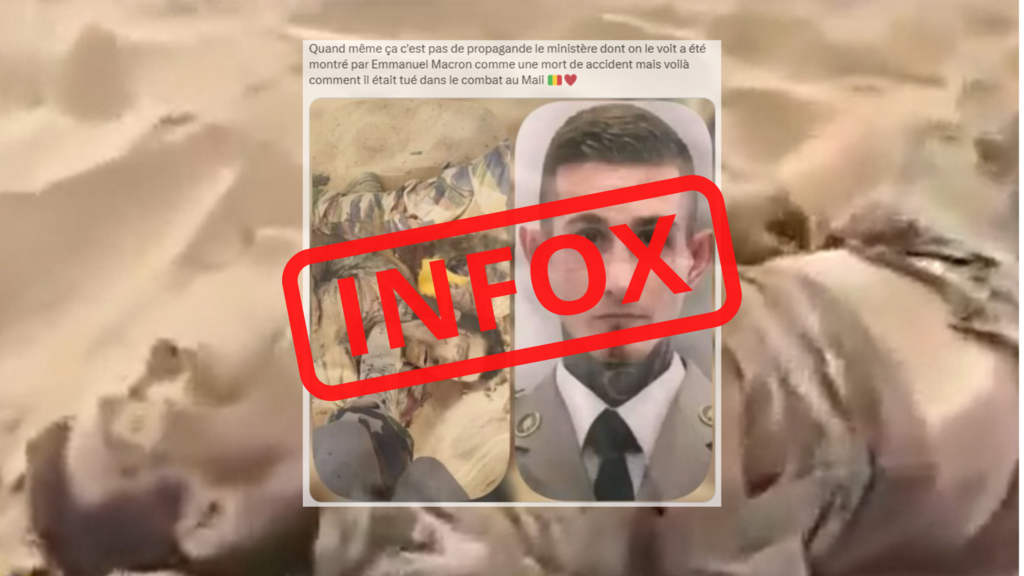
In the heart of the Malian conflict, a new wave of disinformation attempted to link French troops to recent clashes in Anéfis. Between July 4 and 9, Malian forces, with support from Russian African Corps elements, engaged terrorist groups in this strategic locality. Amidst the fog of war, false narratives emerged, falsely implicating a French soldier in activities alongside rebels from the Azawad Liberation Front and the Support Group for Islam and Muslims.
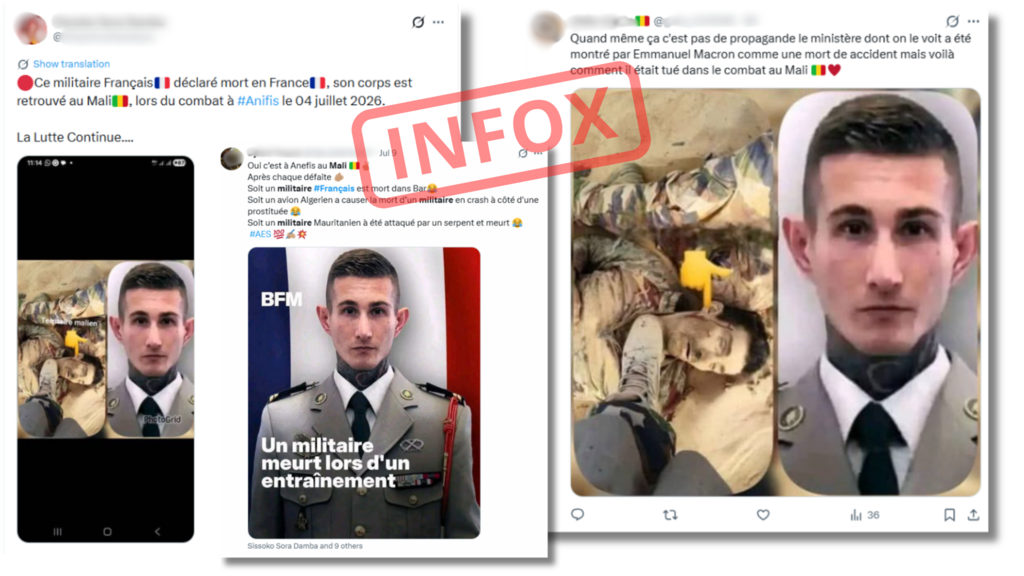
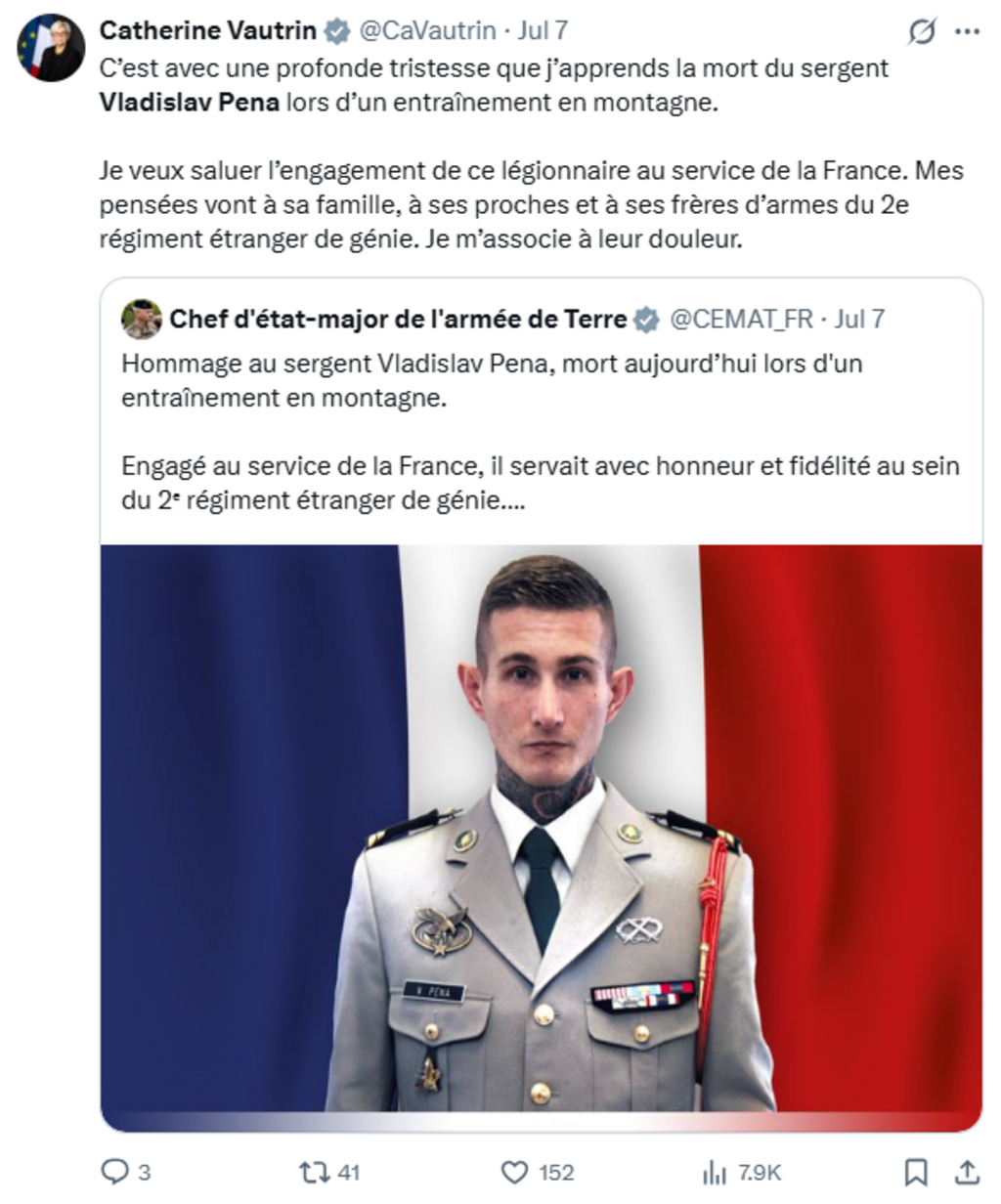
The disinformation campaign began subtly in the aftermath of the fiercest fighting in Anéfis. On July 9, a deceptive post surfaced on X (formerly Twitter), attempting to hijack the news of a French military death in a July 7 training exercise in the Alps. Sergeant Pena, a Russian-born legionnaire, had died accidentally during maneuvers. Pro-AES accounts seized on the opportunity, suggesting “other hypotheses, including possible death in Anéfis, Mali.”
Not a French soldier, but a Wagner mercenary
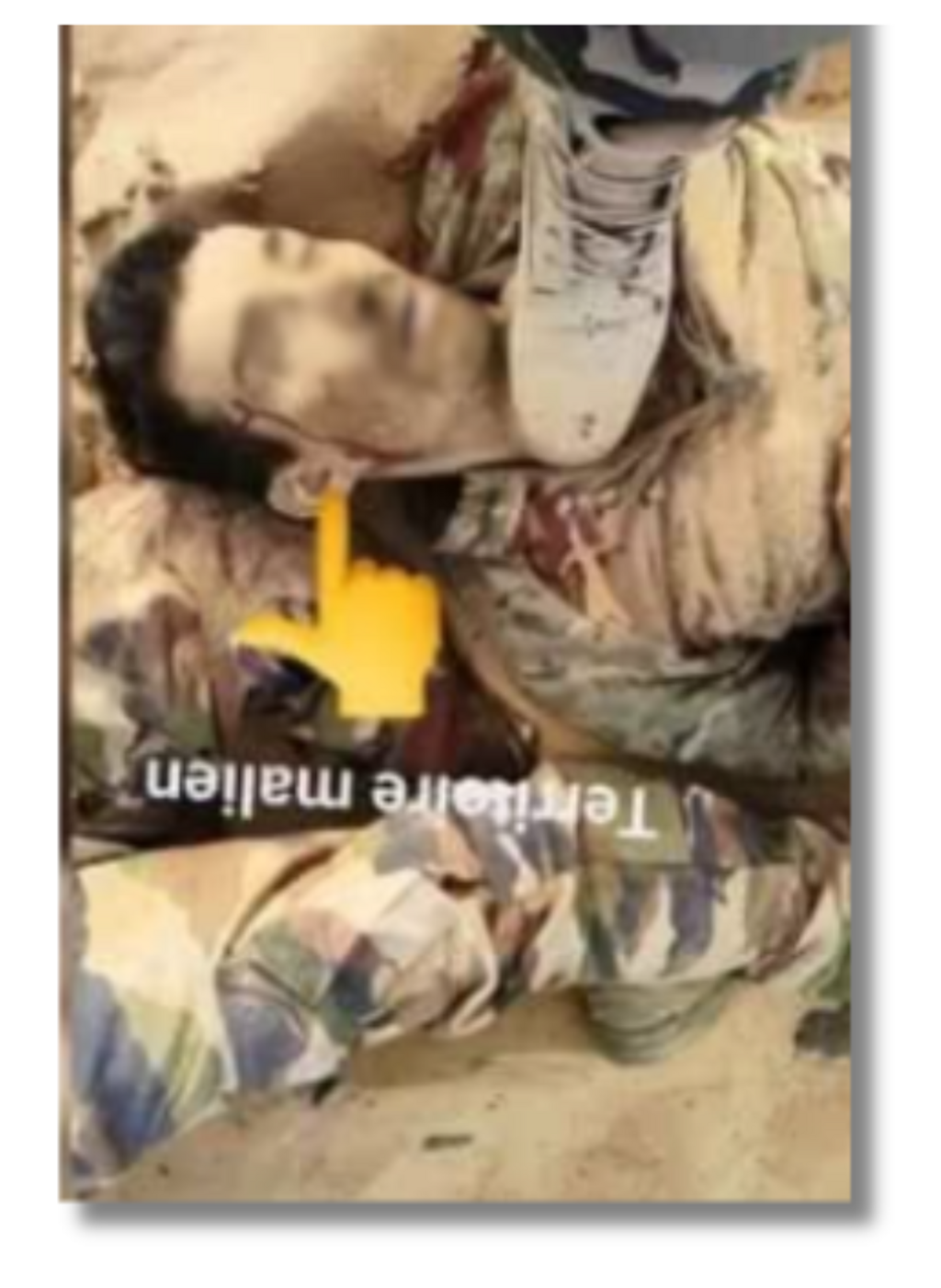
The manipulation escalated the following day with the publication of a photo allegedly showing the death of this French soldier. The image depicted a white soldier lying in the sand, bearing a striking resemblance to the French legionnaire who had died in an accident. The propagandists exploited the soldier’s Russian origins and his physical resemblance to create confusion and undermine public trust.
When the gruesome desert images were shared with Sahel specialists, they immediately identified them as footage from the battle of Tinzaouatène, which took place two years prior in northern Mali. Reverse image searches confirmed the photo matched an archived image of a body lying in the sand, this time labeled as a Russian mercenary. Verification proved impossible due to the image’s anonymous origin on a forum where unverified claims thrive.
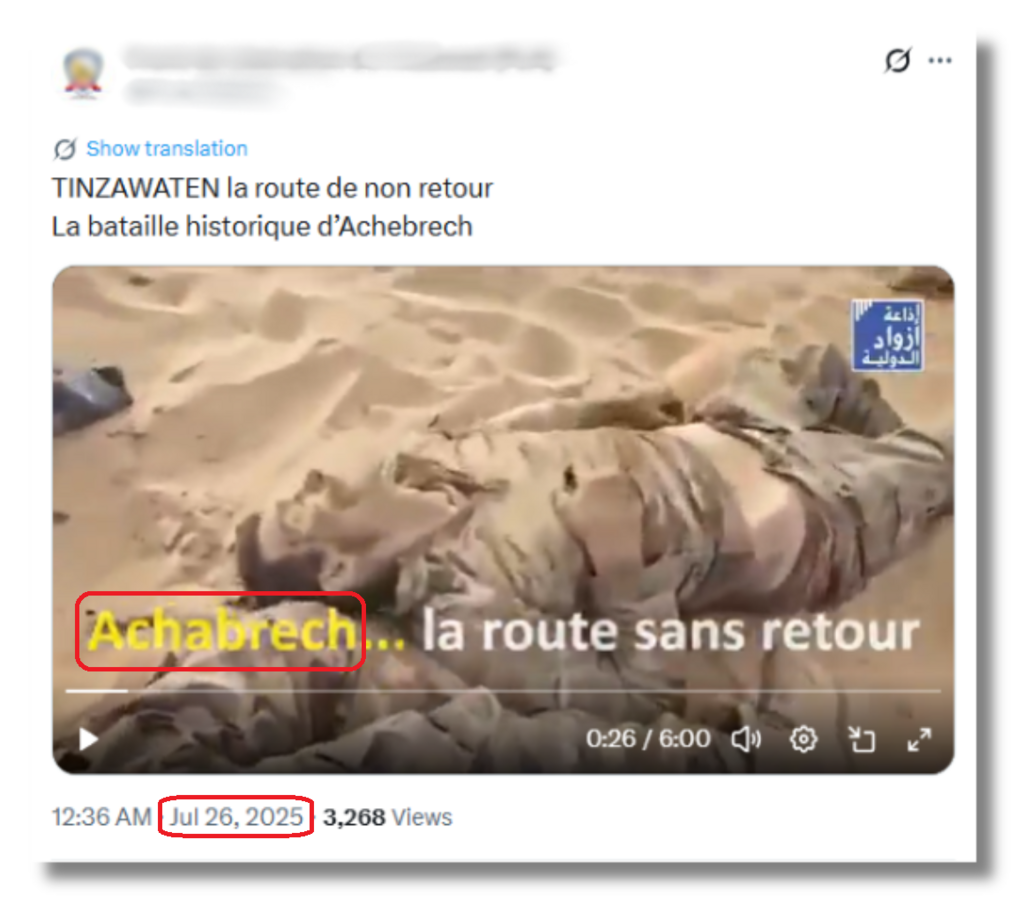
Propaganda videos from 2024
Analysis of a six-minute propaganda video, released in 2025 by the Azawad Liberation Front to mark the first anniversary of the battle, confirmed the image’s origins. The footage showed the same body alongside other Russian fighters. While the images were blurred, the arrangement of the bodies, camouflage patterns, facial features, and hairstyles matched perfectly.
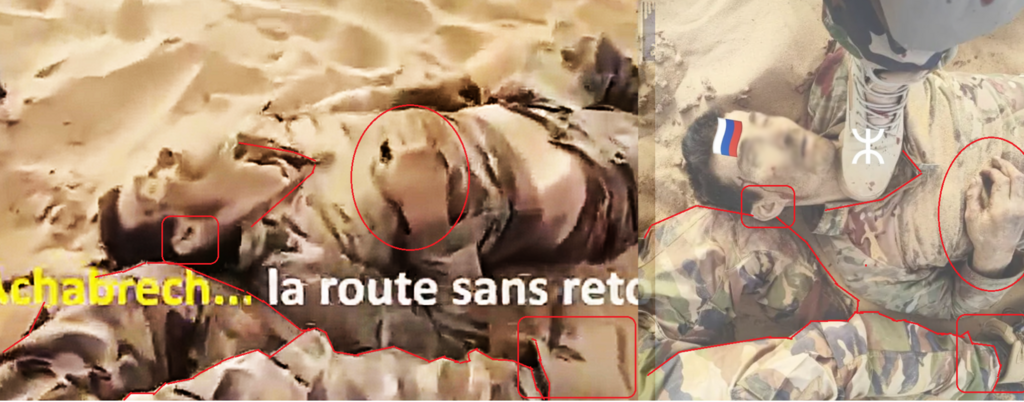
This disinformation was built on an image taken out of context: an archived photo of Wagner elements killed in Tinzaouatène in 2024, not a French soldier allegedly found in Anéfis in 2026.
A flawed narrative that failed to deceive
The false claim that French troops are complicit with terrorists is not new. However, this poorly constructed narrative remained confined to accounts known for spreading Sahelian propaganda. At this stage, it gained little traction. Many users openly condemned the manipulation, signaling that the narrative’s repeated failures over four years may have eroded its credibility.
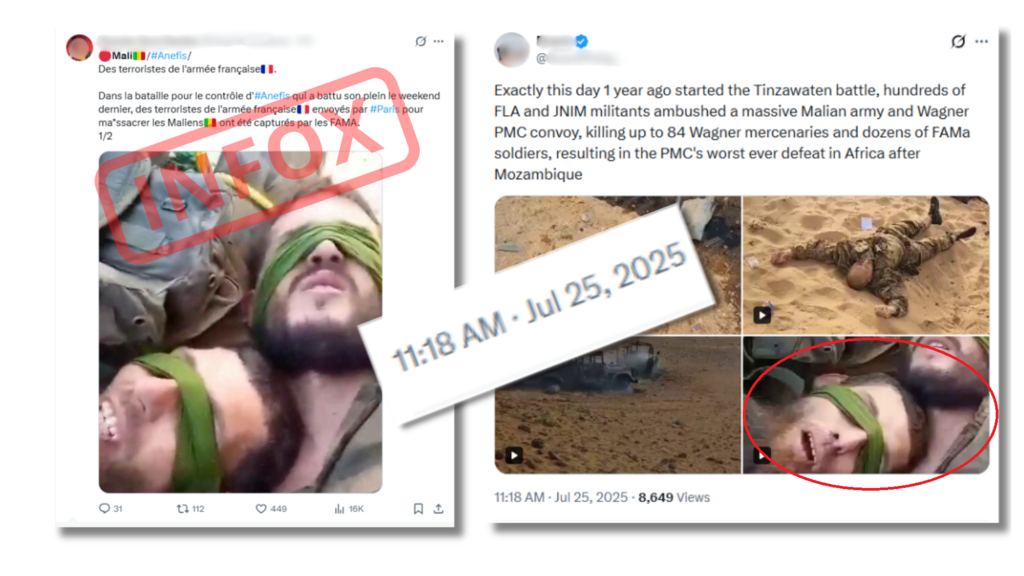
As of now, X has recorded fewer than 50,000 views of these posts. However, the attempt to impersonate a deceased French soldier and tarnish his memory represents a serious breach of ethical and journalistic standards.
Comments are closed, but trackbacks and pingbacks are open.