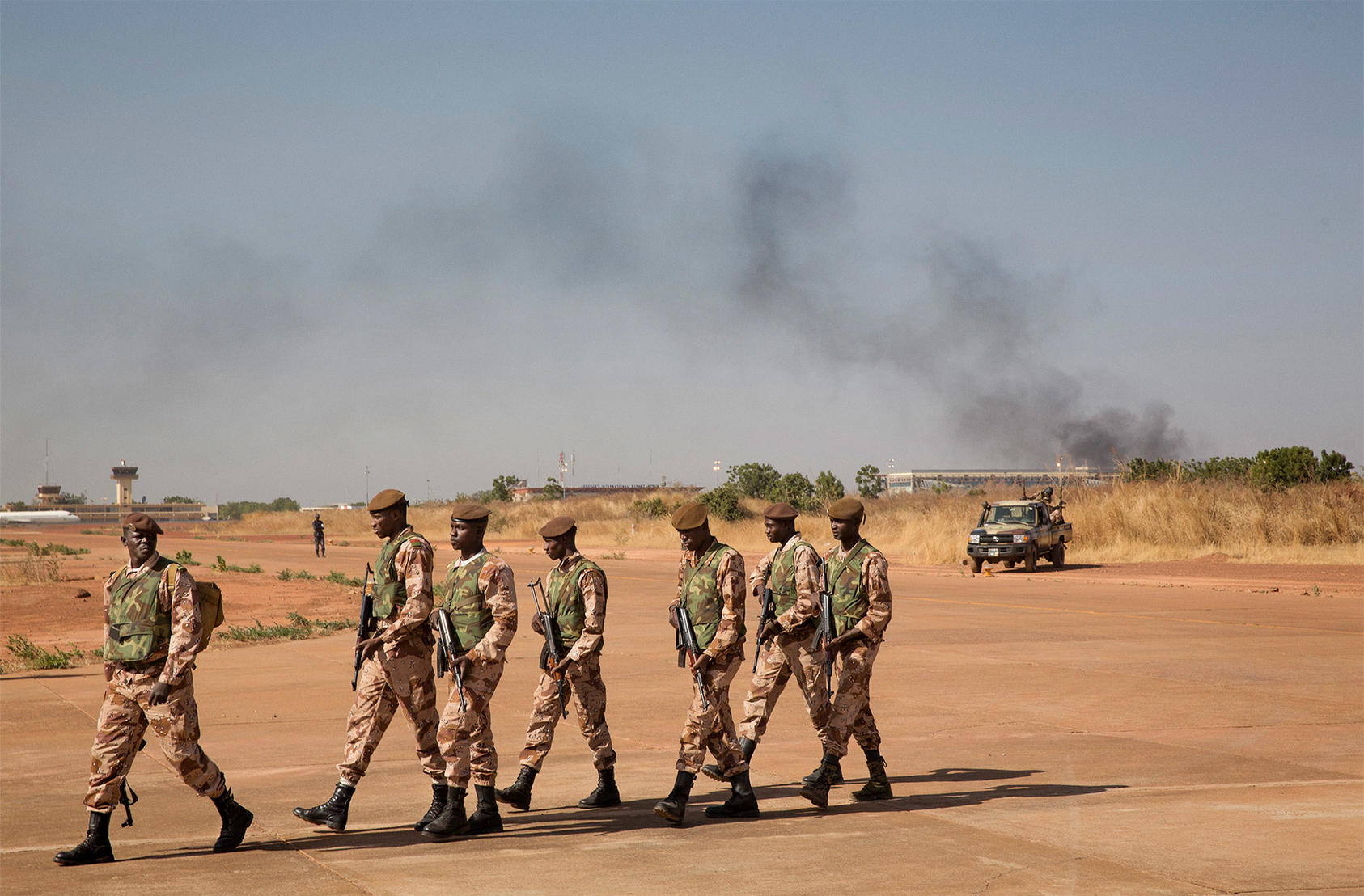
Mali faces unprecedented coordinated assault by Touareg rebels and jihadist groups
The West African nation of Mali has plunged deeper into chaos following a massive, synchronized offensive by Touareg separatists and Islamist militants. This assault, which targeted multiple strategic locations across the country, marks a significant escalation in the ongoing conflict between government forces and armed factions.
Key developments in the coordinated attack
According to General Oumar Diarra, Chief of Staff of Mali’s armed forces, the coordinated assault represents a “strategically planned destabilization effort orchestrated by both internal and external actors” aimed at creating lasting insecurity in the nation. The offensive, which began in the early hours of Saturday, April 25, involved simultaneous attacks in seven major Malian cities:
- Bamako and its military stronghold of Kati
- Central cities including Konna, Mopti, and Sévaré
- Northern strongholds Gao and Kidal
The rebel coalition employed a variety of tactics including:
- Vehicle-borne improvised explosive devices
- Suicide drone attacks
- Indirect artillery fire
- Direct assaults on military positions
The Front de Libération de l’Azawad (FLA) – successor to the former Coordination des Mouvements de l’Azawad (CMA) – and the Jama’a Nusrat ul-Islam wa al-Muslimin (JNIM), an Al-Qaeda affiliate, jointly claimed responsibility for the attacks. Their targets included the presidential residence, Ministry of Defense, and Bamako’s Modibo Keïta International Airport.
Government response and shifting military dynamics
In response to the crisis, Malian authorities declared a 72-hour curfew in Bamako and closed the international airport. The transitional government claimed to have the situation “fully under control” despite reports of heavy fighting across multiple fronts.
The Africa Corps – Russia’s paramilitary contingent operating alongside Malian forces – announced its withdrawal from Kidal following a joint decision with Bamako. This withdrawal came after intense battles where Russian forces reportedly neutralized over 1,000 jihadists and destroyed more than 100 vehicles. However, reports indicate several Russian contractors were injured during the fighting and are currently being evacuated.
Heavy losses and political fallout
The offensive resulted in significant casualties, including the death of Defense Minister Sadio Camara in a suicide bombing at his Kati residence. The attack also claimed the lives of two of his children, his wife, and several civilians. Prime Minister Assimi Goïta was evacuated from Kati for his safety during the assault.
Additionally, the head of the national security agency Modibo Koné was seriously wounded in the crossfire. The transitional government declared two days of national mourning following these losses.
Emerging alliances and regional implications
This coordinated offensive signifies a tactical alliance between Touareg separatists and Islamist militants, despite their differing long-term objectives. While Touareg groups seek autonomy for the Azawad region, jihadist factions aim to establish an Islamic state. Their cooperation appears to be a pragmatic response to their common enemy: the military junta and its Russian allies.
The alliance gained momentum after the United Nations’ MINUSMA mission withdrew from Mali in late 2023. Without international oversight, Malian forces resumed hostilities in the north, prompting Touareg groups to seek operational coordination with jihadist factions. This collaboration was first evidenced during the battle of Tinzaouaten in July 2024, where coalition forces inflicted heavy casualties on Russian mercenaries.
Analysts suggest Ukrainian military intelligence may have provided tactical support to the rebels, as evidenced by the use of drone technology and other advanced military tactics reportedly shared with Touareg forces. Mali responded to these allegations by severing diplomatic relations with Ukraine.
Current security situation and future outlook
The Africa Corps reports successfully defending strategic positions including government buildings and airports, while denying enemy forces control of the Kati arsenal. However, local sources indicate ongoing clashes with heavy casualties on both sides.
The collapse of the Algiers Accords – the 2015 peace agreement between Bamako and Touareg groups – has created a power vacuum that these coordinated attacks have exploited. With the transitional government weakened by recent losses, the future stability of Mali remains uncertain as armed factions continue to challenge state authority across multiple regions.