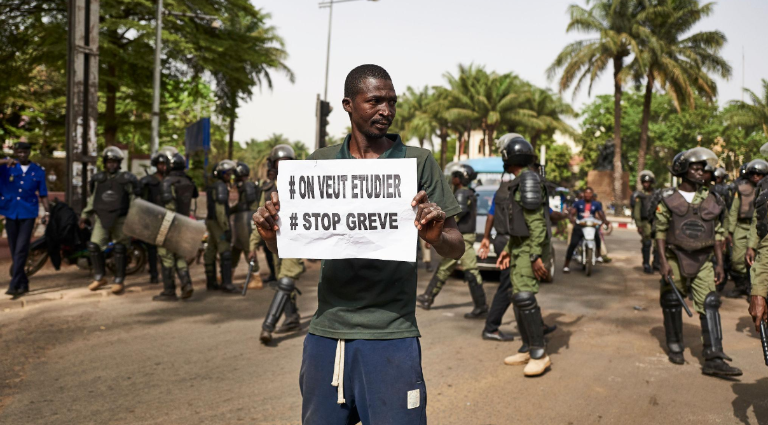
Strike enters fourth week as lecturers push for 2017 research allowance
After three weeks of continuous disruption, Mali’s higher education sector faces an escalating crisis as university lecturers maintain their strike over a long-unimplemented research bonus. The Syndicat national de l’enseignement supérieur et de la recherche scientifique (SNESUP) announced today that its leaders have finally secured a meeting with the country’s top transitional authorities, marking a potential shift in a conflict that has left campuses deserted since October 26.
The movement shows no signs of slowing down, even as the junta breaks its silence. Lecturers insist on receiving the research allowance established by presidential decree 2017-0850/P-RM, a benefit nearly a decade overdue. Without its implementation, universities remain paralyzed, and students face growing uncertainty about their academic future.
What lecturers are demanding after years of delays
The dispute centers on the unpaid research bonus outlined in the 2017 presidential decree. The SNESUP has outlined three core demands:
- Fixed bonus amount: A clear, transparent definition of how much lecturers should receive for their research activities.
- Payment framework: A structured plan for distributing the bonus, including installments and deadlines.
- Back pay settlement: Compensation for the eight years since the decree was signed without fulfillment.
The bonus is intended to support lecturers’ research activities—publications, studies, and academic output—but its absence has left faculty feeling sidelined by the state. The SNESUP argues that this is not a new demand but a matter of enforcing existing law.
First government response: a meeting, not a resolution
The transitional authorities have, for the first time, engaged directly with the SNESUP leadership. A closed-door meeting took place over the weekend, though no details have been released about the discussions or any potential concessions. The union has stated it will first consult its members before commenting further on the outcome.
Critically, the strike remains fully active. The SNESUP confirmed that campuses will stay shut while members assess the government’s willingness to act. Earlier mediation attempts, including a November 7 meeting with religious and community leaders, failed to sway the lecturers’ position.
Impact on students and universities grows more severe
The prolonged strike is taking a toll on Mali’s academic calendar. With each passing week, students grow more concerned about exam schedules, course completion, and the possibility of prolonged delays to their degrees. The SNESUP has emphasized that this is not a political strike but a demand for compliance with existing regulations—a distinction that complicates the junta’s response.
While the government’s involvement may signal progress, lecturers are clear: actions must follow words. The ball is now in the authorities’ court to present a resolution that can restore trust and end the impasse before the crisis deepens further.
Next steps hang on union consensus
The SNESUP will hold internal consultations to evaluate the government’s meeting and any proposals that may emerge. The decision to end the strike rests entirely with its members. Until then, the strike continues, and the future of Mali’s higher education system remains on hold.
The junta’s long-awaited intervention may have opened a dialogue, but the path to resolution remains uncertain—especially when lecturers have waited nearly a decade for what they are owed.
Comments are closed, but trackbacks and pingbacks are open.