A symbolic threshold that unsettles the official narrative
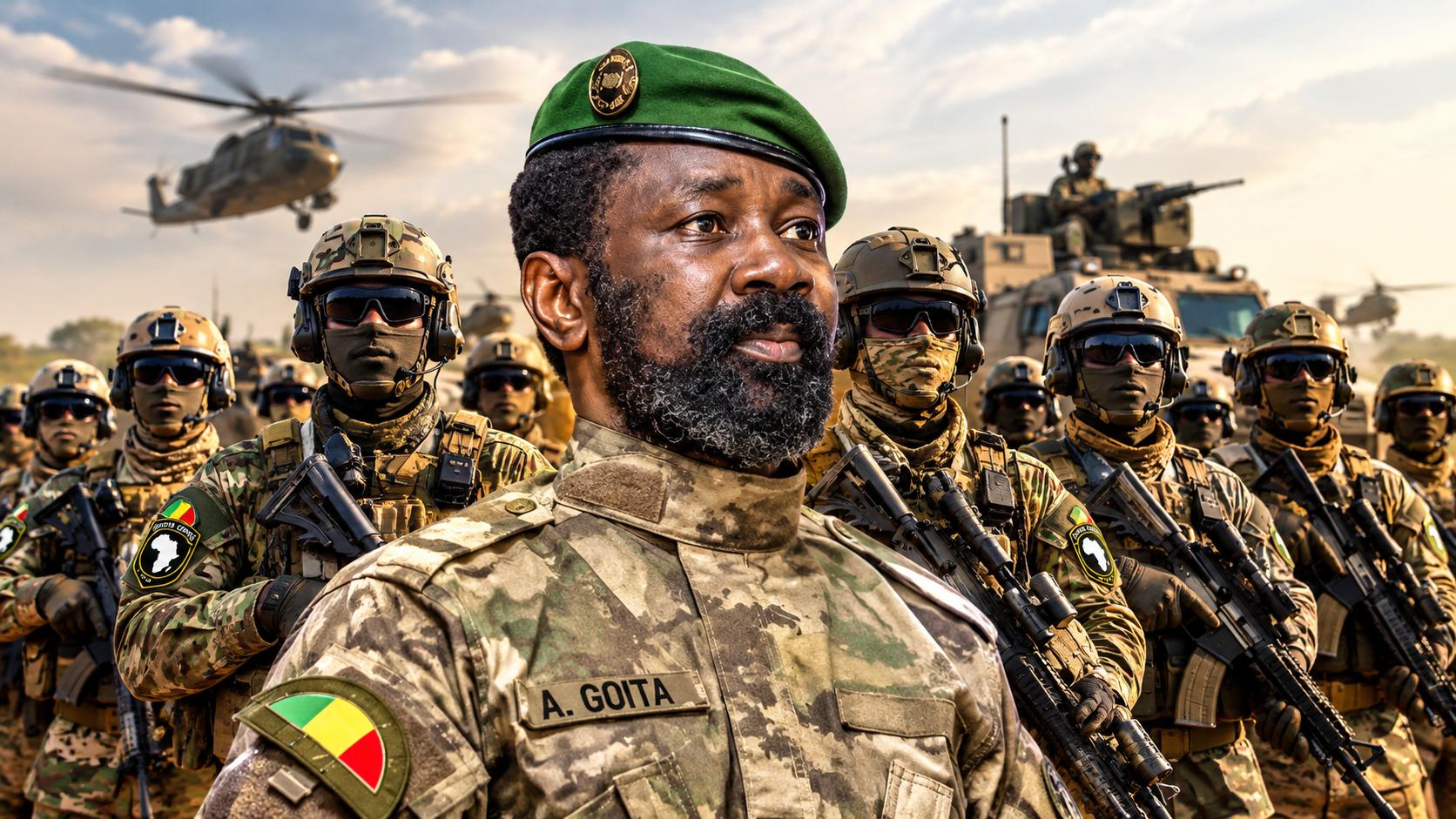
The three-year mark of the Russian paramilitary presence in Mali has been crossed with a death toll that directly challenges the junta’s claims of a “security reconquest” in the Sahel. Independent conflict monitors, cross-checked security leaks and field data now point to at least 358 Russian fighters killed since the contingent arrived in late 2021 — first under the Wagner banner, now rebranded as Africa Corps.
The figure lands hard. Placed against the recent military history of the region, it means that in just three years, the Russian partner has suffered more than double the 59 French soldiers killed during nearly a decade of Serval and Barkhane operations across the entire Sahel.
How the toll accumulated: from Tinzawatène to Sévaré and Dioura
The bloody ambush at Tinzawatène in July 2024 — where more than 80 Russian fighters died alongside Malian armed forces — was the first major shock. But it was not the last.
Coordinated large-scale attacks on garrisons in the centre and north have since pushed the casualty count steadily higher. Repeated assaults on strategic installations at Sévaré and forward positions at Dioura dealt painful setbacks to the joint FAMA / Africa Corps arrangement. Facing armed groups that combine intimate knowledge of the terrain with modern tactical tools — including reconnaissance and strike drones — Russian troops are paying an extremely high price in attrition.
A loss ratio with no recent equivalent in the Sahel
The numbers themselves tell the story of two radically different approaches to war:
- French operations (Serval / Barkhane, 2013–2022): roughly 59 soldiers killed over nearly nine and a half years of regional engagement.
- Africa Corps / Wagner (2021–2026): approximately 358 fighters killed in only three years of intervention in Mali.
The gap is largely explained by opposing operational doctrines. Western forces leaned on air support, technological intelligence and the systematic avoidance of close contact. Russian mercenaries, by contrast, are sent directly to the front line in high-risk sweep operations through heavily mined areas riddled with IED ambushes.
What the death toll means for Bamako and Moscow
The human cost is compounded by a financial bill estimated in the hundreds of billions of FCFA, raising hard questions about the effectiveness of the security model imported from Moscow.
Inside barracks and among the wider population, doubts are growing about whether such a strategy can be sustained. The original promise of the military transition rested on rapid pacification of the territory. Instead, the exponential rise in losses within the key partner illustrates a grinding war of attrition whose human price keeps climbing.
Reactions: a debate that is no longer behind closed doors
Public discussion in Mali has shifted. What was once a sensitive topic confined to security circles is now part of everyday conversation — in markets, on radio panels and across social media. Families of fallen soldiers, local officials in affected regions and civil society voices are asking whether the Russian partnership is delivering the protection it was meant to provide.
The junta faces a delicate balancing act. Acknowledging the scale of the losses would undercut the narrative of steady military progress. Staying silent, however, risks fuelling rumours and eroding trust among a population that has already endured more than a decade of conflict.
Outlook: what comes next for the Russian model in Mali
Three scenarios are quietly being weighed.
1. Reinforcement and adaptation
Moscow could send additional personnel and shift tactics — more drone support, better intelligence coordination with FAMA, and less reliance on frontal ground assaults. This would raise costs further but might slow the casualty rate.
2. A quiet drawdown
A gradual reduction of the Russian footprint would allow the junta to frame the move as a “transition to national ownership” of security, without admitting failure. The risk is that armed groups interpret any withdrawal as a victory.
3. Business as usual — with mounting costs
If nothing changes, the current attrition pattern is likely to continue. That means more funerals, more financial strain and a steadily weakening position for both Bamako and its Russian partner.
What is already clear is that the 358 deaths are no longer just a statistic. They have become a political fact — one that shapes the debate in Mali, tests Moscow’s appetite for a costly distant war, and forces both sides to confront a question with no easy answer: how long can this model hold?
Comments are closed, but trackbacks and pingbacks are open.