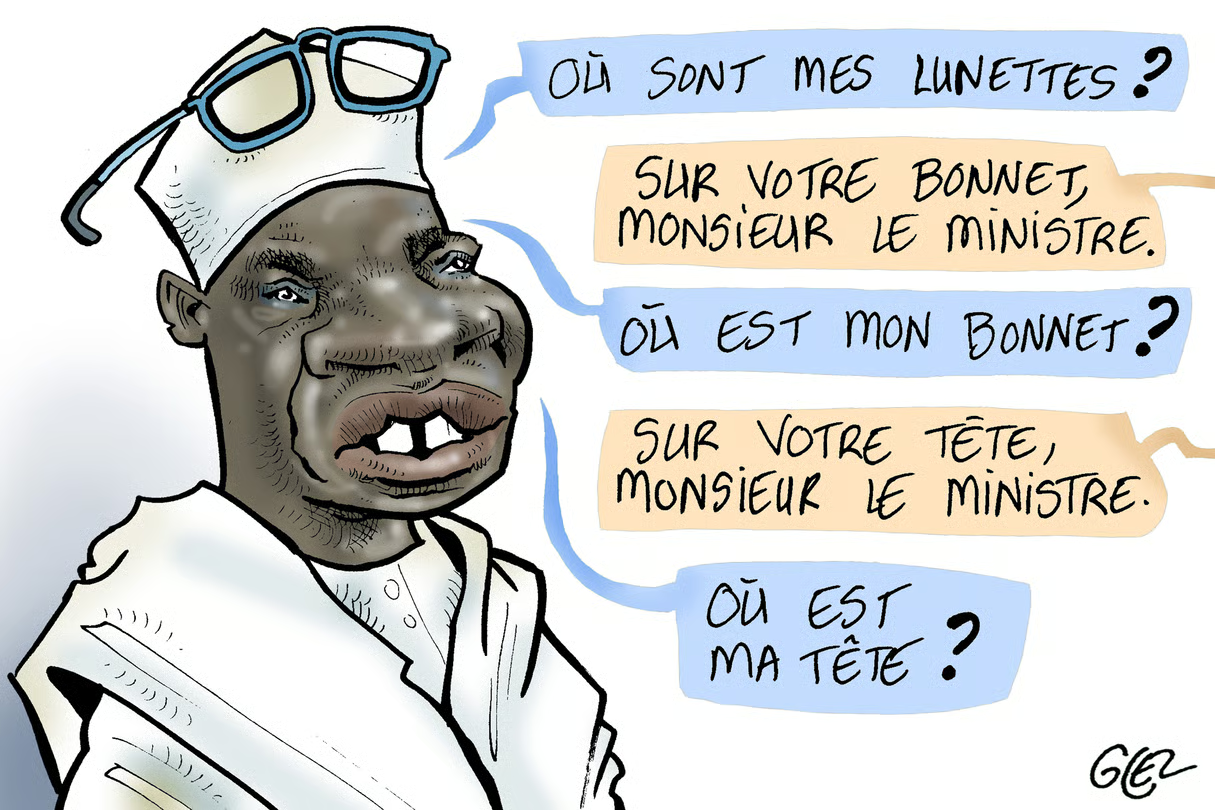
The verdict in Cameroon’s controversial ‘ministerial glasses case’ has ignited a fierce public debate, revealing deep anxieties about the future of journalism in the country. Four reporters now face harsh penalties after a court ruling tied their professional conduct to a minor allegation involving a pair of eyeglasses belonging to a high-ranking official. The decision has not only reshaped their careers but has also cast a long shadow over the freedom of the press in Cameroon.
What the glasses verdict means for Cameroon’s journalists
The court’s decision to impose heavy sanctions on the four journalists has sent shockwaves through Cameroon’s media landscape. Critics argue that the ruling sets a dangerous precedent, where even the most routine inquiries into public officials’ conduct can lead to severe consequences. This case underscores the growing tensions between government authorities and independent journalism, raising questions about the limits of free speech in the country.
How the case began: a question with unintended consequences
The controversy traces back to a routine question posed by the journalists during a press briefing involving a minister. Their inquiry centered on the origin of the minister’s eyeglasses, which, at the time, appeared to be an innocuous piece of administrative curiosity. However, the response they received—and the subsequent legal fallout—have since unraveled into a full-blown press freedom crisis.
The journalists were charged under laws that many legal experts now claim were misapplied, highlighting systemic vulnerabilities in Cameroon’s media legal framework. Their defense team has vowed to appeal, arguing that the ruling chills legitimate journalistic inquiry and emboldens censorship.
Public reaction: a nation divided on press freedom
The verdict has sparked passionate reactions across Cameroon. Civil society groups, international observers, and local communities are divided. While some view the decision as a necessary measure to curb irresponsible reporting, others condemn it as a blatant attack on democratic principles. Protests have erupted in major cities, with activists demanding the immediate reversal of the ruling and a reaffirmation of media rights.
Voices from the ground: solidarity and concern
- Journalists’ unions have condemned the ruling, calling it a direct assault on press freedom and a tool to silence dissent. Many point to the increasing intimidation tactics faced by reporters covering sensitive topics.
- Legal scholars warn that the case could be used as a precedent to suppress critical reporting, further eroding public trust in institutions.
- Citizens have taken to social media and streets, with many expressing solidarity with the journalists. Hashtags like #JusticeForCameroonPress have trended, reflecting widespread public discontent with the judicial outcome.
What happens next for Cameroon’s press?
The fallout from this verdict raises pressing questions about Cameroon’s media future. Will the ruling embolden authorities to pursue more aggressive measures against journalists? Or will public pressure force a reconsideration of the decision? The outcome of the appeal process and the government’s response will be pivotal in shaping the trajectory of press freedom in the country.
One thing is certain: the ‘glasses case’ has become a symbol of the broader struggles facing journalists in Cameroon. It serves as a stark reminder that democracy thrives only when the press can operate without fear. As the nation watches closely, the response to this crisis could redefine the contours of Cameroon’s media landscape for years to come.
Comments are closed, but trackbacks and pingbacks are open.