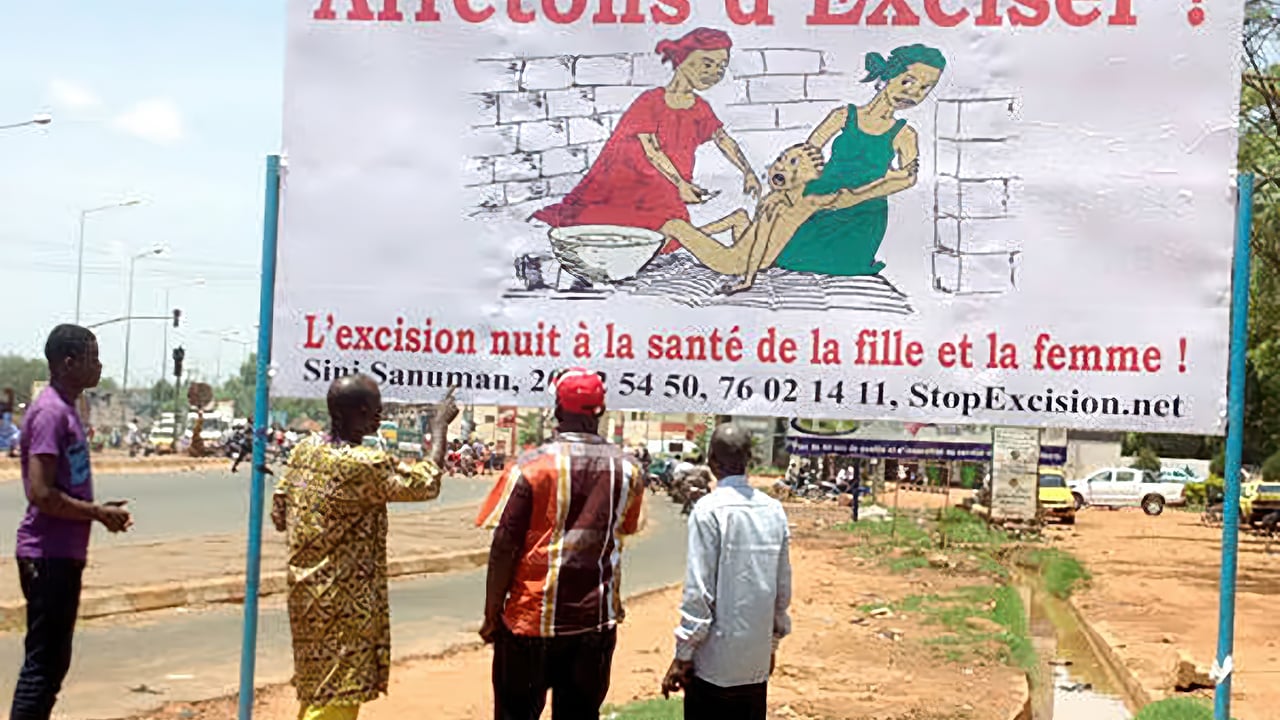

In the West African nation of Mali, President Assimi Goïta is currently navigating an intricate and deeply sensitive societal issue: the ongoing debate surrounding female genital mutilation (FGM), often referred to as excision. This deeply entrenched practice, while facing increasing international condemnation and national health concerns, remains a complex topic due to its cultural and traditional roots within many Malian communities. Goïta’s administration is tasked with the challenging balancing act of addressing this critical public health and human rights issue without inciting widespread social unrest.
Campaigns advocating against FGM are visible across Mali, with public awareness initiatives, such as the one depicted on a billboard, striving to educate communities on the severe consequences of the practice. These efforts, however, frequently ignite intense discussions, highlighting the profound divisions within Malian society. The political leadership, under President Goïta, must carefully manage this public discourse, seeking pathways to encourage change and protect vulnerable women and girls, a key aspect of African society news and Africa politics English discussions today. The goal is to foster a dialogue that respects cultural sensitivities while promoting modern health standards and fundamental human rights.
The management of the Mali FGM debate is a significant test for Goïta, reflecting broader challenges in pan-African current affairs where traditional practices intersect with contemporary human rights standards. Moving forward, a nuanced approach involving extensive engagement with religious leaders, community elders, and civil society organizations will be essential. This strategy aims to build consensus and gradually shift societal norms towards the eradication of FGM, ensuring the well-being of all Malian citizens remains at the forefront of national priorities.
Comments are closed, but trackbacks and pingbacks are open.