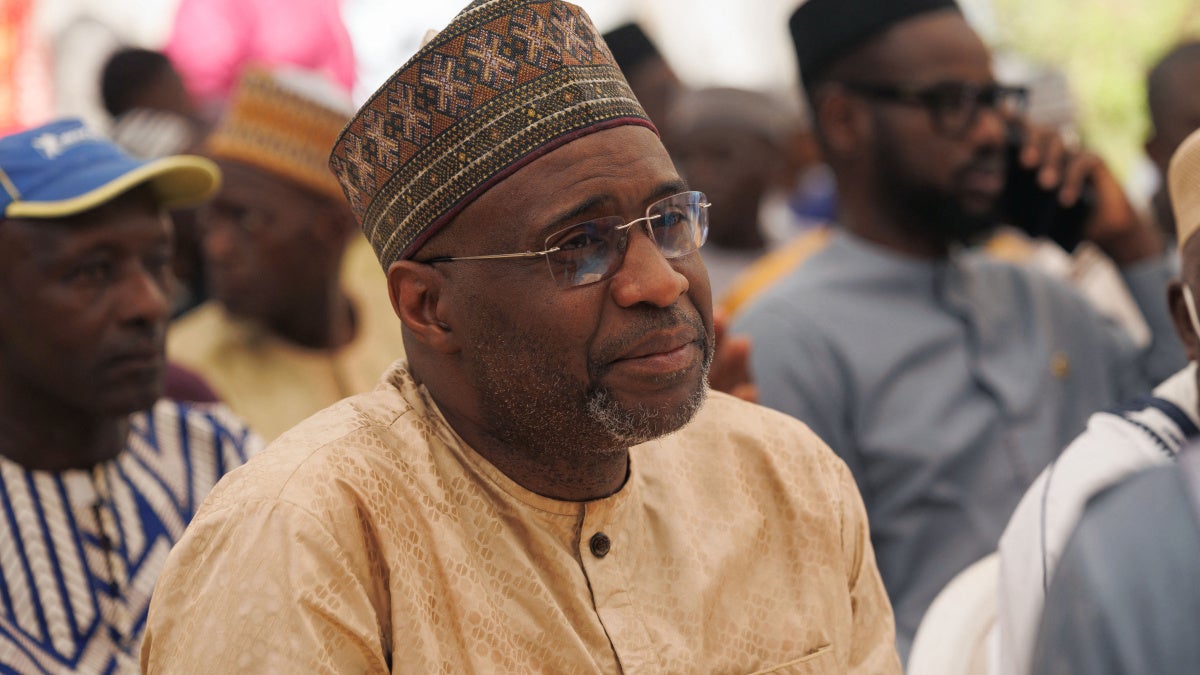
In Bamako, the capital of Mali, former Prime Minister Moussa Mara stood calmly in a courtroom as judges dismissed his legal team’s request for provisional release. Instead, prosecutors demanded a two-year prison sentence—a move emblematic of the military junta’s tightening grip on political opposition and dissent in the country.
Security forces arrested Moussa Mara, who served as Prime Minister for eight months between 2014 and 2015, on August 1. The arrest followed a social media post in which he expressed solidarity with imprisoned political dissidents and vowed to seek justice for them. Authorities swiftly accused him of undermining state credibility, opposing legitimate authority, inciting public disorder, and spreading false information.
The trial began on September 29 before a cybercrime tribunal, with a verdict expected on October 27. Concerns are mounting over the fairness of the proceedings, which critics argue violate the fundamental right to free speech. “These charges have nothing to do with Moussa Mara’s post on X,” stated a member of his defense team. “This is a direct assault on freedom of expression.” Lawyer Mounkaïla Yayé echoed this sentiment, warning that the case sets a dangerous precedent for future dissent in Mali.
Since seizing power in a 2021 coup, the military junta led by General Assimi Goïta has systematically suppressed political opposition, civic spaces, and media freedom. The government has banned all political parties, jailed opposition figures, and forcibly disappeared journalists and human rights activists. General Goïta has further entrenched his rule by delaying elections and postponing the return to civilian governance.
The junta has also ignored calls to hold security forces accountable for human rights abuses, failing to meet its international legal obligations to investigate grave violations and prosecute perpetrators. In January, Mali, alongside Burkina Faso and Niger, formally withdrew from the Economic Community of West African States (ECOWAS), stripping citizens of the ability to seek justice for rights violations at the ECOWAS Court of Justice. In September, the three nations announced plans to exit the International Criminal Court treaty, further jeopardizing access to justice for victims of mass atrocities.
The arrest of Moussa Mara underscores a stark reality in Mali today: even expressing solidarity with the oppressed is now criminalized. The junta’s intolerance for dissent is glaring. Authorities must immediately drop all charges against Moussa Mara, release him and all other arbitrarily detained prisoners, and uphold the right to free expression.
Comments are closed, but trackbacks and pingbacks are open.