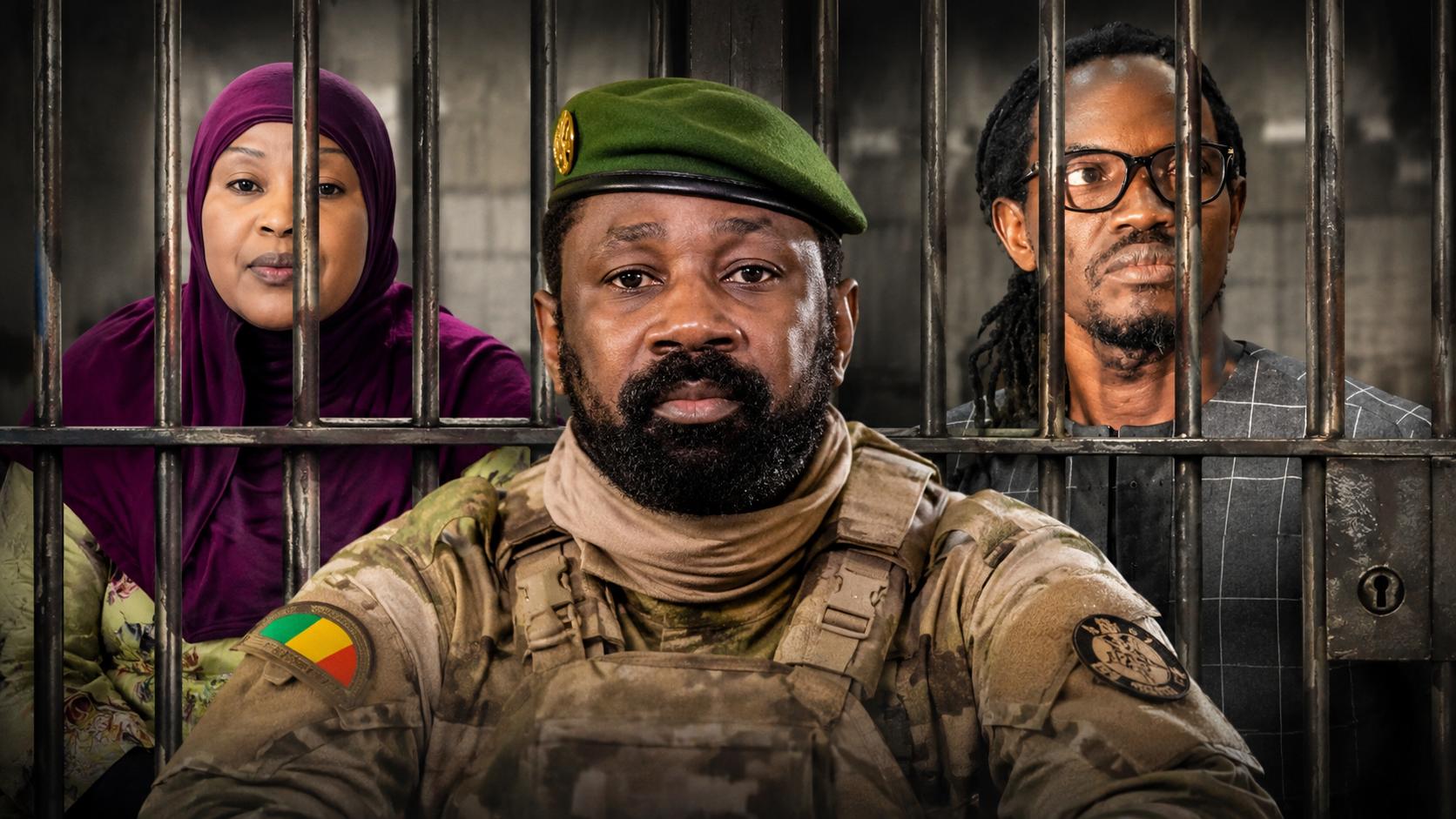
In Mali, the military court has once again delivered a harsh verdict. Mohamed Youssouf Bathily, widely known as Ras Bath, and social media influencer Rokia Doumbia, recognized publicly as Rose ‘la vie chère,’ have been sentenced to a decade behind bars—seven of those years without parole—for their outspoken criticism of the transitional government.
The charges levied against them include ‘forming a criminal association’ and ‘damaging state credibility,’ reflecting the authorities’ growing intolerance for any public expression challenging the leadership of General Assimi Goïta.
Mali’s escalating repression against outspoken voices
This ruling is not an isolated incident. It reflects a broader pattern of crackdowns in Mali, where dissent—no matter how mild—is met with severe penalties:
- Political dissidents under pressure: Economist and former presidential advisor Étienne Fakaba Sissoko is serving a prison sentence for publishing a book that scrutinized the transition’s management. He is not alone; former Justice Minister Malick Coulibaly and multiple opposition party leaders have faced arbitrary detention or legal harassment for their stance on national affairs.
- Civil society and activists in the crosshairs: Prominent anti-corruption advocate Clément Dembélé was jailed after questioning government policy decisions. Numerous online activists have also faced account suspensions or legal action merely for posting about Mali’s economic hardships or security challenges.
- Media under siege: Local journalists frequently face threats of arrest or broadcast bans, while major international news outlets remain barred from operating in Mali.
When criticism becomes a crime in Mali
According to the defense team representing Ras Bath and Rose ‘la vie chère,’ the verdict exposes the judiciary’s role in silencing public debate. Despite plans to appeal the decision to Mali’s Supreme Court, the message is stark: in today’s Mali, questioning living costs or the legitimacy of military rule can now be treated as a criminal offense. The space for free expression is rapidly shrinking under official pretexts of national stability.
Comments are closed, but trackbacks and pingbacks are open.