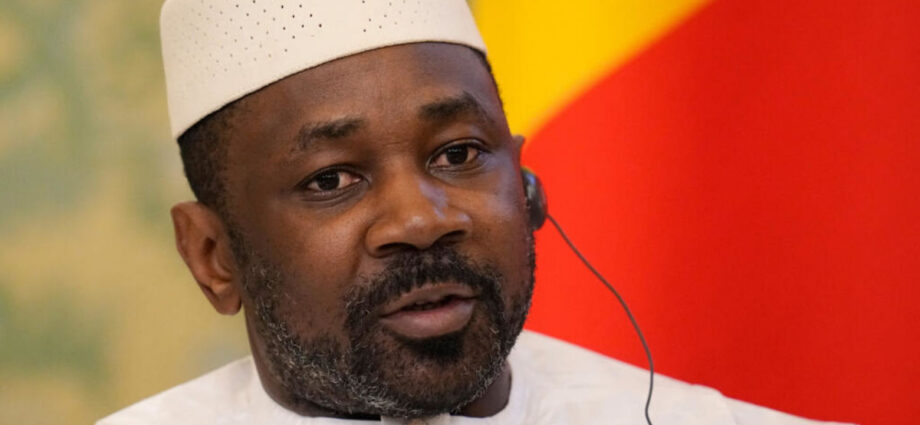
As Mali commemorates its Independence Day on September 22, the nation finds itself at a crossroads. Transition President General Assimi Goïta marked the occasion with a televised address on September 21, celebrating economic progress, vowing to intensify efforts against armed terrorist groups, and emphasizing national reconciliation.
General Goïta, who seized power six years ago without elections—with support from Russia’s Africa Corps—also framed Mali’s ongoing collaboration within the Alliance of Sahel States (AES) as a path toward greater sovereignty. Yet his optimistic tone contrasts sharply with the realities faced by many Malians, who continue to struggle amid persistent insecurity and governance challenges.
opposition voices demand answers amid growing discontent
Not everyone shares the government’s assessment. In exile, opposition leader Etienne Fakaba Sissoko, spokesperson for the Coalition of Forces for the Republic (CFR)—led by Imam Dicko and uniting political figures and civil society members in diaspora—has taken a firm stance. Speaking to David Baché, he criticized the president’s conflation of Independence Day celebrations with the transition’s performance.
“One can love Mali deeply, support its soldiers, and defend its sovereignty without endorsing a regime that has failed its people,” Sissoko asserted. “Malians deserve tangible results: safe travel, employment, reliable electricity, freedom, and a credible path forward.”
silence at home, dissent abroad
While opposition voices inside Mali face severe restrictions, those in exile are increasingly vocal. Sissoko highlighted the disconnect between official narratives and ground realities, particularly regarding security. “The president’s speech made no mention of Russia or the outcomes of military collaboration with Wagner-affiliated forces,” he noted, referencing the recent Dioura attack, where over 100 Malian soldiers were killed and dozens captured by JNIM (al-Qaeda-affiliated) militants.
a nation in mourning, not celebration
Sissoko’s assessment is bleak. “Today, Mali is not a nation in celebration but one in mourning. The country’s decline has reached unprecedented levels under this government. I refuse to call this Independence Day a cause for joy—it is a day of mourning for the state of our nation.”
His remarks underscore deep frustration with what many perceive as a leadership focused more on consolidating power than delivering tangible progress. As Malians reflect on 66 years of independence, the gap between rhetoric and reality grows ever wider.
Comments are closed, but trackbacks and pingbacks are open.