Security dynamics in the Sahel are shifting rapidly after the unexpected withdrawal of the Front de Libération de l’Azawad (FLA) from Kidal. This strategic retreat has forced the Malian separatist group to seek new external support, with direct outreach to eastern Libya and the United Arab Emirates marking a decisive pivot in its survival strategy.
Why Kidal’s abandonment changed everything for the FLA
The Fall of Kidal—Mali’s long-standing rebel stronghold—was not the result of a military confrontation. On October 6, 2026, Malian government forces reclaimed the city without a single shot fired. The FLA had withdrawn deliberately, framing it as a tactical retreat to preserve fighters, weapons, and logistics. For years, Kidal had symbolized Tuareg autonomy and served as the operational heart of the separatist movement. Its sudden abandonment signals a crisis within the FLA’s command structure and a collapse of its territorial foothold.
Libya and the UAE: the new lifelines for Mali’s insurgents
With Kidal lost and the 2015 Alger Accord officially dead, the FLA has turned its attention toward alternative backers. Two key destinations stand out: Benghazi in eastern Libya and Abu Dhabi.
In Benghazi, FLA representatives met with high-level Libyan security figures, including Saddam Haftar, son of Libyan National Army commander Khalifa Haftar. While no immediate arms deals have been confirmed, the outreach highlights a clear intent to rebuild supply routes across the porous Sahara frontier. Eastern Libya’s proximity and weak border controls make it an attractive transit hub for weapons and fighters moving between the Sahel and the Mediterranean.
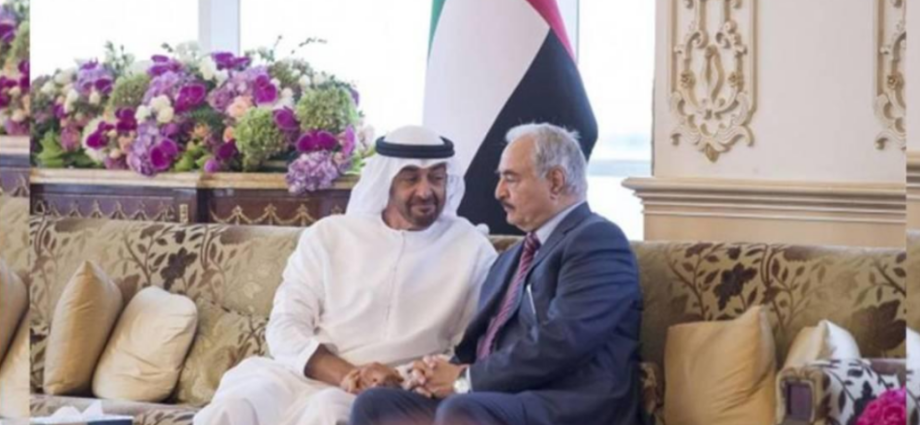
Meanwhile in Abu Dhabi, the FLA has pursued financial and logistical support through Emirati networks active across the Sahel-Sahara belt. The UAE’s growing footprint in Africa—through investments, military training, and covert partnerships—aligns with the FLA’s urgent need for external backing. But this alignment carries geopolitical risks, particularly with Algeria.
Algeria’s red flag: UAE ties to Mali’s rebels spark regional alarm
For Algeria, Mali’s Sahara frontier is not negotiable. With over 1,000 kilometers of shared border, Algiers views Sahel stability as a core national security priority. Recent tensions with the UAE over regional rivalries have heightened Algeria’s sensitivities. Any Emirati support to the FLA is seen in Algiers as a direct threat to its southern flank—a potential breach that could destabilize a buffer it has spent decades securing.
Algeria’s counter-move: rebuilding influence with Bamako and Niamey
Faced with the risk of foreign interference, Algeria is doubling down on diplomacy. Over the past twelve months, Algerian officials have intensified talks with Malian and Nigerien authorities to restore trust and coordinate on security, border control, and anti-trafficking efforts. This strategic re-engagement is not just rhetorical. Algeria has renewed economic cooperation with both capitals, offered intelligence-sharing platforms, and pushed for joint military operations along the common borders.
For Bamako, aligning with Algiers offers a pragmatic alternative to the collapsing peace process and the FLA’s external alliances. For Niamey, it’s a chance to secure the northern corridor against insurgent infiltration. The renewed partnership sends a clear message: Algeria will not cede influence in the Sahel to Gulf powers or Libyan factions.
What comes next: a fragile balance
The coming months will test whether Algeria can sustain its diplomatic offensive against the backdrop of a resurgent FLA seeking foreign arms and funding. The Sahara’s vast desert corridors remain porous, and smuggling networks are resilient. If the FLA secures new supply lines via Libya or the UAE, its operational capacity could rebound. Conversely, if Algeria succeeds in isolating the movement diplomatically and militarily, the rebels may face irreversible decline.
The stakes are high—not just for Mali’s stability, but for regional power dynamics. Whoever controls the Sahara’s crossroads may ultimately decide the Sahel’s next chapter.
Comments are closed, but trackbacks and pingbacks are open.