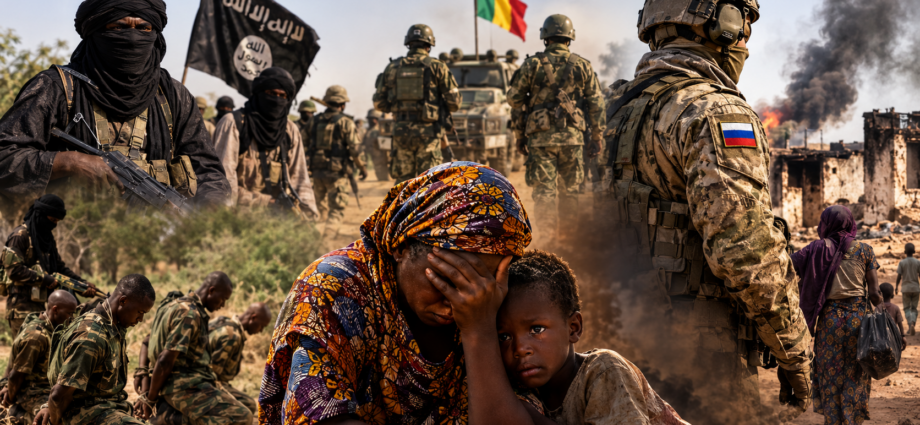
Mali’s military faces dual threats as civilians caught in crossfire
The latest operations in Mali reveal a troubling paradox: while government forces suffer fatal attacks from the Group for the Support of Islam and Muslims (JNIM), civilians continue to bear the brunt of excessive violence allegedly carried out by the Malian army with backing from Africa Corps.
This juxtaposition of military losses and civilian casualties underscores a critical failure in protecting vulnerable communities. Reports indicate that JNIM has intensified its offensives against military outposts, yet the army’s response has allegedly included indiscriminate violence against civilians, further destabilizing already fragile regions.
Civilian lives at risk as security strategy falters
The Malian army, already stretched thin by jihadist attacks, now faces accusations of contributing to the civilian death toll. According to documented accounts, scores of non-combatants have been killed in operations described by human rights observers as disproportionate and unchecked.
The involvement of Africa Corps a Russian-affiliated contingent operating alongside Malian troops has intensified scrutiny. Questions persist about accountability, particularly when foreign military partners participate in operations that result in civilian harm. The alliance between Bamako and Moscow, once touted as a cornerstone of Mali’s security strategy, now faces mounting scrutiny over its effectiveness and adherence to international humanitarian standards.
Who is accountable when civilians pay the price?
The conflict’s human cost extends beyond battlefield losses. The deaths of soldiers many executed after capture by JNIM highlight the relentless threat facing Mali’s armed forces. Yet the killing of civilians in military operations demands urgent answers: Who is responsible, and can such actions be justified under the guise of counterterrorism?
Independent investigations are urgently needed to determine whether Malian forces, or their foreign allies, have violated humanitarian laws. Without transparent accountability, the cycle of violence will persist, leaving communities trapped between jihadist brutality and state-sanctioned force.
Security promises fall short as civilian suffering grows
Government narratives of territorial recovery and sovereignty ring hollow for communities reeling from unchecked abuses. Military victories over JNIM cannot be declared successes if they come at the cost of civilian lives.
The Malian state must prioritize civilian protection over short-term operational gains. This includes enforcing strict rules of engagement, investigating alleged abuses, and holding perpetrators to account regardless of their affiliation. The true measure of Mali’s security strategy lies not in the number of operations conducted, but in the safety and justice delivered to its people.
Until then, the country’s civilians will remain pawns in a conflict where protection is promised but violence persists.
By Alasane OUEDRAOGO — Journalist
Comments are closed, but trackbacks and pingbacks are open.