Rabat upholds historical claims while addressing migration challenges
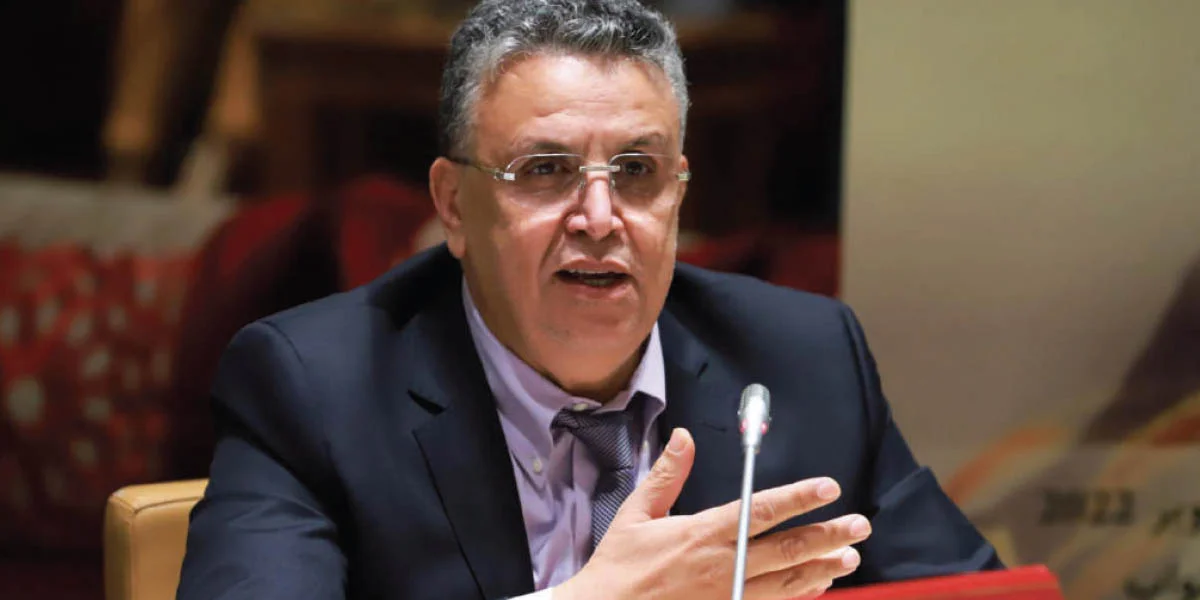
The Moroccan government has once again brought attention to its long-standing territorial claims over Ceuta and Melilla, emphasizing the need for ongoing dialogue with Spain regarding these two enclaves. Morocco considers both cities part of its national territory, and discussions on this matter remain open as part of a broader, patient strategy, according to Justice Minister Abdellatif Ouahbi.
During a recent interview, Ouahbi reiterated that the issue is frequently raised during bilateral meetings between officials from both nations. He also stressed that Spain must take full responsibility for accommodating and repatriating unaccompanied Moroccan minors who recently crossed into Ceuta in large numbers on July 30 and 31. The minister criticized Madrid’s approach, arguing that while Spain urges Morocco to curb irregular departures, those who successfully reach Spanish soil are granted access to legal procedures.
Ouahbi further highlighted the importance of shared legal frameworks and operational mechanisms between the two countries to combat irregular migration. He emphasized that Morocco cannot be expected to serve as Europe’s sole border guardian.
Madrid rejects Moroccan claims with firm stance
The Spanish Ministry of Foreign Affairs swiftly responded to Morocco’s renewed assertions, firmly rejecting any possibility of negotiations regarding the sovereignty of Ceuta and Melilla. A spokesperson for the ministry reiterated that the international community recognizes these cities as an integral part of Spain’s territory, and their status is not subject to discussion.
During a visit to Ceuta, Spanish Foreign Minister José Manuel Albares focused solely on the recent migration surge, commending Morocco for its willingness to repatriate unaccompanied minors who arrived during the recent influx.
Spanish officials split over Morocco’s claims
Reactions within Spain have been divided. Juan José Imbroda, President of Melilla and a member of the opposition Partido Popular (PP), sharply criticized Morocco’s position. In a public statement, he questioned the usefulness of Ceuta and Melilla if Spain is unable to manage its own borders and address youth migration outflows. Imbroda described the current migration situation as an “international embarrassment” for Morocco, urging the country to handle the crisis with greater dignity.
The Moroccan Ministry of the Interior, in turn, emphasized the shared responsibility of both nations in managing the recent surge of crossings into Ceuta. The ministry warned against online content inciting further attempts on August 15, stressing that combating irregular migration and human trafficking networks requires collaborative efforts rather than unilateral action.
Comments are closed, but trackbacks and pingbacks are open.