In the aftermath of the 2003 Casablanca attacks, Moroccan authorities recognized that security measures alone would not suffice to prevent radicalization. Instead, they embarked on a two-decade-long overhaul of the country’s religious landscape, focusing on imam training, extremist discourse prevention, and the strengthening of institutional frameworks to bolster national stability.
The Commander of the Faithful: A unique religious authority
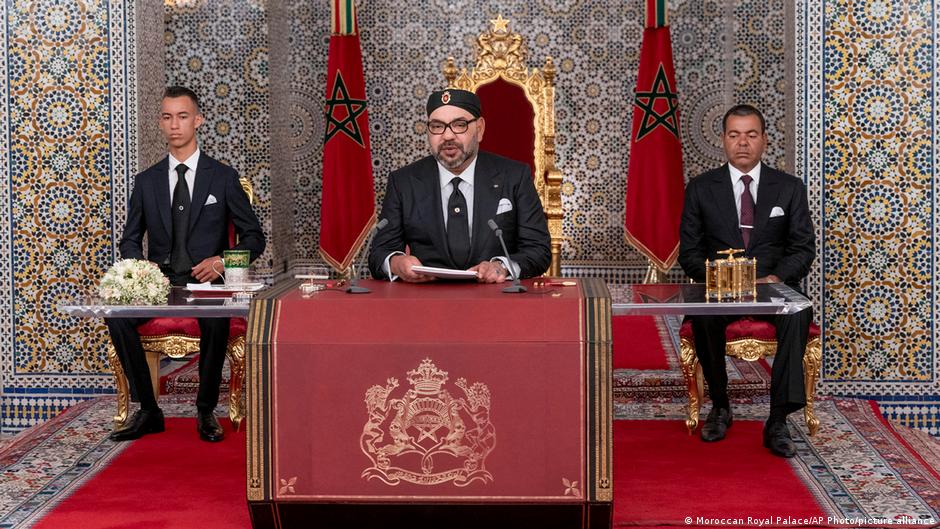
At the heart of this strategy lies the Commandery of the Faithful (Imarat al-Mouminine), an institution enshrined in Morocco’s Constitution and placed under the direct authority of King Mohammed VI. This role grants the monarch not only political leadership but also religious legitimacy, enabling him to guide theological discourse and promote a moderate interpretation of Islam.
According to Alexandre Negrus, President of the Institute for Applied Geopolitical Studies (IEGA) and co-author of a recent report, the Commandery of the Faithful distinguishes Morocco’s approach from other nations attempting to regulate religious spaces. “What sets Morocco apart is its ability to regulate religious discourse from within the faith itself,” he explains. “The King is not merely a political overseer but a recognized religious authority.”
A three-pillar Islamic framework
The Moroccan model rests on three foundational doctrinal references: Maliki jurisprudence, historically dominant across the Maghreb and Sahel; Ash’arite theology, which harmonizes faith and reason; and Sufism, which addresses spiritual and communal aspirations often exploited by extremist groups. This balanced approach aims to neutralize ideological vulnerabilities by fostering a resilient and inclusive religious narrative.
Regional influence and inherent challenges
While Morocco’s strategy has drawn admiration from neighboring Sahelian nations grappling with jihadist threats, experts caution against direct replication. Driss Aït Youssef, a security analyst, notes that the model’s success is deeply tied to the King’s dual role as both political leader and Commander of the Faithful—a position that enjoys widespread societal trust. “This legitimacy is difficult to transplant elsewhere,” he observes. “The Moroccan experience offers valuable lessons but cannot be applied identically in other contexts.”
The IEGA report highlights Morocco’s proactive initiatives, including the Moussalaha program, which facilitates the religious and social reintegration of individuals convicted of terrorism-related offenses. Additionally, the Mohammed VI Institute annually trains hundreds of imams from across Africa, equipping them with tools to propagate a moderate interpretation of Islam in their home countries.
Navigating digital radicalization and institutional limits
Despite its achievements, Morocco’s model faces modern challenges. Negrus points to the standardization of sermons in official mosques, which, while preventing radicalization, sometimes creates a disconnect between institutional Islam and the everyday concerns of worshippers. “The digital space has become a new battleground,” he warns. “Radical discourses thrive online, beyond the reach of traditional regulatory bodies.”
The report underscores that while Morocco’s approach serves as a source of inspiration, its success hinges on unique national factors—particularly the monarchy’s religious legitimacy—that may not translate easily to other regions. Nevertheless, it provides critical insights for societies seeking to counter radicalization and identity-based fractures amid the Sahel’s persistent security crises.
Comments are closed, but trackbacks and pingbacks are open.