Moussa Sarr’s justice ministry: navigating Senegal’s political challenges and ousmane sonko’s dissent

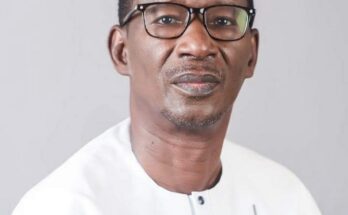
Me Moussa Sarr has been appointed as the new Minister of Justice in a particularly charged environment, marked by significant political and judicial stakes. His extensive background as a lawyer and his legal expertise are expected to be invaluable assets as he navigates the complex challenges ahead.
The elevation of Moussa Sarr to lead the Ministry of Justice unfolds against a backdrop of intense political and judicial activity. This includes pressing expectations for governance accountability and the ongoing sensitivity surrounding cases related to political violence that occurred between 2021 and 2024.
As the former legal counsel to President Bassirou Diomaye Faye, the new Keeper of the Seals now assumes a critical and strategic portfolio, central to the current institutional dynamics. This is a significant development in Africa politics English discussions.
With over two decades of experience at the bar, Me Moussa Sarr has built a distinguished career in business litigation. His specializations encompass economic criminal law, banking law, real estate law, and public business law. He is also recognized for his teaching contributions at several higher education institutions in Dakar.
His technical proficiency is highlighted by supporters as a key advantage for leading a ministry tasked with handling intricate matters, particularly those involving public finance management and judicial oversight procedures.
However, the appointment of Me Moussa Sarr has not garnered universal approval within the political sphere. It emerges amidst persistent disagreements between the Head of State and his former Prime Minister, Ousmane Sonko, notably concerning the direction of the government’s accountability policy.
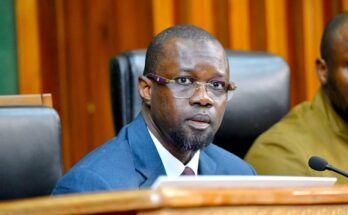
During a recent public address, Ousmane Sonko voiced reservations regarding the adopted strategies, while simultaneously affirming that his concerns were not directed at the minister personally. Nevertheless, this stance reveals a deeper divergence on the methodology for addressing public management affairs, a topic frequently discussed in African news today.
governance accountability: balancing rigor with institutional prudence
Currently, two distinct perspectives are clashing at the highest echelons of the executive. One approach advocates for unwavering firmness, pushing for the strict and swift enforcement of sanctions for mismanaging public funds. The other favors a more cautious approach, emphasizing adherence to judicial procedures and preventing any potential political weaponization of justice.
In this delicate environment, the Ministry of Justice becomes a crucial arena for arbitration, where the boundary between demanding transparency and maintaining institutional stability remains exceptionally fine.
Among the primary challenges awaiting the new Keeper of the Seals is the management of cases linked to the political violence that gripped the nation from March 2021 to February 2024. These events profoundly impacted national political life and continue to fuel demands for justice from victims’ collectives and civil society organizations, a significant aspect of African society news.
Despite the enactment of an amnesty law in March 2024, heated debates persist regarding the classification of these incidents and the potential necessity for further prosecutions or complementary reparation mechanisms.
Caught between the imperative for accountability, pressure from political stakeholders, and strong societal expectations, Moussa Sarr assumes leadership of a pivotal department where every decision carries the potential for significant political ramifications.