Niamey sets stage for regional education reform under AES banner
Niamey has opened the first ministerial conference of the Alliance of Sahel States (AES) education and training sector, bringing together leaders from Niger, Mali and Burkina Faso to address a deepening educational crisis. The summit, chaired by Niger’s Prime Minister Ali Mahamane Lamine Zeine, convenes amid severe shortages of qualified teachers and widespread school closures driven by armed violence across the region.
Structural shortages threaten education quality across Sahel
Teacher deficits remain the most pressing challenge to educational sovereignty. In Niger, official figures for the 2023–2024 academic year show 69,636 primary school teachers serving over 3 million pupils—an average ratio of 43 students per instructor. This imbalance reflects both infrastructure strain and chronic understaffing. The situation extends beyond sheer numbers: teacher training and qualification levels have also come under scrutiny.
In May 2026, Niger’s Minister of National Education Élisabeth Shérif acknowledged that the scarcity of qualified educators and inconsistent teaching standards were critical internal weaknesses in the system. With 105,869 teachers across all levels for nearly 3.95 million students, the country continues to grapple with high rates of uncertified personnel.
Historical data from UNESCO highlights the depth of the crisis. As early as 2017, 78.5% of 70,491 public school teachers in Niger were on temporary contracts, with some entering classrooms without pedagogical training. This underscores the urgent need to expand teacher training colleges and strengthen professional development programs.
Burkina Faso and Mali face compounded challenges
Both Burkina Faso and Mali are contending with similar shortages, further exacerbated by security constraints. In many rural and conflict-affected districts, teachers are reluctant to serve, while logistical barriers prevent timely deployment to remote areas. These systemic gaps risk undermining long-term educational resilience throughout the Sahel.
Violence drives mass school closures and learning loss
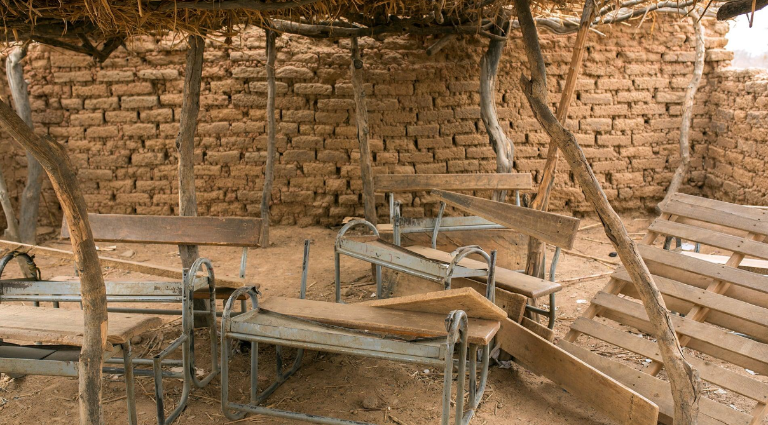
The spread of insecurity has forced thousands of schools to shut down, depriving children of their fundamental right to education. In Burkina Faso, official data from February 2024 recorded 5,336 closed schools affecting over 820,000 pupils and 24,000 teachers. Despite recovery efforts, many regions remain inaccessible, leaving entire cohorts of students without structured learning opportunities.
Mali’s education cluster reported 2,444 non-functional schools in June 2026, impacting about 733,200 children and 14,604 teachers—more than one in five registered institutions. In Niger, by the end of 2025, 1,097 schools had been closed due to security threats, affecting 93,676 students, including 48% girls. The Tillabéri region alone accounted for 1,032 such closures.
These closures disrupt learning, displace educators, and sever communities from essential educational services, creating long-term deficits in human capital development across the region.
Displacement crisis compounds educational breakdown
Forced population movements have intensified the pressure on already strained systems. As families flee violence, they lose access to local schools, often abandoning education altogether. Displacement figures highlight the scale of the emergency: over 2 million internally displaced persons in Burkina Faso, around 414,524 in Mali, and 548,386 in Niger—each figure reflecting families uprooted and children left without classrooms.
This influx strains host-region schools, which struggle to absorb new students lacking adequate facilities, materials, and qualified staff. For many children, displacement leads to extended absences or permanent dropout, deepening cycles of deprivation and inequality.
From declaration to action: building a resilient education future
The Niamey summit seeks to chart a path forward through coordinated action. Key priorities include aligning curricula, pooling instructional resources, mutualizing teacher deployment, and standardizing diploma recognition across AES member states. Strengthening technical and vocational education, along with expanding teacher training pathways, are central to the vision of a sovereign education system.
Yet practical implementation will require urgent measures: reopening shuttered schools, securing learning environments, recruiting and retaining teachers in high-risk zones, and rolling out alternative learning systems for displaced children.
The stakes could not be higher. Niger’s education ministry estimates that nearly five million children remain out of school. This staggering figure underscores the magnitude of the task ahead—and the need for tangible results, not just declarations of intent.
A sovereign Sahel must be measured not only by geopolitical unity, but by its ability to educate its youth, preserve its knowledge, and prepare a resilient generation for the challenges of tomorrow. At Niamey’s conference table, the challenge is clear: to turn ambition into classroom reality.
Comments are closed, but trackbacks and pingbacks are open.