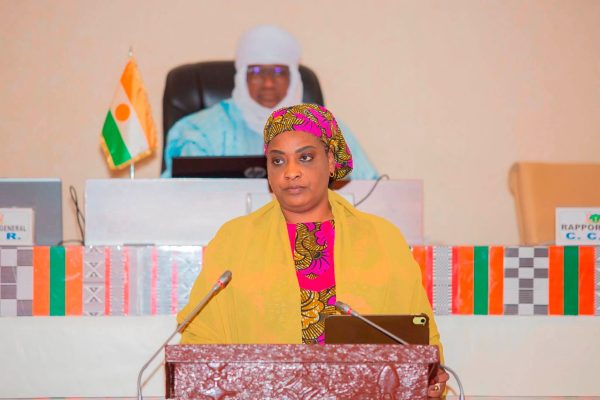
Niamey, July 28, 2026 – Niger’s public sector reform initiative has reached a significant milestone as the Consultative Council for Refoundation (CCR) convened its first ordinary session of 2026. Led by Dr. Mamoudou Harouna Djingarey, the council examined progress on key public administration reforms, with the Minister of Public Service, Labor, and Employment, Aïssatou Abdoulaye Tondi, presenting a comprehensive update on her department’s transformative initiatives.
The discussions centered on restructuring the state’s human resource management system to enhance performance, equity, and responsiveness to citizen expectations. The reforms aim to create a more agile, transparent, and citizen-focused public administration aligned with the broader Refoundation agenda.
Comprehensive public administration overhaul underway
The minister outlined sweeping reforms targeting the harmonization of the civil service, modernization of administrative services, and the implementation of robust human resource policies. These changes are designed to elevate service delivery standards while ensuring equitable treatment of all public servants.
A key objective is to build an administration capable of meeting the evolving needs of citizens while optimizing the management of state resources. The reforms reflect a commitment to institutional excellence and sustainable governance.
Digital transformation drives administrative efficiency
Digitalization remains at the heart of the reforms, with the Integrated State Human Resource and Payroll Management System (SIGRHEP) emerging as a cornerstone. This platform is set to revolutionize how the government manages its workforce by centralizing and securing administrative records.
To date, over 16,500 staff files have been digitized, while an additional 23,000 have been updated as part of the transition. Complementary custom applications have been developed to further streamline administrative operations. The system is projected to handle the personnel and payroll data of nearly 200,000 public servants, supported by a network of 150 human resource and payroll managers across the country.
Structural reforms and performance tools take center stage
Beyond digital upgrades, the ministry has implemented pivotal institutional changes. New legislation governing the civil service’s general status has been adopted, alongside performance evaluation tools and a strategic redeployment plan for staff in post-crisis regions.
The department has also prioritized professional examinations, direct recruitments, and career progression tracking for thousands of civil servants. These measures are part of a broader effort to professionalize the public sector and align it with modern governance standards.
The Council evaluates reform challenges and progress
Following the presentations, CCR members engaged in constructive dialogue with government representatives, examining the challenges of administrative modernization, human resource management, and employment policies. The session concluded with the adoption of a motion commending the government’s reform efforts.
The reforms underscore Niger’s determination to leverage administrative modernization as a catalyst for improved public service delivery, state efficiency, and the successful implementation of the Refoundation agenda.