
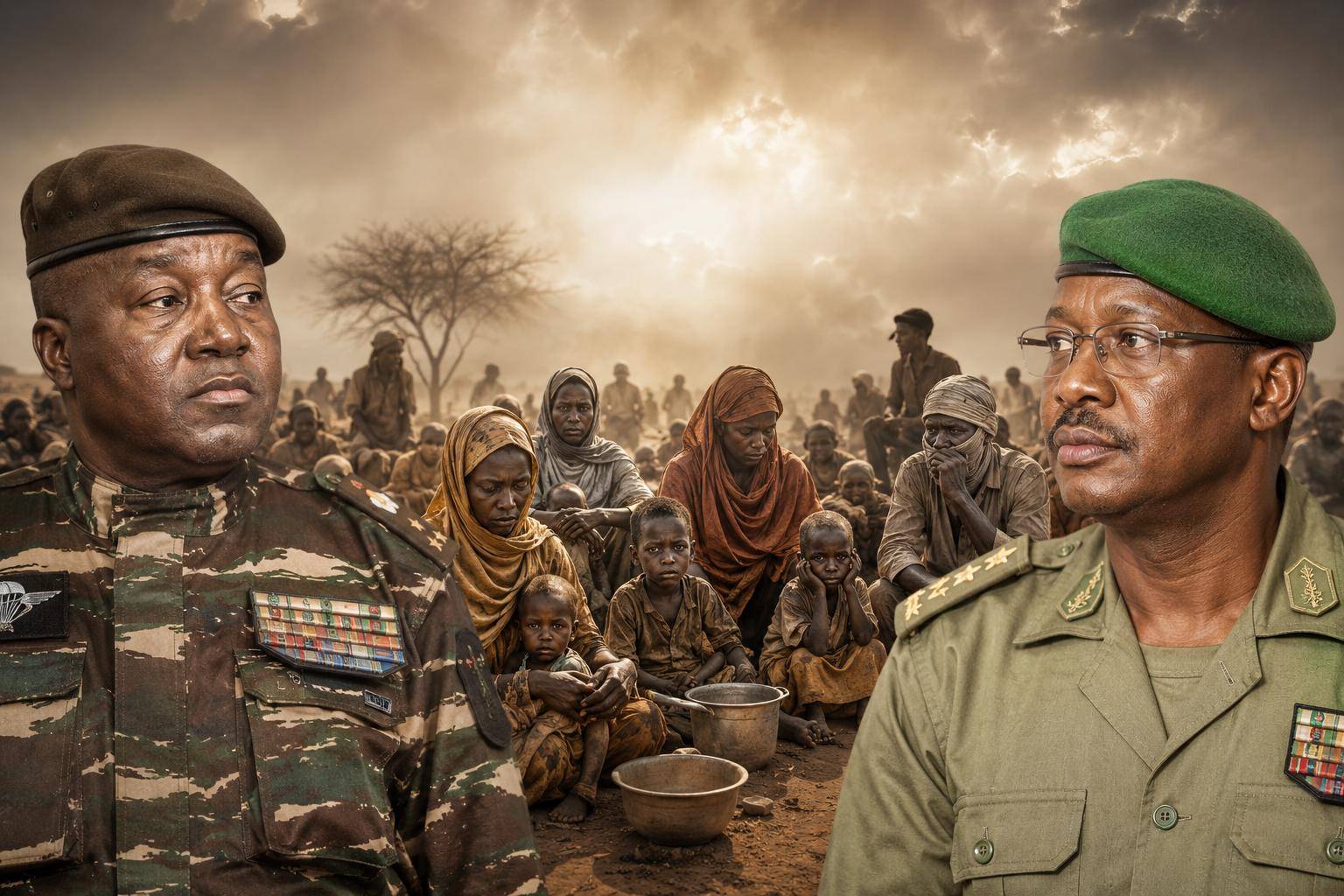
The Nigerien military’s recent decision to split Operation Garkoi into two new tactical headquarters—Operation Akarasse along the Algerian border and Operation Klafoki along the Chadian frontier—has sparked sharp criticism from governance and security analysts across the Sahel. While official statements emphasize efficiency and coordination, critics argue the move is less about strategy and more about bureaucratic expansion that drains public resources at a time of severe economic hardship.
Costly restructuring amid deepening social crisis
The creation of two parallel command structures requires recruiting additional high-ranking officers, detachment leaders, and logistical staff, further inflating the military budget. Critics describe this as a political maneuver to reward military elites with promotions and financial perks, all while the population grapples with unprecedented poverty.
The disparity is glaring: while the state prepares to fund lavish new headquarters in Bilma and Arlit, essential public sectors like education collapse. Thousands of contract teachers have gone months without pay, trapped in extreme precarity. Redirecting funds to accommodate military hierarchy instead of paying public servants or supporting families is condemned as a reckless misuse of taxpayer money.
A fragmented army under siege
Beyond financial concerns, the split reflects a military struggling to contain surging terrorist threats. If stability were assured, the original command structure would have sufficed. The need to establish two specialized operations—one for Algeria’s border and another for Chad’s—signals that insurgent groups like Al-Qaeda, the Islamic State, and Boko Haram have overwhelmed centralized defenses.
This division reveals a military stretched thin, forced to stretch its forces across vast, opposing fronts. It exposes the escalating security crisis gripping the nation’s borders and confirms that terrorist activity is no longer confined to isolated zones but poses a systemic threat.
Ultimately, the launch of Operation Akarasse and Operation Klafoki appears less like a strategic advance and more like a desperate reaction to mounting pressure. For taxpayers, it means a heavy financial burden. For citizens, it means neglected priorities and deepening hardship. For the nation’s security, it signals a troubling entrenchment of instability.
