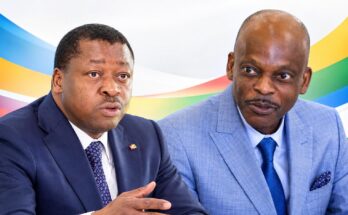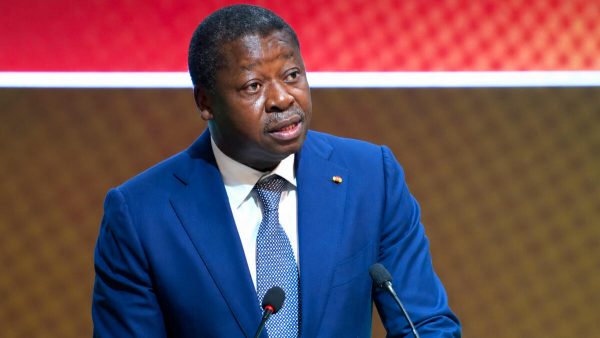
In a bold call to action, Faure Essozimna Gnassingbé, President of the Council, delivered a no-nonsense message at the third edition of the Biashara Afrika forum in Lomé. The gathering, held on Monday, May 18, 2026, brought together Africa’s top decision-makers to push for tangible economic progress across the continent.
The Togolese capital has firmly established itself as a hub for pragmatic African commerce. This year’s Biashara Afrika, co-organized by the African Continental Free Trade Area (AfCFTA) Secretariat and the Togolese government, set the stage for an offensive aimed at turning political ambitions into measurable economic outcomes. The forum focused squarely on boosting intra-African trade and investment, with leaders emphasizing the need for decisive action over lofty ideals.
ADVERTISEMENT
The Togolese leader’s address was more than rhetoric; it was a manifesto for change. He urged African nations to move beyond declarations of intent and embrace a results-driven approach: « The era of vision must now become the era of results. » In his view, Africa stands at a pivotal economic crossroads, with the collective capacity to transform political will into tangible progress. The time for hesitation, he asserted, is over.
Togo leads by example in the AfCFTA experiment
Rather than relying on abstract theories, Togo is putting its strategy into practice. Positioned as a strategic gateway, the country is leveraging its infrastructure to become a key player in the AfCFTA:
- Strengthening regional connectivity to streamline trade corridors.
- Serving as a premier logistics hub, anchored by its deep-water port—an unmatched asset in West Africa.
- Implementing bold structural reforms that have earned continental recognition for improving the business climate.
Through this model, Lomé aims to prove that economic integration can yield immediate dividends when aligned with the needs of businesses. The message is clear: Africa’s potential can only be unlocked through concrete steps, not empty promises.
The AfCFTA in numbers: a continental behemoth with hurdles to clear
The AfCFTA represents a monumental economic project, unparalleled in scale. Its ambitions are vast:
Key AfCFTA statistics
- 55 member states.
- A consumer base of 1.4 billion people.
- A combined GDP of approximately $3.4 trillion.
Yet, despite its potential, the reality on the ground tells a different story. The Biashara Afrika forum took direct aim at the bottlenecks stifling intra-African trade. Priorities identified by participants include:
- Removing non-tariff barriers.
- Addressing chronic infrastructure deficits.
- Easing access to financing.
- Revamping fragmented value chains.
- Integrating small and medium-sized enterprises (SMEs) into cross-border trade.
Without these critical steps, the AfCFTA risks remaining a theoretical framework rather than a catalyst for growth.
Biashara Afrika: turning AfCFTA promises into action
« We must shift from intentions to tangible outcomes, » declared a Kenyan entrepreneur at the forum, echoing Faure Gnassingbé’s call. A Nigerian economist added, « The AfCFTA will only gain credibility if SMEs are included in this single market. » These sentiments reflect the urgent demand from economic players for swift and inclusive implementation.
The forum’s discussions extended beyond technicalities, framing the AfCFTA as part of a broader geopolitical shift. Africa is positioning itself to wield greater influence in global trade, with the AfCFTA serving as a strategic response to globalization challenges and international trade tensions.
The message from Lomé is unequivocal: Africa now has the legal frameworks, natural resources, and human capital required. The challenge no longer lies in designing the future—but in executing it without delay.