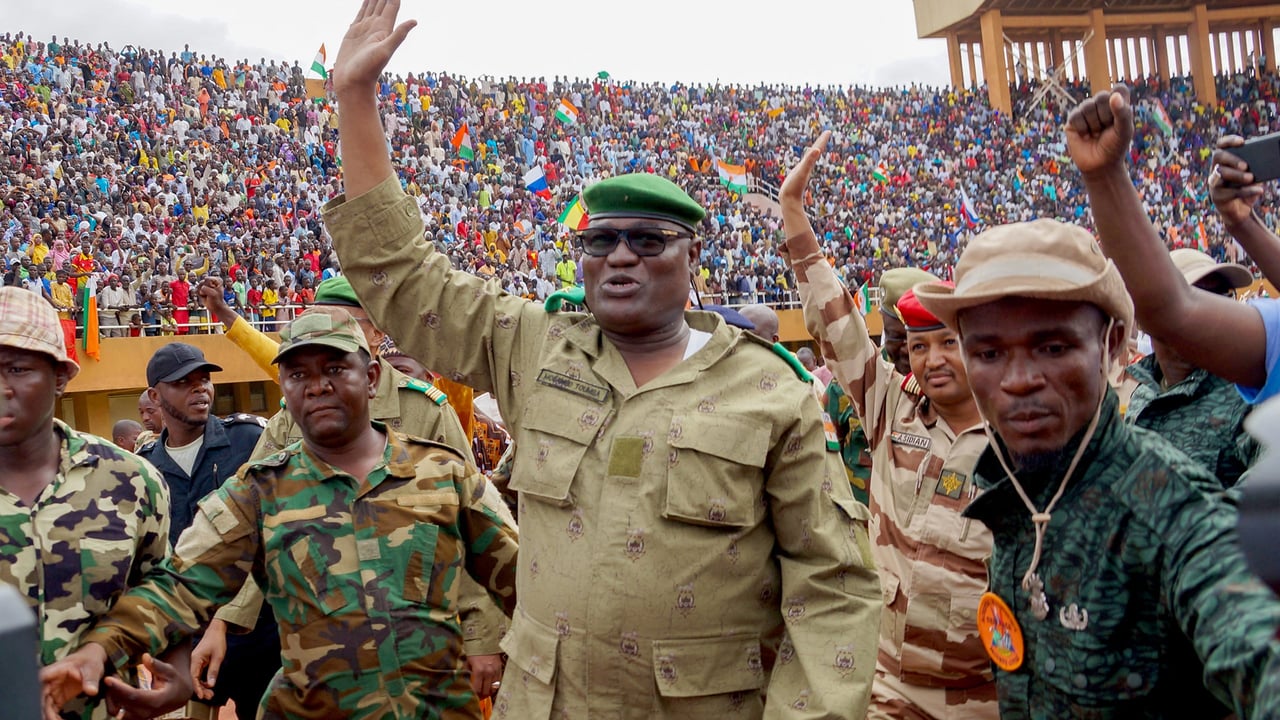

The facts. In a lengthy interview spanning two and a half hours, broadcast on April 21 via the national network RTN, General Mohamed Toumba, Niger’s Minister of the Interior and Minister of State, discussed various aspects of the country’s security landscape. As Niger faces a surge in jihadist violence, particularly within the Tillabéry region, the General reaffirmed the military junta’s recurring criticisms of France.
His remarks also touched upon the strained diplomatic ties between Niamey and Cotonou. This comes as Patrice Talon prepares to conclude his term, handing over the presidency to his successor, Romuald Wadagni, whose inauguration is scheduled for May 24. Reporting on these shifts is essential for those following African news today.
“Patrice Talon has stepped down, yet Talon was never the core issue. The true problem remains Macron,” the Nigerien General claimed. He further asserted that Talon served as a tool for French interests, stating, “He provided the French with the infrastructure to establish themselves and attempt to launch strikes against us from his soil. That is the crux of the matter.”
When questioned about his expectations for the incoming administration of Romuald Wadagni, the Interior Minister called for “proof of sincerity.” He insisted that Bénin must declare its independence from French interests and ensure that Cotonou does not permit French forces to use its territory for hostile actions against neighboring states. This is a significant development in pan-African current affairs.
Background context. This verbal offensive from a prominent member of the Nigerien junta is part of a broader pattern. Relations between Bénin and Niger have plummeted since General Abdourahamane Tiani seized power through a military coup on July 26, 2023.
Earlier this year, following attacks on the Niamey international airport and Base 101—where Russian Africa Corps personnel are stationed—Abdourahamane Tiani issued stern warnings. He specifically targeted leaders like Emmanuel Macron, Patrice Talon, and Alassane Ouattara, suggesting that while they had been vocal in their opposition, they should prepare for Niger’s response. He accused France, Côte d’Ivoire, and Bénin of complicity in attacks claimed by the Islamic State.
Significance of the move. While General Mohamed Toumba’s warnings align with previous rhetoric, they carry extra weight as Romuald Wadagni prepares to lead Bénin. This analysis is vital for Africa politics English readers seeking to understand regional stability.
Securing 94% of the vote in the April 12 election, Patrice Talon’s successor has signaled a desire for reconciliation with Niamey. Wadagni has expressed a firm belief in the necessity of dialogue, noting that regional neighbors face identical hurdles such as security threats, poverty, and youth unemployment. He emphasized that working together is the only path toward collective prosperity.
Furthermore, Wadagni noted that while security cooperation with Niger and Burkina Faso currently falls short of expectations, regular communication between the respective military chiefs suggests that ties may eventually strengthen. However, this optimistic outlook does not appear to be mirrored by the leadership in Niamey, marking a complex chapter in African society news. According to reports from The Panafrican Press, the path to normalization remains fraught with tension.