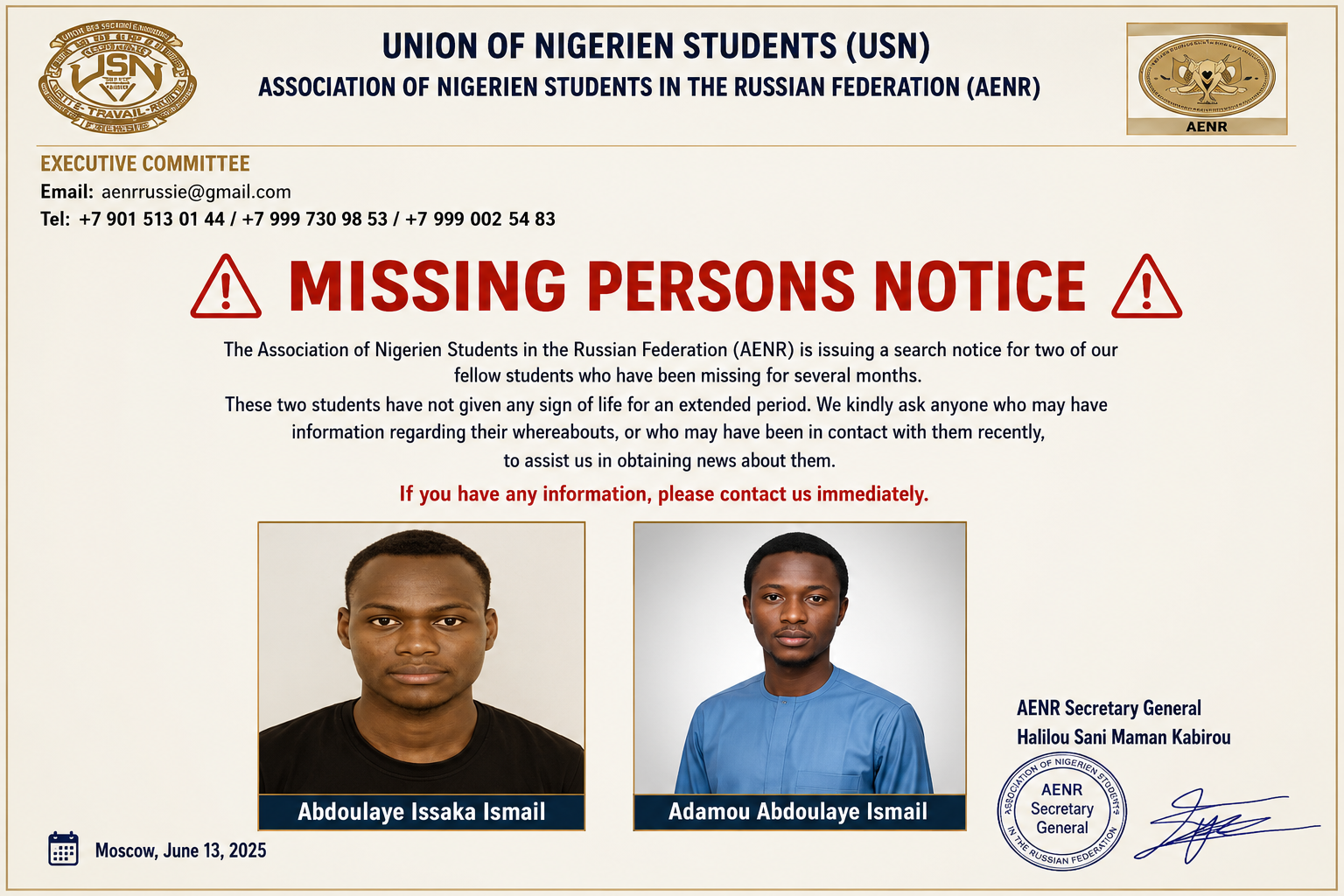
The Nigerien Student Association in Russia (AENR) has confirmed the death of Adamou Abdoulaye Ismaël, a young student from Niger who had been missing for months. His disappearance was first reported in June 2025, alongside another Nigerien student, Abdoulaye Issiaka Ismaël, whose death on the Ukrainian front had already been declared. While the exact circumstances of Adamou’s death remain undisclosed, the tragedy has once again plunged families in Niger into grief.
The loss of these two students raises pressing questions about the motivations behind their involvement in a conflict thousands of miles from their homeland—a war that holds no direct bearing on Niger’s national interests. As Russia deepens its ties with African nations, including Niger, through promises of scholarships, academic opportunities, and economic cooperation, the human cost of these engagements is becoming increasingly visible.
The two fatalities are not isolated incidents. Over the past two years, reports have emerged of African students and migrants in Russia being recruited or drawn into the Ukrainian war effort under opaque conditions. Many arrived in the country with aspirations of education or better prospects, only to find themselves entangled in a brutal conflict they neither initiated nor benefited from.
This grim reality underscores a troubling ethical dilemma: the exploitation of young Africans pursuing their dreams, only to be exposed to the horrors of war. The deaths of Adamou and Abdoulaye serve as a stark reminder of the human toll behind geopolitical maneuvers, where the most vulnerable often pay the highest price. As Moscow expands its influence across Africa, the question lingers: are the promises of partnership and opportunity worth the hidden risks?
Behind the diplomatic rhetoric and strategic calculations lie two shattered families in Niger, mourning sons who left seeking knowledge but never returned home. Their story is a poignant reflection of how, in the shadows of global power struggles, it is the innocent who bear the heaviest burdens.
Comments are closed, but trackbacks and pingbacks are open.