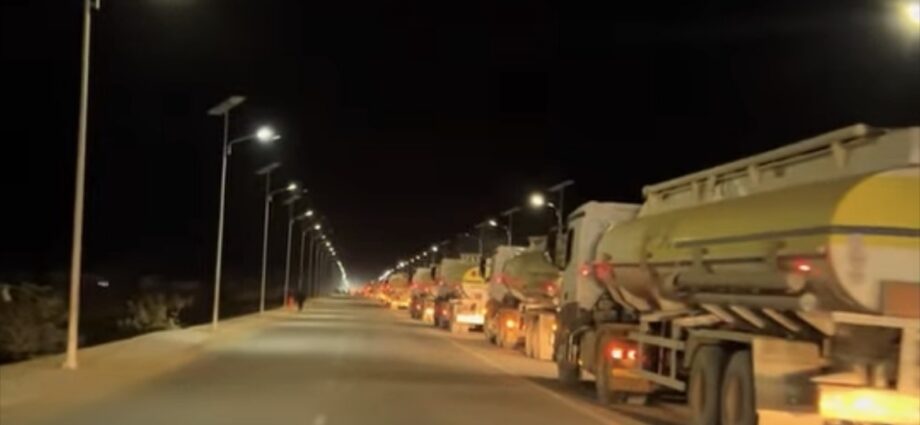
Nigeria’s neighbor, Niger, finds itself in a paradoxical situation: despite producing over 100,000 barrels of crude oil daily, the country continues to face severe fuel shortages. How can a nation with significant hydrocarbon resources struggle to meet domestic energy demands? This question now confronts the military regime led by General Abdourahamane Tiani.
Oil production soars, but domestic fuel remains scarce
The paradox of Niger’s energy sector has become impossible to ignore. Since the opening of the Agadem oil field in 2011 and the establishment of the Zinder refinery (SORAZ), Niger has positioned itself as a key player in West African hydrocarbons. Official 2024 figures indicated production levels of approximately 110,000 barrels per day, with 20,000 barrels refined domestically and 90,000 earmarked for export.
Yet this production capacity has failed to translate into reliable fuel availability. Motorists routinely face empty pumps, while transporters report significant delays. The economic impact ripples across sectors: businesses struggle with deliveries, artisans grapple with operational disruptions, and the transportation industry operates at reduced capacity.
Structural imbalances drive fuel deficit
Government data reveals alarming trends in domestic fuel availability. Between January and August 2026 alone, Niger reported a gasoline shortfall of 196.62 million liters, representing a threefold increase from 2024 levels. Diesel shortages reached 52.60 million liters during the same period. These figures underscore a fundamental mismatch between production capacity and national consumption needs.
The Zinder refinery functions, but its output cannot meet demand. The gap between crude production, refining capacity, financial constraints, and distribution logistics has exposed critical weaknesses in Niger’s energy management.
Algeria provides temporary relief amid transparency concerns
In response to mounting shortages, Niger turned to Algeria. A March 2026 memorandum of understanding was followed in June by three agreements between Niger’s state-owned SONIDEP and Algeria’s Sonatrach subsidiaries. Most recently, a November 2026 shipment delivered 1.65 million liters of fuel via 53 tanker trucks to alleviate domestic pressure.
While this cooperation offers immediate relief, it raises pressing questions about Niger’s negotiation position. What financial commitments accompany these agreements? What volumes and pricing structures govern the supply? How do these terms compare with alternative procurement strategies? Without clear answers, citizens remain skeptical about the true costs of this dependency.
Financial disarray deepens sectoral crisis
October 2026 brought another revelation: a special committee was formed to address oil sector debts totaling millions. This decision, while acknowledging systemic failures, suggests long-standing financial mismanagement within the sector. The committee’s three-month mandate to restructure debts among SONIDEP, SORAZ, NIGELEC, and China’s CNPCNP highlights the severity of the crisis.
The question remains unanswered: how did a strategic sector, supposedly generating substantial state revenue, accumulate such financial liabilities that threaten its own operations?
Sovereignty claims tested by everyday reality
General Tiani’s administration has consistently framed hydrocarbon production as a pillar of national sovereignty. Yet the persistent fuel shortages expose a glaring disconnect between policy rhetoric and lived experience. Citizens endure daily disruptions fuel station queues, interrupted business operations, and constrained mobility despite the country’s oil wealth.
The regime bears responsibility not only for resolving immediate shortages but for demonstrating how oil revenues can translate into tangible energy security for its people. The arrival of Algerian fuel may offer temporary respite, but it does not address the underlying structural failures in production, refining, and distribution.
For Niger to achieve credible energy sovereignty, it must move beyond export-focused production models and implement transparent, efficient, and sustainable management of its petroleum resources.
By Alasane OUEDRAOGO — Journalist
Comments are closed, but trackbacks and pingbacks are open.