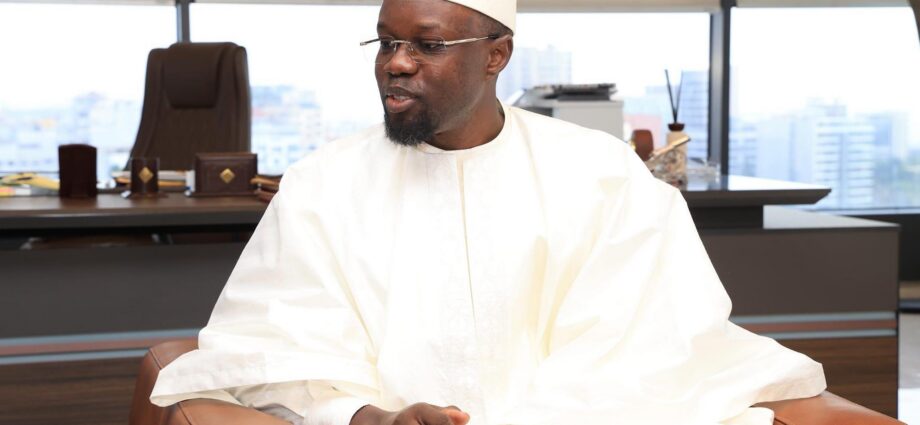
Senegal stands at a pivotal moment as the absence of opposition leader Ousmane Sonko from the Youth Olympic Games opening ceremony sparks fresh debate over national unity and institutional dialogue. Political analysts and public figures are now urging a decisive shift toward reconciliation, framing the moment not as a fracture, but as an opportunity to rebuild bridges across the political divide.
Breaking the impasse: why Sonko’s exclusion is more than a protocol issue
What began as a protocol discussion has evolved into a symbolic flashpoint. While President Bassirou Diomaye Faye and key government figures attended the ceremony at Stade Abdoulaye Wade, Sonko—despite his status as former parliamentary leader—was not invited. Amadou Ba, a senior PASTEF official, publicly questioned the government’s decision, stating that as a former second-ranking official of the state, Sonko deserved a place at a ceremony meant to celebrate Senegal’s youth.
This controversy is not merely about attendance; it reflects deeper institutional tensions. Analysts point to a growing divide between the executive and legislative branches, one that risks overshadowing national priorities. The moment demands urgent attention—not to escalate conflict, but to redirect energy toward shared goals.
The power of sport in healing political divides
The Youth Olympic Games represent more than athletic competition; they are a unifying force. Journalist Samba Magane emphasized this during a national broadcast, recalling how Senegalese citizens rallied around the national football team in moments of division. “The national team belongs to Senegal—not to any political party,” he noted. He argued that sport, when harnessed thoughtfully, can act as a neutral platform for national cohesion.
This perspective challenges political actors to rise above partisan interests and embrace a spirit of cohabitation. Even amid disagreement, there remains a moral imperative to uphold the nation’s collective identity and future.
A historic chance to reset political relations
Historian Abderrahmane N’Gaïdé framed the current moment as a turning point. He drew attention to the symbolic weight of a simple gesture: a handshake. “A handshake, once rare, now carries immense meaning,” he said. “It signals not just reconciliation, but a willingness to move forward together.”
N’Gaïdé urged political leaders to seize the momentum created by recent social truce agreements and the Youth Olympic Games to reopen channels of communication. His call is clear: rather than deepen divisions, this is a time to restore trust and renew the promise of inclusive governance.
What’s next for Senegal’s political trajectory?
As Senegal navigates this delicate phase, two paths emerge. One leads to continued polarization, where symbolic gestures become political weapons. The other leads toward renewal, where dialogue replaces division, and shared purpose guides decision-making.
For citizens and leaders alike, the choice is not just about protocol—it’s about the kind of nation they want to build. The Youth Olympic Games may have ended, but the opportunity for a political reset has only just begun.
Comments are closed, but trackbacks and pingbacks are open.