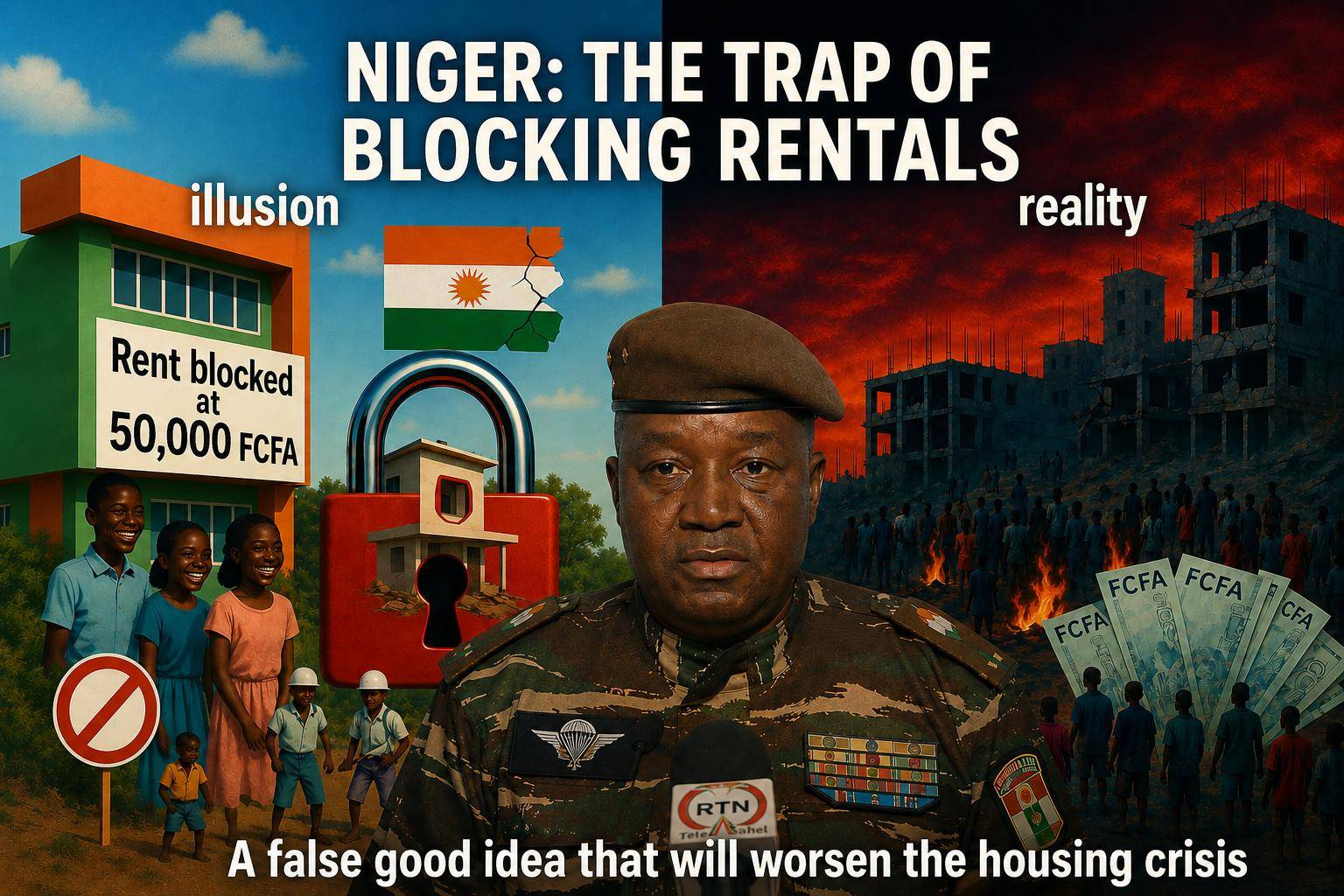
In a move aimed at currying favor with urban populations, Niger’s transitional authorities have enacted legislation capping residential rents in Niamey between 15,000 and 80,000 West African CFA francs. While the policy seeks to curb speculative practices and ensure affordable housing, economists warn that such administrative price controls often backfire, creating distortions that could worsen the very crisis they aim to resolve.
Why price controls fail in housing markets
The fundamental principle of supply and demand governs real estate just as it does other sectors. When housing availability lags behind demand, prices inevitably rise. The only sustainable solution to high rents is to increase supply through new construction—not by artificially suppressing prices through decree.
The new rent ceilings, particularly the 80,000 FCFA cap on social housing units in Niamey, introduce three critical vulnerabilities:
- Investment paralysis: With profits capped by law, private developers and landlords have little incentive to finance new projects. Capital that would otherwise flow into housing construction may instead seek safer, more profitable sectors.
- Deterioration of existing stock: Reduced rental income leaves property owners unable to maintain buildings. Expect leaky roofs, crumbling walls, and neglected plumbing to become widespread as maintenance budgets vanish.
- Emergence of shadow markets: When formal rental channels fail to allocate housing fairly, informal arrangements take over. Prospective tenants may resort to under-the-table payments to secure priority access, undermining transparency and fairness.
State overreach without resources
For rent controls to function without stifling the market, the government would need to compensate by rapidly expanding public housing projects. Yet Niger’s fiscal constraints—compounded by political turbulence and reduced international aid—make such an initiative implausible. The state lacks both the funds and the administrative capacity to deliver tens of thousands of affordable units in the short term.
Moreover, the policy sends a chilling signal to local financial institutions. Banks, wary of regulatory uncertainty, may curtail lending to real estate ventures. The ripple effects would extend beyond developers to construction workers, material suppliers, and small businesses reliant on housing-related commerce.
A populist gamble with long-term consequences
This decree reflects a classic case of short-term political calculus: appealing to urban voters during a transitional period while ignoring economic fundamentals. History shows that price controls rarely address housing shortages; instead, they distort incentives and exacerbate scarcity.
By discouraging investment and accelerating the decay of existing housing stock, the military-led administration risks transforming a cost-of-living crisis into a full-blown housing emergency. Securing a decent home in Niamey could soon become an even more daunting challenge for ordinary citizens.