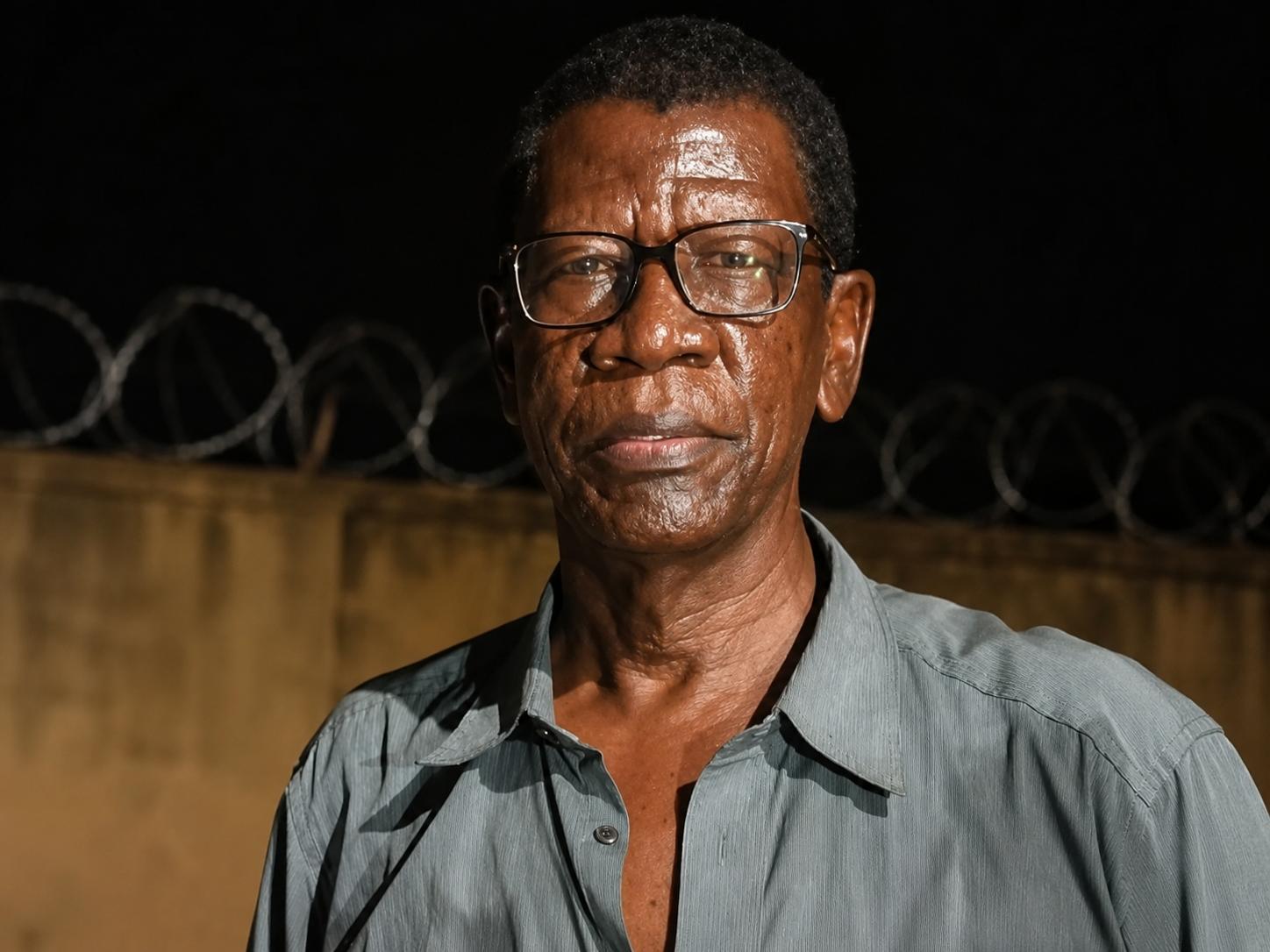
A capital on edge after a veteran broadcaster vanishes
The shockwaves from the sudden disappearance of Moussa Kaka, a well-known Nigerien journalist and director-general of Radio Télévision Saraounia (RTS), are still rippling through Niamey and far beyond. A historic figure in Sahelian news, Kaka has been out of contact for several weeks, and the mounting uncertainty has triggered an outpouring of anger and anxiety among colleagues, rights advocates, and international observers.
The veteran reporter and former correspondent for Radio France Internationale (RFI) has built a reputation over decades for rigorous coverage of security crises, political turmoil, and complex community dynamics across the Sahel. His professional path — marked by in-depth investigations and rare access to key actors on the ground — has repeatedly put him at odds with various regimes.
No official word, no trace
Accounts gathered from relatives and local colleagues indicate that the journalist stopped communicating after leaving his home in Niamey. No official reason for any detention has been given by the transitional authorities, and efforts to obtain information from security services and police stations in the capital have so far produced nothing.
What began as a private worry has quickly turned into a public controversy, with questions mounting about the circumstances of his disappearance and the absence of any explanation from the state.
RSF raises alarm and demands transparency
Press freedom organization Reporters Without Borders (RSF) reacted swiftly to the silence surrounding the case. Speaking on Africa Radio, Sadibou Marong, head of RSF’s West Africa desk, voiced deep concern over what he described as a troubling detention or enforced disappearance.
“The disappearance of Moussa Kaka is an extremely alarming signal for the entire media landscape in Niger and the Sahel. We urgently call on the Nigerien authorities to shed full light on his situation, to specify whether he is being held by intelligence services, and to guarantee his physical integrity and immediate release,” Marong said.
The organization stressed that protecting journalists is the responsibility of the transitional government, and that reporting news cannot be equated with an act of destabilization.
A profession pushed to the brink
The case has become a rallying point for Nigerien journalists, who see it as part of a broader deterioration of the guarantees that once allowed them to work. Across the Sahel, the space for independent reporting has narrowed steadily since military governments took power, with international outlets suspended, activists and civil society figures summoned or detained, and local reporters increasingly forced into self-censorship.
Beyond Niger: a regionwide warning sign
Kaka’s disappearance is unfolding against an especially harsh backdrop for journalism in the countries of the Alliance of Sahel States (AES) — Niger, Mali, and Burkina Faso. For many in the profession, the case illustrates a worrying erosion of the basic protections that make a free press possible.
As the subregion grapples with immense security and economic challenges, the loss of one of its most respected voices casts a dark shadow over the future of the right to report freely in Niamey. The coming weeks will test whether the authorities offer answers — or whether the silence becomes the story itself.
Comments are closed, but trackbacks and pingbacks are open.