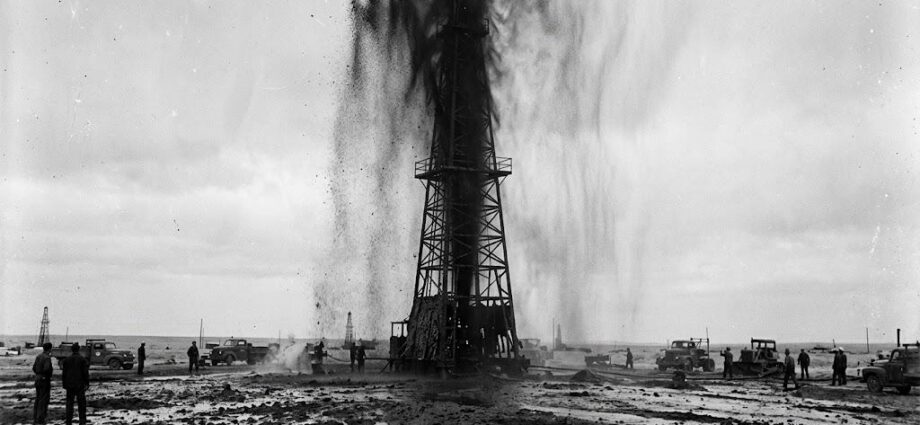
The unchecked industrial recklessness and institutional silence following a technical failure have turned a minor well incident into a looming environmental catastrophe. On September 25, 2026, a devastating geyser of crude oil and toxic gas erupted from Goumeri W8, a well located on the Agadem block deep in Niger’s desert landscape—over 1,700 kilometers from Niamey. What began as a routine malfunction has spiraled into an uncontrolled catastrophe: vast slicks of crude spread across the sands, while a toxic plume poisons the air with invisible fumes.
Seventeen days of denial before official recognition
It took the Nigerien government seventeen days—more than two full weeks—before it finally admitted on October 12 what had long been evident: an environmental emergency of “exceptional gravity.” During that window, every day of unchecked emission worsened the damage. The operator, China National Petroleum Corporation (CNPC), maintained absolute silence: no public statements, no transparency on the source or volume of the spill.
This calculated opacity reflects a pattern of environmental impunity that persists when foreign energy firms operate beyond rigorous oversight. The well, designed to pump 90,000 barrels per day to feed an export pipeline to Benin, was already operating at the limits of safety protocols. The crisis was not unforeseen—it was the predictable outcome of prioritizing output over environmental safeguards.
Undisclosed methane surge: a climate time bomb
While government statements downplayed the situation, satellite data from the European Sentinel-5P mission under the Copernicus program exposed the true scale of the disaster. The missing truth? A relentless flow of methane gas.
The scope of the leak is staggering:
- A toxic invisible threat: More than 40 tonnes of methane per hour are spewing from the well.
- A planetary burden: In three weeks alone, over 17,000 tonnes of methane have been released—80 times more potent as a greenhouse gas than CO₂ over a 20-year span.
- A lie of containment: Despite claims of “partial control,” space-based observations confirm the gas flow has not abated since the blowout began.
Failed response reveals deep industrial unpreparedness
The disaster has laid bare systemic failures. Two workers were severely injured in the initial blast, yet authorities were forced to call on emergency aid from Algerian experts at Sonatrach to drill a relief well. This desperate appeal underscores a chasm between Niger’s oil ambitions and its actual capacity to manage industrial risks.
Oil was never meant to flow freely in the Sahara. The absence of immediate fatalities cannot absolve the CNPC of accountability, nor can it excuse the state’s failure to act against a slow, silent poisoning of the desert skies.
The cost of speed over safety
To meet production targets, the Agadem block was pushed beyond safe operational limits. Maintenance checks were deferred, safety redundancies ignored, and environmental monitoring sidelined. The result: a blowout no one was prepared to handle, a spill no one can contain, and a gas plume that will linger for decades.
A call to break the chain of complacency
This is not just an industrial accident. It is a systemic failure of environmental governance. If multinational firms extract resources with impunity on African soil, and governments turn a blind eye to protect short-term revenues, the Sahara will not just burn—it will suffocate.
Comments are closed, but trackbacks and pingbacks are open.