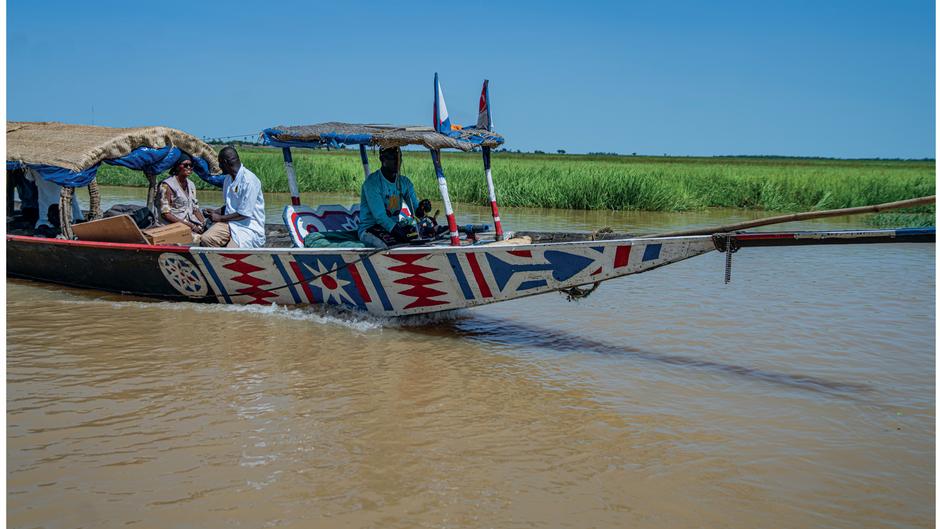
In the heart of the Sahel, Mali faces one of its most pressing humanitarian challenges in decades. Over 6.4 million people now depend on emergency aid and protection, with more than 400,000 displaced—mostly women and children—fleeing violence in regions like Gao, Ménaka, and Ansango. Behind these staggering figures are real faces: families struggling to rebuild their lives amid food insecurity and malnutrition.
To give voice to these untold stories, seven humanitarian organizations joined forces to present “Mali: Personal Glimpses of Humanitarian Crisis”, a compelling photo exhibition by Malian photographer Tiécoura N’Daou. Currently showcased in Berlin, the exhibition captures the human toll of conflict and displacement through powerful imagery. N’Daou, also an educator and researcher based in Mali, shares insights into his creative process and the emotional weight behind each photograph.
Displacement has left entire communities in precarious conditions. One in three displaced individuals is a child under five, many suffering from acute malnutrition. The exhibition serves as both an artistic tribute and a call to action, urging global audiences to recognize the silent suffering unfolding across Mali.
Beyond the frame: a photographer’s perspective
Tiécoura N’Daou doesn’t just take pictures—he measures their impact. Every snapshot he captures is carefully considered, ensuring it reflects the dignity and reality of its subjects. His lens becomes a bridge between Mali’s rural landscapes and urban displacement camps, documenting stories that mainstream media often overlooks.
“Photography is about more than aesthetics,” N’Daou explains. “It’s about responsibility. Each image carries a narrative that can influence decisions, policies, and public awareness.”
The exhibition in Berlin marks a pivotal moment in raising international awareness. By blending art with advocacy, N’Daou challenges viewers to see beyond the numbers and connect with the humanity behind Mali’s crisis.
Farine locale movement gains momentum in Yaoundé
Meanwhile, in Yaoundé, Cameroon, a different kind of creativity is unfolding. The air is filled with the rich aroma of freshly baked bread—made not from imported wheat, but from local grains. A recent artisan bakery competition, organized by the Service d’Appui aux Initiatives Locales de Développement (SAILD) and the Association Citoyenne de Défense des Intérêts Collectifs (ACDIC), celebrated bakers who are revolutionizing local food systems.
The initiative promotes the use of traditional flours—such as maize, cassava, and millet—to support sustainable agriculture and reduce reliance on foreign imports. These innovative bakers are not only redefining taste but also fostering food sovereignty in the region.