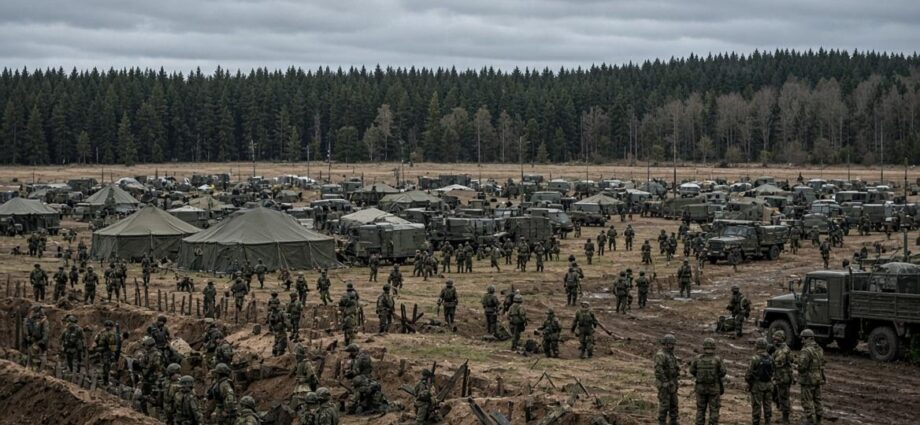
Poland has launched a sweeping security operation along its northeastern frontier, bordering Russia’s militarized exclave of Kaliningrad, as fears mount over imminent hybrid threats from Moscow. The move comes amid a surge in unmanned aerial incursions, suspected sabotage plots, and escalating hybrid tactics targeting critical infrastructure across the region.
Military and counterterrorism grid tightens across Poland’s northern flank
This isn’t a routine border patrol. The operation is a multi-layered security clampdown involving elite counterterrorism units, national police, border guards, and conventional military battalions. The goal is twofold: eliminate risks of Russian-backed infiltration and protect key infrastructure in energy, transport, and telecoms—prime targets in Moscow’s asymmetric warfare playbook.
Key components of the operation include:
- Real-time surveillance drones scanning the frontier 24/7;
- Mobile rapid-response teams ready to intercept any suspicious incursions;
- Enhanced cybersecurity protocols for state networks and critical facilities;
- Joint command centers coordinating action between military, police, and intelligence units.
OTAN’s eastern shield braces against Kremlin’s hybrid gambits
Poland’s decisive response sends a clear signal to the Kremlin: the Baltic frontier is now a hardened red line. As a frontline NATO member, Poland is neutralizing Moscow’s wide array of indirect aggression tactics—from engineered migration flows to AI-driven disinformation campaigns, and from sabotage operations on critical networks to covert drone surveillance.
Balancing deterrence and stability on NATO’s eastern edge
While global focus remains locked on the Ukraine conflict, the Baltic theater is emerging as another critical flashpoint. By militarizing its northeastern border, Poland is not just reacting—it is preemptively deterring. The message is blunt: hybrid aggression will meet an immediate, coordinated, and overwhelming response.
Kaliningrad looms large as NATO’s eastern frontier hardens
Strategically positioned between Poland and Lithuania, Kaliningrad has become a flashpoint for hybrid operations in recent years. The exclave’s proximity to Poland’s border makes it a prime staging ground for Moscow’s covert actions—from electronic warfare to sabotage missions. Poland’s sweeping security tightening directly confronts this evolving threat matrix, reinforcing NATO’s eastern flank with resolve and precision.
Comments are closed, but trackbacks and pingbacks are open.