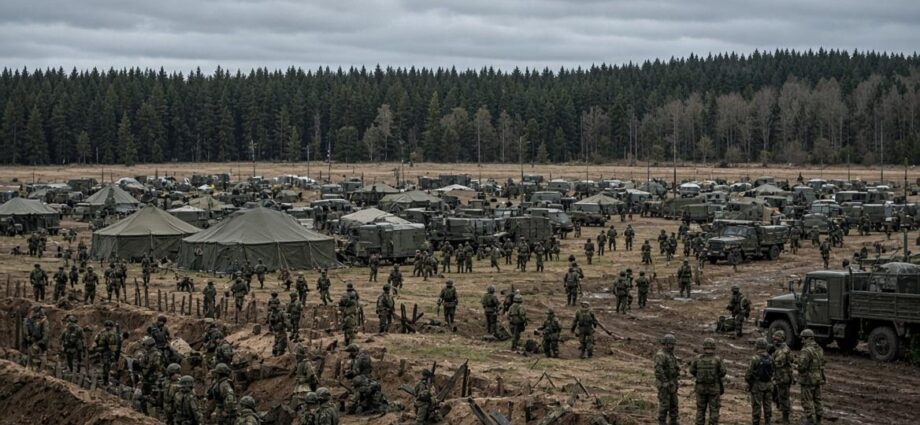
Poland’s decisive action amid rising hybrid warfare threats
The tension between NATO and Russia has escalated sharply along the Baltic coast. Following multiple indicators of hybrid threats—including drone incursions, sabotage attempts, and intelligence reports of imminent clandestine operations—Poland has launched a sweeping border security operation along its northeastern frontier. This strategic move aims to reinforce defenses near the heavily militarized Kaliningrad exclave, where Moscow’s hybrid tactics have intensified in recent months.
An unprecedented multi-layered security framework
The operation represents more than just an increase in border patrols. Poland has deployed a coordinated network of border guards, national police, elite counterterrorism units, and regular army battalions to create an impenetrable security perimeter. The dual objectives of this unprecedented security push are clear:
- Complete denial of entry for any Russian-trained sabotage cells or illicit operatives seeking to destabilize the region.
- Full protection of critical infrastructure in northern Poland, including energy grids, transportation hubs, and telecommunications networks—high-value targets in Russia’s asymmetric warfare playbook.
Heightened vigilance in the Baltic region
The security escalation comes as unmanned aerial vehicles violate airspace with increasing frequency, raising alarms across Baltic capitals. Suspicious drone flights and breaches of sovereign airspace have become commonplace, forcing governments to maintain a state of constant alert. This surge in hybrid aggression has prompted Poland to adopt a zero-tolerance stance, viewing it as a direct precursor to more serious destabilization efforts.
Poland’s role as NATO’s eastern sentinel
By fortifying its border with Kaliningrad, Poland is making a bold statement to the Kremlin: hybrid warfare tactics will not go unanswered. As a key member of NATO’s eastern defense architecture, Warsaw is taking preemptive action to neutralize a range of indirect aggression methods used by Russia, including:
- Exploitation of migration flows as a pressure tool
- Disinformation campaigns and psychological warfare
- Cyberattacks targeting critical systems
- Sabotage operations on energy and transport networks
A broader front in the East-West standoff
While global attention remains fixed on the war in Ukraine, the situation in the Baltic Sea region underscores a harsh reality: the confrontation between the West and Moscow extends well beyond a single conflict zone. Poland’s move signals a shift toward proactive deterrence, sending a clear message that hybrid threats will be met with decisive, immediate responses. The message is unambiguous—no gap in defense will be tolerated.
Comments are closed, but trackbacks and pingbacks are open.